
10 Tips from a Home Stager
January 25, 2011 § 1 Comment
 Whether you’re preparing your home for the market or just yearning for spring, here are some suggestions we stagers use that might give you or your home a jump-start:
1. Box up what you’re not using currently. This process is the hardest if you’ve been in your house a long time, and it may require someone to help you go through everything and decide what to keep, throw out, or give away. That person may be a family member or a professional organizer. If you’re feeling overwhelmed at Step 1, there’s help for you. Ask your Real Estate agent for a referral.
2. Be clear about the original function of each room. If your home office has taken over the dining room table, it’s time to reclaim the room. Move the computer to a spare bedroom or finished basement. At least for now!
3. Neutralize your walls. Neutral doesn’t have to be beige, but light and bright are preferable to dark and moody paint schemes. You will optimize your room size by lightening up the walls.
4. Edit your bookshelves, entertainment units, and china cabinets. Keep out only enough items to display. It’s okay to leave some shelves empty! Space sells! And see number 1 above if you’re overwhelmed.
5. Box up all your family photos and other items of great personal value. This applies to sellers only, obviously, but it’s very important to remove family, cultural, and religious identifiers so that you reach the maximum number of potential buyers. If you’re not moving and you’re just spring cleaning, use this opportunity to group your family photos and feature them where families gather, in the family room area.
6. Highlight key selling features of your house. If you have a beautiful view of the backyard, remove heavy window treatments. If you have a newly restored hardwood floor, roll up the scatter rugs to unveil it. If you have a great fireplace, make sure it’s not hiding behind the sofa.
7. In the kitchen, store all unused appliances and remove artwork and magnets from the refrigerator. Generally a nice coffee maker is fine to leave on the counter during house showings, but again space sells. This time it’s horizontal space on the counter. So toaster ovens, knife racks, dish drainers, and cutting boards go down below.
8. Clean, Clean again, and then Clean one more time. Since kitchens and bathrooms can sell houses, make sure you spend extra time cleaning them and ridding them of all odors and their sources. Squeaky clean and fresh-smelling are the goals. Buyers may overlook the dated Formica in the guest bath, but they will definitely remember the litter box tucked behind the door.
9. Maximize light and create a comfy feel. Open all window shades and turn on the lights for a house showing. Arrange furniture in conversation groupings away from the walls. Make sure Person A sitting on the sofa does not have to shout across the room to talk with Person B in the chair by the fireplace. You’ll be amazed at how a room can be transformed by simply moving a piece of furniture a few feet forward or to the right.
10. Accessorize. Hang fresh white towels and a new shower curtain in the bathroom, place one large accessory on the coffee table (more effective than lots of little items), and fill a large bowl with fresh fruit for the dining table.
After reaching number 10 on this list of tips, you can kick back and enjoy your clean and organized house. If you’re selling, you are now ready to throw open the doors to potential buyers. If you’re staying, congratulations. You have a fresh start!
Can I Paint My Ceiling Dark?
January 22, 2011 § Leave a comment
 Next time you’re in a large restaurant or a public building, look up at the ceiling. If it’s like the one in this old library in Nashua, New Hampshire, it’s dark. Of course, this ceiling is three stories high. The effect of the dark ceiling is to bring it down visually and make the enormous space seem a little cozier to us way down on the floor.
The same is true in a room in your home. If you have a large space with a high ceiling and particularly if the ceiling really feels too high, then painting it a dark color will square out the room and make its dimensions seem a little more homey.
Unfortunately, if you have a 7-ft ceiling in a bedroom, a dark ceiling might make you feel like you’re the batter in a waffle iron. Cozy is not quite the word to describe that effect. So I recommend a lighter tint for smaller rooms. You can still move away from the white ceiling, but just use a tint of the wall color (10-30% of the full-strength hue). Or use a coordinating tint — something you pull from the bedding or other accent pieces. Using a tint on the ceiling will highlight any crown moulding you have in the room and will unify the color scheme.
Caution: because the ceiling is horizontal and does not get much light shining on it, any color you choose will appear darker up there than it does on the paint chip. Try a sample board first before tackling the ceiling job — a neck-breaker and mess-maker, for sure!
Thinking about Marble for Your Kitchen Counters?
December 10, 2010 § 1 Comment
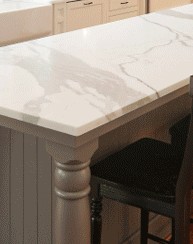
Doesn’t a marble countertop look just terrific in the magazine? There’s something about that smooth creamy finish that really appeals to our desire for a clean, uncluttered look. But looks are deceiving. If you are at the countertop decision stage of your kitchen renovation, think twice about selecting marble. Before you get too caught up in its beauty, take a close look at a sample that has been passed around a bit. Anything catch your eye and send up a red flag?? Those not-so-little dings and scratches on the sample might end up on your countertop. Just so you know… there are more durable options out there if maintenance is an issue.
Having said that, if your vision for your dream kitchen is something out of the French countryside, then by all means, marble is the way to go. It screams fresh baguettes and croissants! The dings and scratches acquired over time become part of the patina of the kitchen — and really part of the overall French country kitchen design. If you are a baker, you might include (as one of my clients did) a marble bake station only (the rest of the countertop was soapstone). Or consider a marble vanity top for your guest half-bath.
A little bit of marble in the right place is a wonderful thing.
Southern Style Christmas Tree
December 7, 2010 § Leave a comment
 When it comes to decorating for Christmas in the South, more is better. And bigger doesn’t hurt either. The Celebrity Holiday Homes 2010 special on HGTV featured Trisha Yearwood’s home decorated with big wreaths made from cuttings from her yard, a rainbow of ornament and ribbon colors, and beautiful hydrangeas perched between the boughs of the Christmas tree! Now that’s an idea that never would have occurred to me so I decided to try it on my own Christmas tree.
I hauled out some silk bouquets I had put away in the closet and selected the reds and creams for the tree. What a terrific pop of color — similar to oversized ornament balls but more textured and interesting. I kept all my other red glass Christmas balls and the children’s ornaments from Nana as well as the little plaid bows. But the silk hydrangeas really make the tree look special even way up here in New England. I’m hooked.
So for those of you who celebrate, y’all have a colorful Christmas!
Flooring Challenges: Working around the color scheme
November 15, 2010 § 4 Comments
 Are you living with a slate floor from the early ’80s? Many of you are. Slate is a wonderful material for the foyer as it’s easy to mop up after muddy boots and dogs trample through. But many slate floors have a distinct color palette (the gray-greens, blue-greens, purples and rusty reds) all in one small square footage. Busy? Yes. And out-dated? Yup.
Besides throwing a rug over it or replacing it, the other approach is to embrace the color palette presented to you by the previous owners. Currently, the gray-blue-greens are quite popular in fabric lines and even paint stores.  And purple is a great accent color. So if you are updating your foyer and are cursing the flooring, take heart. Pull a palette from the floor at least for the foyer area. Blending the floor with the surroundings will make it less of a color feature in your room.
And as always, create a focal point just inside the front door. A large piece of art, a bench, or a mirror– something to draw the eye upward away from the floor.
If you are planning to install new flooring in your entryway, choose a neutral that will stand up to decades of wall color changes and will look just as terrific 20 years from now as it does today.
Brick Historic House: Trim, Shutters, and Roof Made Easy
November 1, 2010 § Leave a comment
 For those of you with historic brick homes, you cannot beat crisp white trim and charcoal black for your shutter color and roof. Forget about updating your shutters and installing a new multi-colored, dimensional roof. Basic black and white may seem blah, but honestly, good taste and traditional styling are never boring.
Express your own creativity in your landscaping. Keep the plantings symmetrical around the front door to coordinate with the symmetry of your formal house design, but add color and variety of shapes and sizes. Another tip: if you do not want to match all the window treatments on the inside of the house (even though it does look spectacular on a house like this), then at least have matching white lining on the curtains, white sheers, or plantation shutters. Mixing things up with a rainbow of window colors just ruins the formal look.
Living in a historic home is not for everybody. There’s a certain expectation — I’ll talk about informal living in another post… but for now, viva la tradition!
House and Trim Colors that Make a Statement
October 14, 2010 § 3 Comments
 Every now and then I see an accent color that whacks me over the head, and this bold expression of lemon yellow really does it to me this time! Usually a color that does not translate well onto siding or other large surfaces because it’s just too intense, this clear saturated primary color on a shutter paired with black wrought iron hardware on a subdued and sophisticated dark, gray-blue siding is a knock-out! What a statement!
What makes this combination work is the sharp contrast between the gray tone in the siding color and the bright clear shutter. If the siding were another warm clear color, the combination would scream like a caution light. But the calm understated siding lets the yellow attract all the attention. There’s no competition between the colors, just sheer harmony.
Another key to this combination is the “bridge” color that pulls the look together: white. The white trim makes the colors pop — as they say — and it’s critical whenever you use bright colors, either inside or out. White also gives your eye a chance to rest from the intensity of the palette.
But just like other bold statements, be prepared to attract a lot of buzz. And keep the lawn mowed.
How Bold House Colors Can Work
September 30, 2010 § 2 Comments

 What is more refreshing than a creamsicle — that delicious pairing of tangy orange with smooth creamy vanilla! That’s just how I would describe these two houses — absolutely luscious!
Although we don’t often see orange as a house color, the addition of creamy gray-white either as trim color or as part of the architecture makes the combo work. The result is warm and happy without going off the color charts of good taste.
The stucco example here is a house turned patisserie on the grounds of Versailles in France. The other example is a modern home, one of the creative designs by Victoria Mohar of MoharDesign in Somerville, Massachusetts. It is so refreshing to see creative color combinations that work and that push the house color envelope a bit.
If you’re introducing a bold color into your exterior color scheme, pair it with a well-respected neutral, like creamy vanilla. The result will be refreshment for your neighborhood.
Paint Color and Home Staging
September 7, 2010 § Leave a comment
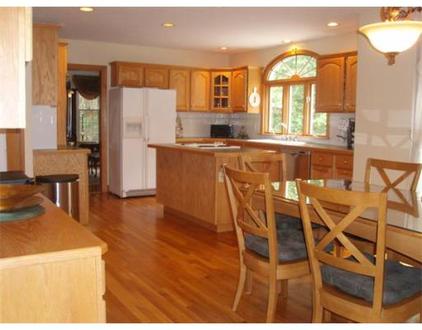 Decorating a house and selling it are two different things. Although the original rich yellow paint color created a warm and cozy kitchen feeling, warm and cozy in real estate jargon translates into small. And when it comes to kitchens, it seems, the bigger the better.
To show this kitchen to better advantage, we chose a calmer paint color that created less contrast with the ceiling color. That little trick raised the ceiling in the room and created a more open feeling — translated: bigger. Other than removing a piece of art from the wall and replacing a couple of light bulbs, no additional changes were made to the room.
So although you may feel that the kitchen lost its personality when the paint was neutralized (and neutral doesn’t mean beige — more on that in another post), creating a neutral palette allowed the actual selling features of the room to come forward: shiny hardwood floors, solid wood cabinets, large decorative window, center island with cooktop, updated lighting. You get the picture…
Going from Home to Sold: Working with a Stager
August 10, 2010 § Leave a comment
 I know they have to design, stage, and sell in one hour. But on some of those design shows, the home stager comes sweeping through, insulting the homeowners in every room, as if those poor people should know instinctively that the wall color they chose for the kitchen is the only reason their house won’t sell. A good home stager in real life, of course, will tread delicately through the minefield of personal decorating taste and homeowner attachments and end at a win-win.
If you need to sell your home and your realtor recommends a staging consultation, here’s what to expect.
The stager will arrive and begin looking at your home from the curb. Don’t be alarmed or feel invaded. They are there to help you sell. Try to envision this fairly unwelcomed guest as someone who is on your team.
If you haven’t listed your home yet, the stager will walk through your property and evaluate what changes need to be made to sell the home. It’s nothing personal. The stager is seeing your home from the perspective of the buyers in our current market.
The stager will know how to identify all the selling features that your property has to offer and how best to highlight them to buyers.
The stager may give you tips to enhance your landscape or point out areas that need touch-ups.
The biggest nerve that the stager will hit (delicately we hope) is what is personal to the homeowners and needs to be removed from the home if it is to sell quickly and for top dollar: family photos, children’s art and toys, figurine collections, delicate houseplants, years worth of memorabilia, most of the books, and yes, the homeowners’ personal design style. I quipped with one homeowner the other day that we were turning their well-lived-in home into more of a Ramada Inn (with all due respect to Ramada, of course).
The point is, if you’re selling your home, you will want to appeal to as many buyers in today’s market as possible. That means that lots of things that made your house your home need to be packed up so that the potential buyers can see themselves living there.
At the end of the consultation, the stager will leave you with a rather lengthy to-do list. You can plow through it yourselves or call them back to help you. Your realtor will have access to other service providers as well, like cleaners and organizers. Chances are very good that if you accomplish everything on that list, the home you are trying to sell today will become the house that… SOLD!


 Your Home & Color Coach