
Choosing Paint Colors for House Trim and Doors
November 29, 2012 § 448 Comments

The front door is the focal point of your house and it can make a big splash. (Even though Great Britain’s former Prime Minister Tony Blair reportedly changed his 10 Downing Street door color from conservative black to Labour Party red as seen in this photo from the Daily Mail, evidently it was all an April Fool’s joke — see the full story at http://news.bbc.co.uk/1/hi/magazine/8677004.stm)
Doubtful that changing your own front door color will create as much of a stir in the neighborhood, but you’ll want to give it considerable thought anyway.
But first, what about the trim color?
House trim color: If you have a small house and you want it to look bigger, consider painting the edge trim the same color as the house or just a shade lighter. This will blend the corners of the house in with the body and draw your eye to color — hopefully, the front door. If you want to show off the trim in a more contemporary way, consider painting the edge trim two shades darker than the house color. To accent your trim in a traditional way, choose contrast by using either white or cream. If you have a stone house, the grout color is a great trim color.
The message here is to avoid too many different hues (different colors) when painting the house, trim, doors and shutters. Unless you have an architectural masterpiece, I would avoid choosing trim colors that are unrelated to the house color (for example, painting a gray house with navy blue trim, red shutters and red garage doors). Not only will you draw attention to all the different colors themselves and away from the front door (regardless of what color IT is), but you will have visual chaos!
Exception: If you have an old Victorian home, you may want to accent all the different architectural elements with paint in many different colors.
Trim around windows: To keep the windows looking as large as possible, paint the trim around the windows the same as the window frames, either white or cream or whatever color the window frames are. Matching the trim to the actual windows will make them look bigger than if you break up the color by painting a dark trim around a white window or a white trim around a dark window.
Garage door color: Unless you want to broadcast to your neighbors that you have a three-car garage, you probably don’t want to highlight your garage doors. Standard garage doors should usually be painted either the color of the house or a couple of shades darker to “anchor” them. Plus, by painting the garage doors the house color or a little darker, your house will look bigger and less chopped up. The focus is reserved for the front door. Note: yes, metal garage doors can be painted even if they’re white when installed. Just clean the doors very well and use a good primer.
Exceptions: Garage doors associated with brick homes are often painted either the trim color, the grout color, or the shutter color — black or dark green, for example. No need to try and match a paint color to the brick. The other exception is the new carriage-style garage doors, designed to be the focal point on the front of a home. If you have fancy garage doors, it’s okay to show them off! Even keeping them white or the trim color is okay.
Shutter color: For a traditional look, match your shutters to the roof color. If you have a dark gray or black roof, black shutters look terrific. It’s like adding a touch of black to a living room to dress it up a bit. Matching the shutters to the roof makes it look like you planned your roof color as part of the overall house palette. Dark brown shutters with a brown roof color give a similar, traditional look as black shutters with a gray/black roof. And brown is supposedly the new black. But for a classic home, black will never go out of style.
If you have lots of really small windows or don’t want dark shutters, consider choosing a color that blends with the house color. Here’s one strategy: choose your house color in the medium range. Then go lighter for the trim and a shade or two darker for the shutters (or remove the shutters altogether). And choose a completely different hue for the front door. This contemporary look focuses attention on the front door. There are no distracting colors anywhere else on the house.
Front door color: It’s time to create your focal point, the front door. This is the area you want guests to find when they pull in the driveway. Color is the way to do it although a shiny black door with a brass kickplate, brass door handle, and big colorful wreath is a classic. If you don’t want black, consider a rich dark red in a semi-gloss finish. Dark red (not cherry) seems to work with almost all house colors.
Here are a few other ideas:
- Light green house. Traditional: Dark purple door (especially nice if you have lilacs and other purple flowers in your landscape) and white door trim. For a modern look: Rusty red.
- Dark green house. Traditional: Rusty red door or natural wood and cream door trim. Modern: Turquoise.
- Light blue house. Traditional: Dark red door or navy blue door with white door trim. Modern: Dark olive green.
- Dark blue house. Traditional: Maroon door (play up the nautical look) with cream door trim. Modern: Lime green.
- Red house (or brick). Traditional: Black door with brass accents (classic) and white door trim. Modern: Grass green.
- Brick house. Traditional: Mahogany door with light grout color door trim. Modern: Dark purple.
- Pink house. In the North, a charcoal or black door. In the South, anything punchy. White door trim.
- Gray house. Traditional: Navy blue or red door with white door trim. Modern: Bright lemon yellow.
- Brown or tan house. Traditional: Dark green door with white door trim. Modern: Robin’s Egg Blue.
- Yellow house. Black door, black shutters, white door trim (a classic look). Modern: Dark red.
- White house. Traditional: Black, red or other dark rich color. Modern (or in warmer climates): Any bright, cheerful color that works with your landscape plantings. White trim everywhere.
One woman I read about paints her front door for every season. It might be cranberry red during the winter, purple in the spring, raspberry during the summer, and rust during the fall. Every year it’s different.
Don’t forget the roof: Consider the roof color when you’re making your house color choices and if you’re getting a new roof, choose something that coordinates with your house color. There are many choices in roof colors these days particularly in the brown family– many more choices than just slate gray or black. Don’t pass up the opportunity to finish the job with a well-coordinated roof.
Selling Your House? Restore Rooms to their Original Function
November 16, 2011 § Leave a comment
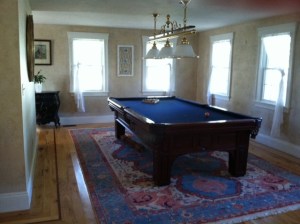 Is your living room a Man Cave? Many of us have reconfigured our rooms at home to reflect our lifestyles: dining rooms may be home offices; family rooms may have movie theater seating and 60″ televisions; and master bedrooms may have more exercise equipment than your local health club. All that is fine and probably a good use of space… until you decide to put your house on the market.
When called upon to stage this home, we couldn’t help notice the elephant in the room. The pool table and its well appointed overhead lighting had to go. We needed to return the living room to its original function with a conversation area that would welcome prospective buyers coming in the front door. (Note: some of you might love a pool table in your living room, but majority rules when it comes to staging!)
With the pool table gone and the rug rolled up to expose the beautiful hardwood floor, we moved the sofa from the other side of the room and brought in two slipper chairs, a cozy rug, and some accessories. The result? A more conventional living room and an easier sale. 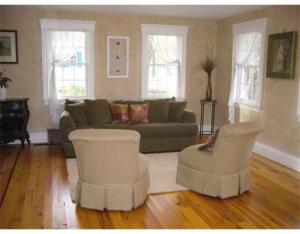
If you plan to put your house on the market, start your prep by returning rooms to their original function. Move excess furniture and equipment to storage. You will get a quicker sale!
Staging: Before & After Photos
July 5, 2011 § Leave a comment
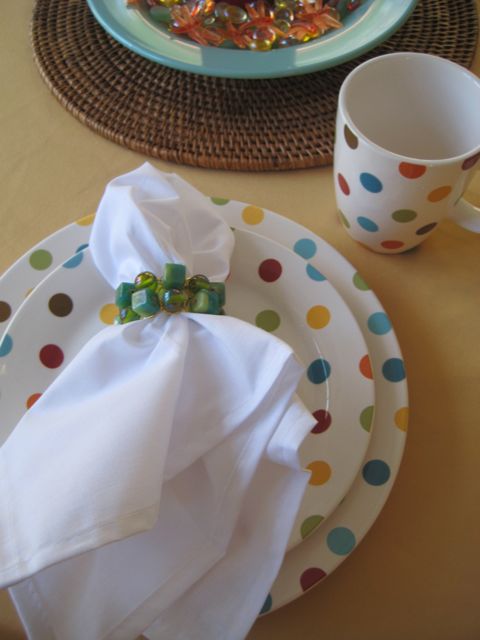 Staging (in the mid-range of home prices — not the very high end) is often referred to as “undecorating.” We take great pains to remove all the homeowner’s treasured collections, family photos, and personalized sense of style and substitute a more generic brand of “decor” that is most likely to appeal to a broad range of potential home buyers. Sometimes the job entails de-cluttering and a little rearranging of the furniture. Other times, we strip wallpaper, repaint, and rejuvenate a house that hasn’t seen any upgrades in… ahem… awhile.
For those of you who are curious, I just posted some Before & After photos of some recent projects to give you an idea of what happens with staging. Most of the homes pictured sold within 2 weeks of going on the market (with the help of superb real estate agents, of course, setting an appropriate price for each property, and very motivated and cooperative sellers who were willing to go the extra mile– it’s a partnership!).
Here’s the link:
Update Your Backsplash to Sell
June 17, 2011 § 3 Comments
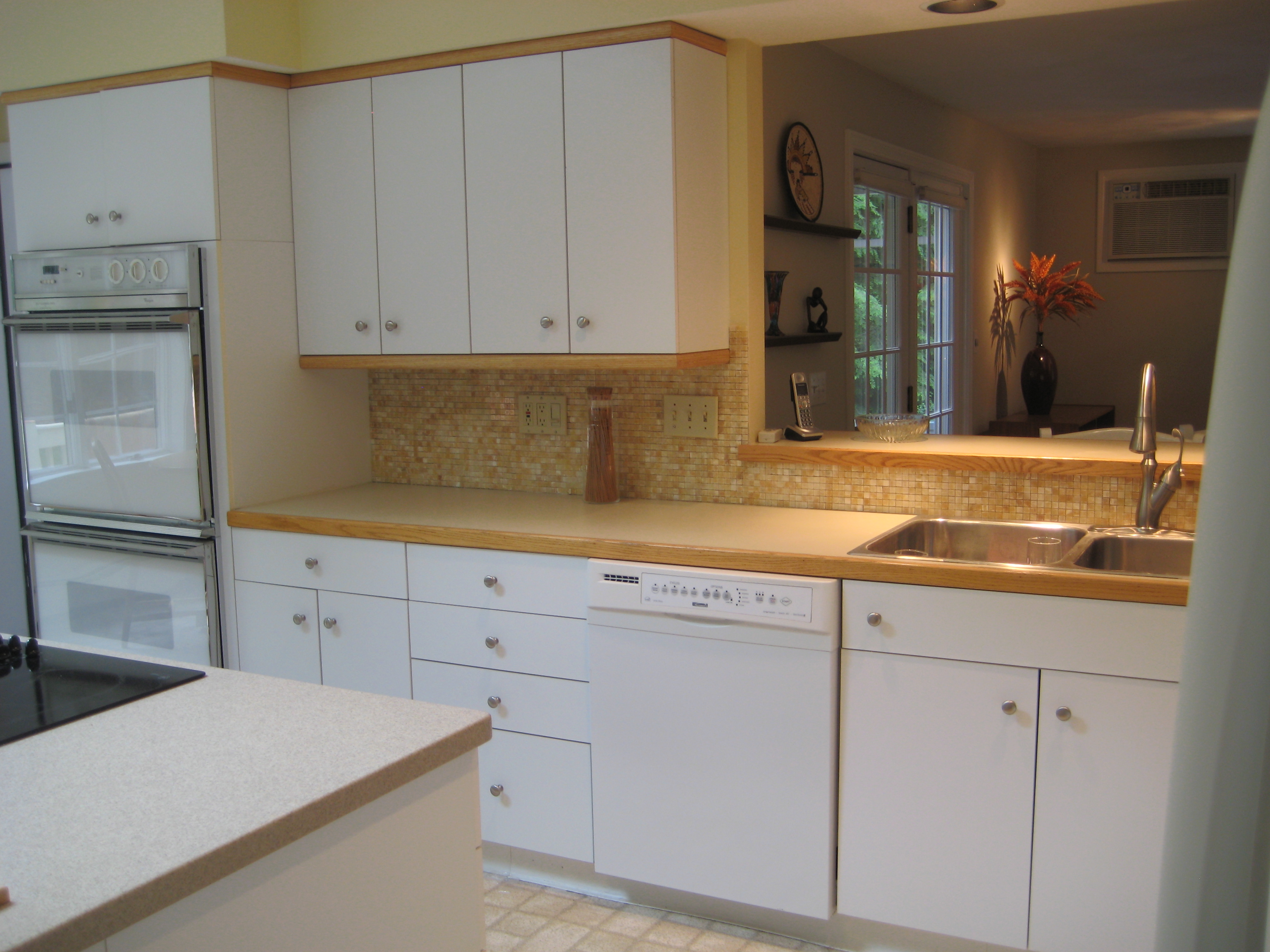
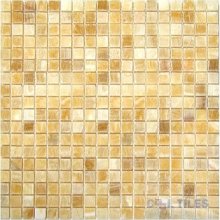 Honey onyx mosaic tiles — love ’em! We switched out the old ceramic backsplash in a “modern” kitchen (still had Formica counters with oak trim) and updated the look of the whole room (okay, we changed the cabinet knobs too). The white melamine cabinets, Formica counter tops, and linoleum floor all stayed! It was a wonderful transformation for a minimal cost to the homeowners who were updating to sell.
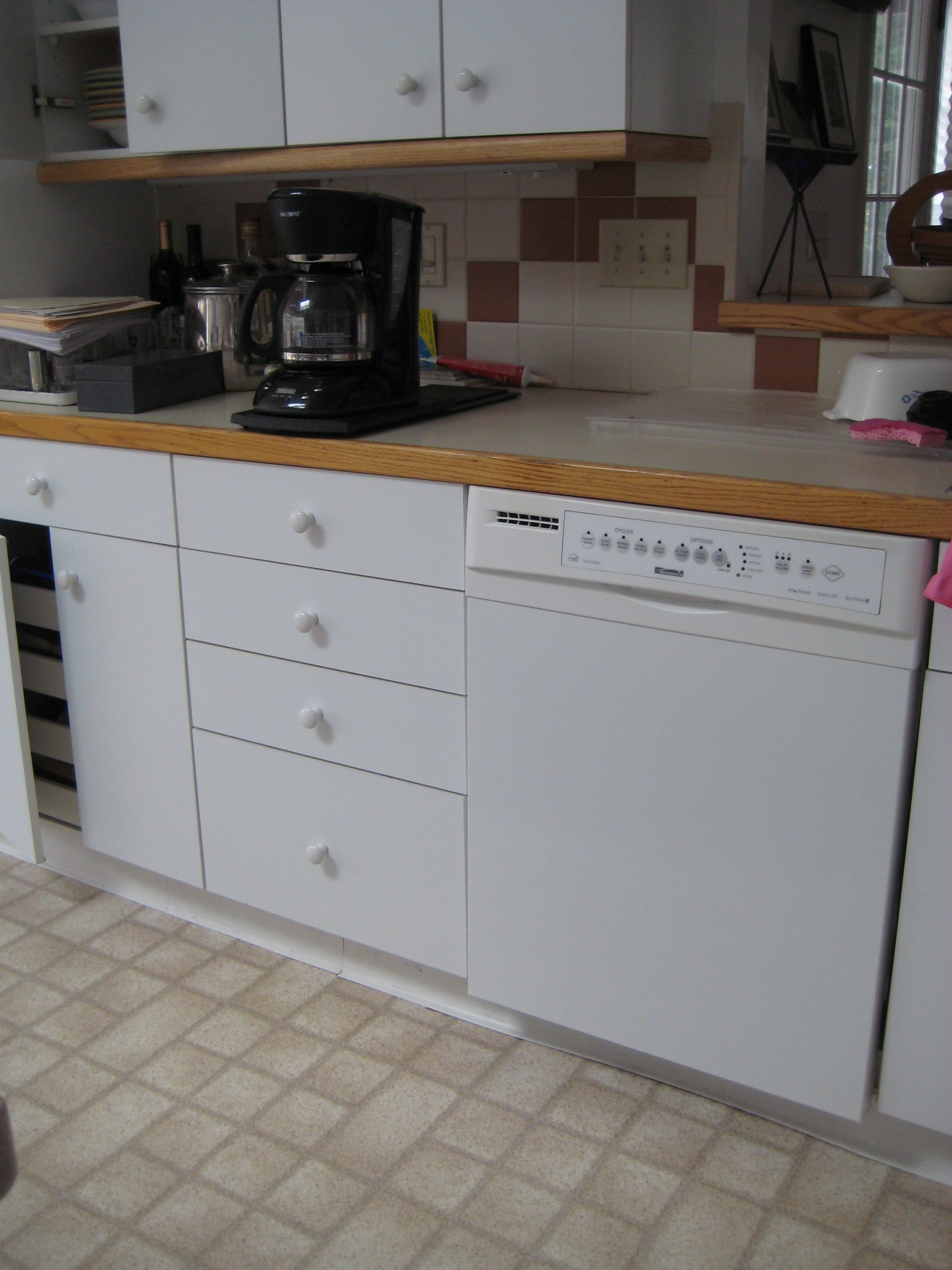
We chose the onyx for its variety of warm colors (would blend the oak trim nicely), its scale (the small tiles would add interest to the plain white cabinets), and its ease of installation (mosaics require fewer cuts!). The biggest benefit? These tiles came from one of our prominent “big box” stores so the homeowners did not pay a lot for materials. A bonus when you’re preparing your home for the market!
Vacant Home Not Selling? Stage It
June 16, 2011 § Leave a comment
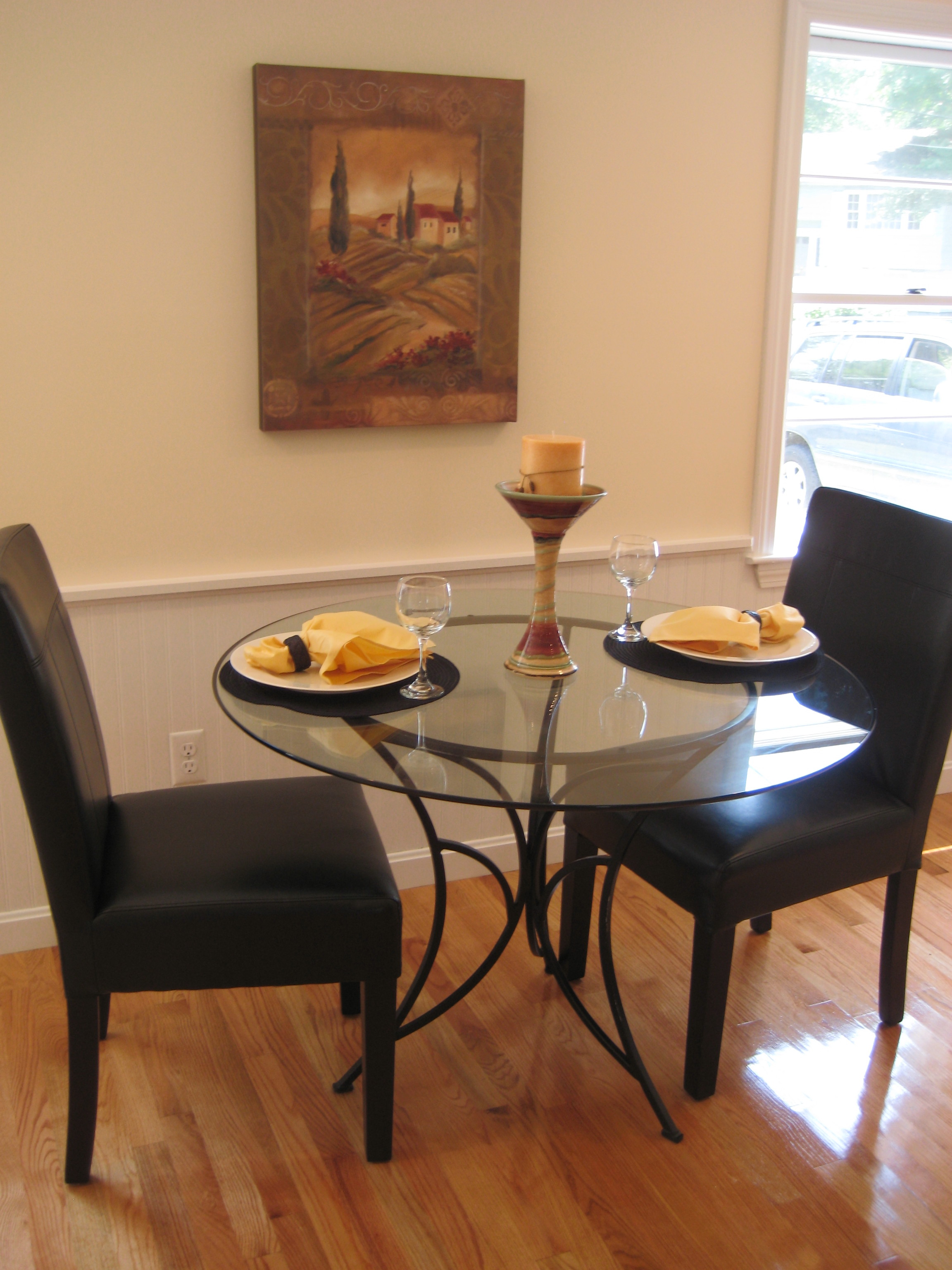 Home buyers these days have no imagination! No offense intended, but let’s just say that home buyers are not in the mood for trying to figure out how a room is intended for use. If they walk into a house with no furniture anywhere,
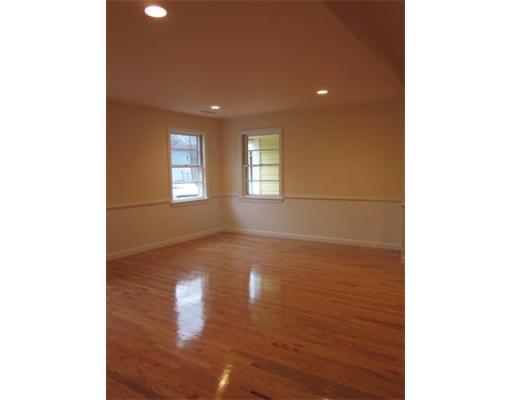 potential buyers are likely to say, “Oh, forget it!” and move on to the next property. Since the market is flooded with perfectly nice properties that are furnished, selling a vacant one is risky and maybe a tad foolish. Only because there’s a reasonable solution.
Stage it.
And here’s how: If you are a seller about ready to pack up and head for your new home, hold the movers at bay for one more minute. Go through the house (with your realtor or a professional stager) and tag the furniture that will stay in the property while it’s on the market. Things like a table and chairs for the dining room — under the chandelier — and maybe the breakfast nook, a couple of comfortable chairs for the living room or family room, a sofa if possible, an area rug in decent shape, some dishes and glassware for the tables, and at least one piece of “generic” art (something that will appeal to ALL buyers, not just some). The rest of the furnishings can go!
Then at least when the potential buyers open the front door, they will see an uncluttered yet welcoming arrangement of furniture in the appropriate rooms and get the idea of where their own furnishings might go. You’re on your way to selling!!
Paint Color and Home Staging
September 7, 2010 § Leave a comment
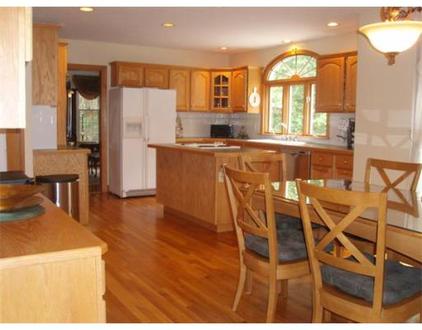 Decorating a house and selling it are two different things. Although the original rich yellow paint color created a warm and cozy kitchen feeling, warm and cozy in real estate jargon translates into small. And when it comes to kitchens, it seems, the bigger the better.
To show this kitchen to better advantage, we chose a calmer paint color that created less contrast with the ceiling color. That little trick raised the ceiling in the room and created a more open feeling — translated: bigger. Other than removing a piece of art from the wall and replacing a couple of light bulbs, no additional changes were made to the room.
So although you may feel that the kitchen lost its personality when the paint was neutralized (and neutral doesn’t mean beige — more on that in another post), creating a neutral palette allowed the actual selling features of the room to come forward: shiny hardwood floors, solid wood cabinets, large decorative window, center island with cooktop, updated lighting. You get the picture…
Going from Home to Sold: Working with a Stager
August 10, 2010 § Leave a comment
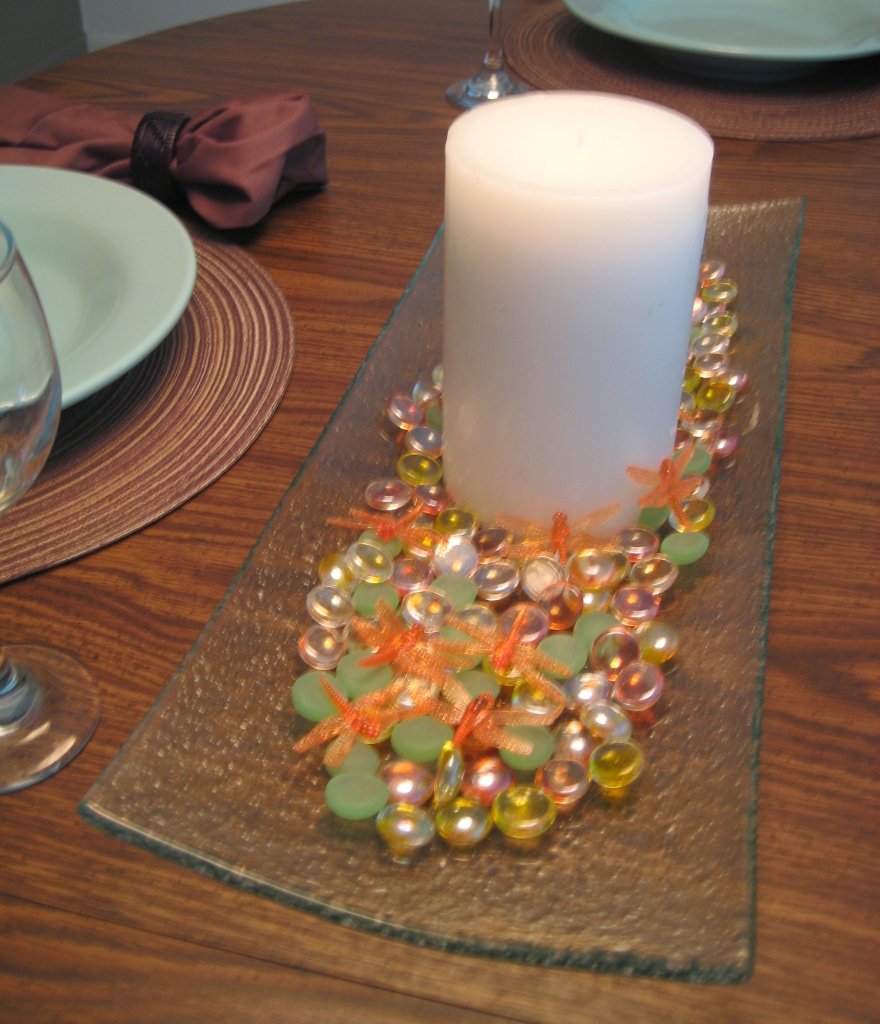 I know they have to design, stage, and sell in one hour. But on some of those design shows, the home stager comes sweeping through, insulting the homeowners in every room, as if those poor people should know instinctively that the wall color they chose for the kitchen is the only reason their house won’t sell. A good home stager in real life, of course, will tread delicately through the minefield of personal decorating taste and homeowner attachments and end at a win-win.
If you need to sell your home and your realtor recommends a staging consultation, here’s what to expect.
The stager will arrive and begin looking at your home from the curb. Don’t be alarmed or feel invaded. They are there to help you sell. Try to envision this fairly unwelcomed guest as someone who is on your team.
If you haven’t listed your home yet, the stager will walk through your property and evaluate what changes need to be made to sell the home. It’s nothing personal. The stager is seeing your home from the perspective of the buyers in our current market.
The stager will know how to identify all the selling features that your property has to offer and how best to highlight them to buyers.
The stager may give you tips to enhance your landscape or point out areas that need touch-ups.
The biggest nerve that the stager will hit (delicately we hope) is what is personal to the homeowners and needs to be removed from the home if it is to sell quickly and for top dollar: family photos, children’s art and toys, figurine collections, delicate houseplants, years worth of memorabilia, most of the books, and yes, the homeowners’ personal design style. I quipped with one homeowner the other day that we were turning their well-lived-in home into more of a Ramada Inn (with all due respect to Ramada, of course).
The point is, if you’re selling your home, you will want to appeal to as many buyers in today’s market as possible. That means that lots of things that made your house your home need to be packed up so that the potential buyers can see themselves living there.
At the end of the consultation, the stager will leave you with a rather lengthy to-do list. You can plow through it yourselves or call them back to help you. Your realtor will have access to other service providers as well, like cleaners and organizers. Chances are very good that if you accomplish everything on that list, the home you are trying to sell today will become the house that… SOLD!
Sew a Simple Window Topper
August 9, 2010 § Leave a comment
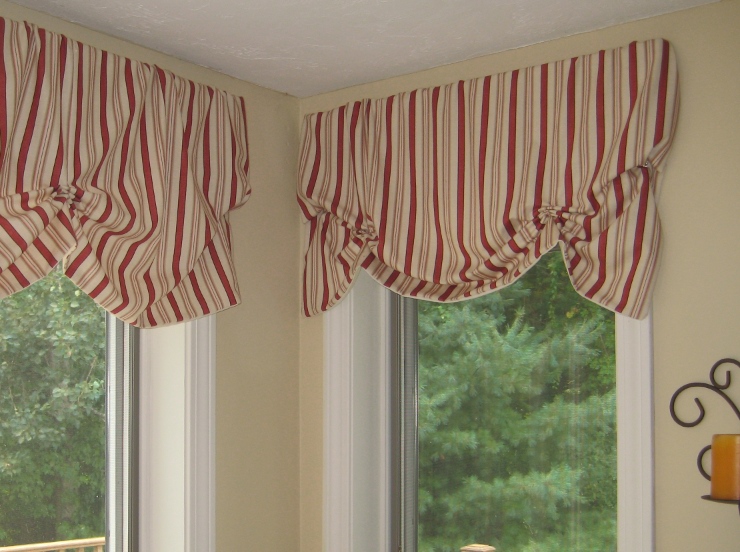 I do own a sewing machine (a hand-me-down), but I would not call myself much of a seamstress. I sew when I feel inspired or I find a fabric I cannot live without. These window toppers were so easy that I had to share. If you cannot sew a straight line, pick stripes for your fabric. Infinitely easier than everything else.
Cut rectangles of fabric and lining, allowing enough extra for your seams and your rod pocket at the top. Then with right sides together, sew along the edges of your rectangle leaving a little space at the end to turn the fabric right side out. Press the box, turn over one edge and hand-stitch a rod pocket. You’re almost done.
Once you’ve hung your new valances, then you can add a little style by cinching up the fabric in a couple of places (maybe along either edge and in the middle if your valances are wide enough). Use a needle and thread to tack in place. Voila!! Little custom valances in an afternoon!
Banish Old Brass with Paint
August 5, 2010 § 6 Comments
 Brass will be back at some point, but there are lots of alternative metals on the market these days that make shiny, brassy… well… brass seem really dated and ordinary. I see these brass candelabra chandeliers everywhere. I even had one in my own home until I decided I couldn’t stand it anymore.
 I suppose I could have replaced it at relatively low cost, but then I would have to take it down, etc, etc. I decided that the quickest fix was to paint it. So I got my tallest ladder, moved the table out of the way, and primed the brass. All of it. Then I gave it a coat of matte black acrylic paint. (I was liking it better already.) I then drew on the inner artist somewhere in me to apply several different colors: dark brown, burnt umber, lighter brown, in kind of a faux finish of sorts to make the finished product look more like oil-rubbed bronze (my version).
I even painted the little candlesticks a creamy yellow, found leather-like chandelier shades at my local home improvement store, and used a scrap of fabric for a chain cover. There. All set — I love it. Time to put the ladder away.
If you have old lighting in your home, you can either replace it or paint it! Just remember when working with lighting of any kind, turn off the power first!
Top Three Tips for Selling Your House Fast
August 4, 2010 § 1 Comment
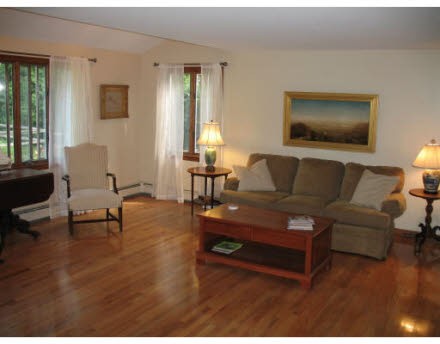 This house sold with multiple offers at the Open House. (Incredible in this picky buyer’s market.) What made this house stand out and what can we all take home from this experience? Here are three top tips:
1. When in doubt, move it out. Although this property had some big things going for it (location, location, location), the family had lived in the house for twenty-plus years and had accumulated not only their own trappings but also lots of odd furniture and artifacts from deceased relatives. This happens to many of us. What do we do with all that stuff? The answer is clear when you’re trying to sell your house: move it all out.
At the first visit, we tagged items that needed to go — things like extra side chairs and small tables, worn furniture, family photos, large area rugs, antiques and breakables — and we left each room with furniture that would identify the room’s function to buyers. The reasonable and highly motivated homeowners then made many trips to a storage facility to clear the decks and let the house “breathe.”
2. Open the door, fix your floor. Remember that old adage, something like, if you want to know if a fellow is well-dressed, look down? Well just like polished shoes, the first thing buyers notice when they open the front door is the floor, and if yours is covered by old, worn or stained carpeting, uh-oh. In general, carpeting is out. Buyers are looking for hardwood floors and tile, both of which provide easy maintenance and no safe haven for dust allergens. If you have hardwoods covered by large area rugs (like these homeowners did), congratulations! Simply roll up the rugs, buff up the floors and go “Cha-ching!” If you have wall-to-wall carpeting, don’t panic. Have it professionally cleaned, and that will help.
3. Make it sunny, welcome the money. You’ve undoubtedly heard this before, but it’s worth mentioning again. The message here is lighten and brighten. This house had dark rooms with rich wall color and heavy window treatments. We lightened the wall color and opened up the windows by removing the heavy drapes and replacing them with airy sheer panels that framed the windows but did not block the light. The result in this family room? An ahhhh feeling.
If you are overwhelmed by the prospects of preparing your house for the market, talk to your realtor. He or she will find you the help you need to get the job done quickly so you can have that “Ahhhh feeling” too!
 Your Home & Color Coach