
Painting Over Tradition But Maintaining the Soul
August 26, 2013 § Leave a comment
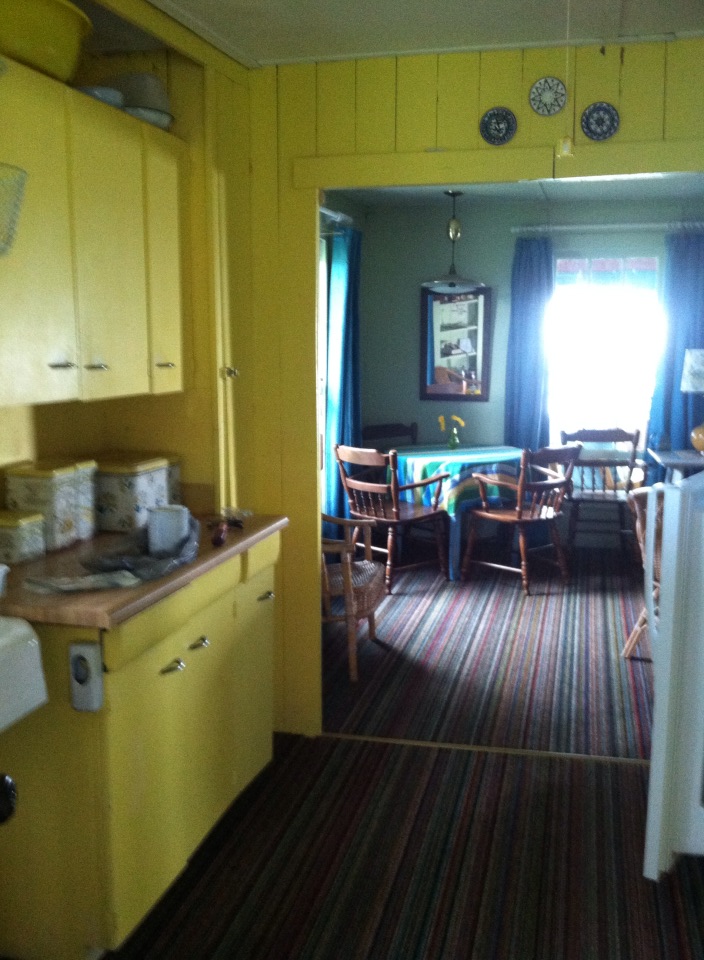 Make no mistake. This is my mother’s kitchen. She painted it this bright yellow probably 60 years ago, and up until this past summer, it stayed that way.
With my mother’s passing and the rebirth of the cottage as a rental property, I decided to tone down the walls in the kitchen a bit. I considered sea foam greens, light ocean blues, and beach sand beiges, but I ended up with a light peachy cream-yellow (Windham Cream HC-6, Ben Moore) as it kept the cheerful sunny aura of the space but took some of the harshness away.
I brought the blue in with the window treatment, kept all the old furnishings like the metal paper towel dispenser and bottle opener, and the yellow tub that we all took baths in as kids. I think Mother would be pleased. And that’s important to me.

Choosing a Color Palette for Your House: It’s a Natural
January 29, 2013 § Leave a comment
 Another drive-by sighting of some curb appeal. This time, the stone wall pops out partly because of its mix of natural stones (and not just one kind) but also because the house color is drawn from the wall’s palette of natural hues. Even the front steps coordinate nicely with the wall.
Any of the wall’s creams, beiges, browns, and grays would have worked for a paint color, but the builders chose a light creamy yellow for the siding with a beige shingle on the portico. White trim pulls the house together and the black door makes the dramatic statement.
It’s so easy to choose your house color from nature. You cannot make a mistake.
Stone and Brick Reveal Your Exterior Color Palette
January 25, 2013 § Leave a comment
 Yes, it’s winter and the roof in this photo is covered with snow, but now we can focus on the rest of the house, particularly the stone. What works on this house is the color palette that is taken directly from the numerous available hues in the stonework itself.
The bricks are a monochromatic rusty red color that complements the stone without competing with it — a challenge when you have multiple materials on the house. The siding is a gray neutral, also in the stone. The trim is pulled from some of the darker taupe stones. How easy is that? Job done.
If you are building a home with different materials, use the busy one with the most colors (stone or brick) to make the rest of your color decisions. That way, the whole house will come together in a harmonious cornucopia of color.
The alternative? Choosing a color that is not in the palette at all. The result? A disjointed effect that divides the house into sections and makes it seem smaller. Can be done, but it’s tricky and needs a professional colorist to pull off. Do yourself a favor and stick with the natural palette that presents itself to you from your building materials.
Color Your Home Happy
January 18, 2013 § Leave a comment
 Whether you live in a deluxe villa or a double-wide, you deserve a happy home. And the place to start is by adding color. Numerous studies have shown that color influences the way we feel and can even be used to describe our emotions (“I’m in a blue mood”).* But what may influence us the most is a lack of color.
The study found that people with depression associated their mood with the color gray. And you don’t have to paint your walls gray to have a gray aura in your home. Take a look around your house, in the corners and shadowed areas and particularly the ceiling. Do you see gray? Do you feel blah? Well then… time for color.
Start by painting your ceiling either a bright white or a tint of your wall color. That will either maximize the light reflection in the room (and bolster your mood) or make the room feel bigger and more open. Either way, you’ll feel better.
Next, if you’re timid about your color-selecting skills and afraid to make a mistake with the wall color, then start small. Add some colorful accessories to the room — pillows, artwork, other changeable items. Doing that will help you create a palette of colors you like without making a big investment or paying a painter to repaint two or three times.
When you’re ready to take the plunge and add color to your walls, try an accent wall first. Pick the wall that you see when you enter the room (the focal wall) and paint that a color you like. Add accents to the room in the same color to pull the room together. Keeping three walls neutral with pops of color on an accent wall and accessories here and there will help you step into the world of color without any Crayola catastrophes.
Note: There is nothing wrong with neutrals and whites in the home. To many people, neutral means calm. But if you are somebody who likes to wear color and you are drawn to color yet your home does not reflect that love of color, then it’s time to add color. That’s what I’m talking about.
*http://www.livescience.com/6084-colors-describe-happiness-depression.html
Choosing Paint Colors From Room to Room
January 14, 2013 § 1 Comment
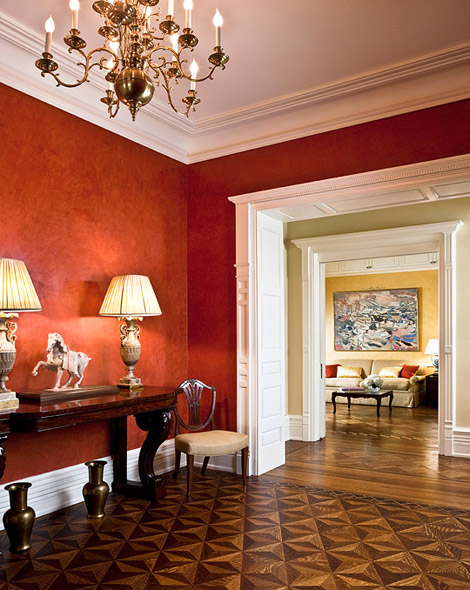 Create flow throughout your home by sharing colors between rooms. In this luscious red Venetian plaster dining room, the red is shared with the living room pillows across the hall. Just enough to draw your eye over there and pull the two spaces together.
Paint colors in nearby rooms “speak” to each other because they are adjacent on the color wheel. Red and yellow are separated by a neutral with a slight green undertone, adding a punch of contrast to the hallway.
Layering colors between rooms that you can see from one location and “cross-pollinating” the colors with pillows, accessories, and artwork will create a flow that will make your home appear bigger, less chopped-up, and more thoughtfully planned for optimal warmth.
(Interior design: Marcy Masterson)
Making Sense of Color Trends
January 8, 2013 § 1 Comment
 Is anybody else’s head spinning as you look at the color trends for 2013 or is it just me?
When we look at the Benjamin Moore Color forecast, we clearly see pastels — a look refreshingly optimistic every few years after we finish huddling in our dark, cozy dens and want out. Here we see a pale yellow added tastefully to warm gray walls — a really soft, uplifting combo. (Lemon Sorbet 2019-60 is the Ben Moore paint color of the year if you haven’t already heard.)
The other color combos from Ben Moore introduce Dusty Mauve (2174-40) back into the mix (been a few years, like 30), in combination with Golden Straw (2152-50) and a soft navy (Evening Dove (2128-30). The other trends from Ben Moore show us more Coastal blues and greens (never out of fashion in my book), and more taupes and grays, a trend we have been in for a few years now. Here is a link to the Ben Moore colors and combos: http://www.benjaminmoore.com/en-us/for-your-home/trends-2013
And then there’s Sherwin-Williams. Talk about something for everybody…I’ll say. I wouldn’t call this a color trend. It’s more like a smorgasbord. 
We have the Vintage Moxie Collection, an Easter basket of colors to choose from including Radiant Lilac (SW0074) and Aloe (SW6464, the Sherwin-Williams Color of the Year).
Then if you’re still in a chalky-earthy color mood, there’s the Honed Vitality Collection including all colors we’ve been using already like Unusual Gray (SW7059) and Roycroft Suede (SW2842), both terrific exterior colors. http://www.sherwin-williams.com/architects-specifiers-designers/inspiration/color-forecast/2013-color-forecast/honed-vitality/
Sherwin-Williams went Peter Max with its High Voltage collection — Electric Lime (SW6921) and Feverish Pink (SW6859) are colors I would reserve for a pillow or a picture frame. Maybe a front door color if you’re so inclined. Yikes! http://www.sherwin-williams.com/architects-specifiers-designers/inspiration/color-forecast/2013-color-forecast/high-voltage/
Finally Sherwin-Williams offers the dark, moody, masculine colors for anybody who’s left. The Olde World Gold (SW7700) and Plum Brown (SW6272) are both terrific exterior colors as are most of this Midnight Mystery collection. http://www.sherwin-williams.com/architects-specifiers-designers/inspiration/color-forecast/2013-color-forecast/midnight-mystery/
What Sherwin-Williams has shown us with their lack of consensus when it comes to color trends for 2013 is that we are more diverse in our color likes and personalities than ever before. Pretty much anything goes. So paint what you love. If you are caught up in color trends, then stick to whites and neutrals for your walls and add pops of trendy colors in things like pillows, accessories of all kinds, and even front door colors. Things you can switch out easily when the next hot new trend comes along because who knows what the color experts will throw at us next year.
Everybody’s Favorite Neutral: Revere Pewter
January 4, 2013 § 2 Comments
As our design aesthetic moved steadily from beige to gray over the past several years, one warm gray popped up as the perfect transitional color. Benjamin Moore’s Revere Pewter HC-172 is currently the number one all-around neutral as it is not too light, not too dark, not too yellow, not too green, not an ounce of pink, and even not too gray. Perfect with all kinds of complementary colors including this luscious Persimmon 2088-40 on the ceiling.
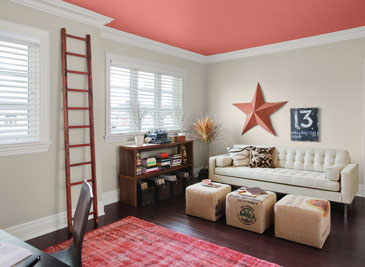
I like Revere Pewter in public areas like the dining room as it looks spectacular with warm golds and crystal. In the kitchen, it highlights the stainless steel appliances. In the hallway, it even makes a golden oak bannister look terrific.
As one fan describes it, the color “calms and restores, like driftwood found on the beach.” Yup. Kind of makes me want to dunk the whole house in it.
Return of the Gilded Age, Well Not Exactly
January 3, 2013 § 1 Comment
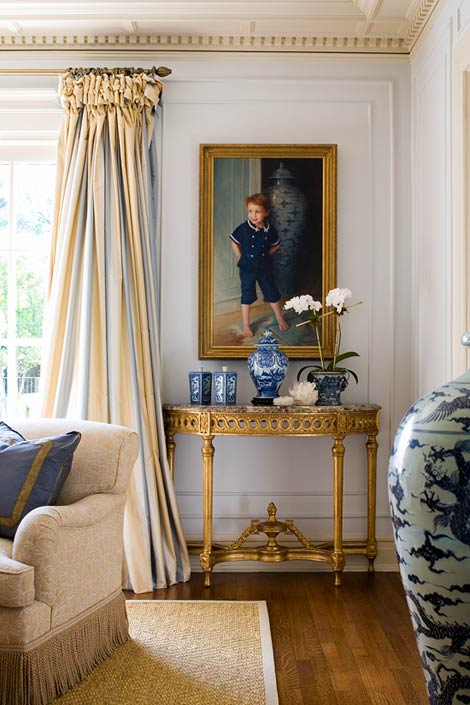
We have Downton Abbey, Princess Kate, and the popularity of all things English to thank for the resurgence of gold in interior design right now. At least that’s my opinion… And what a welcome sight it is.
After too many years degilding homes of anything that even hinted of gold, brass or yellow, the hue of royalty has returned.
The new interpretation, however, is decidedly fresh as we see in this living room from Traditional Home magazine. The wall color is so subtle that it accentuates even the creamy tan stripe on the window panel and the moldings on the ceiling. The gold demilune table and classic gold-framed art above it pop. As does the Chinese porcelain, as if pulled directly from the painting. Even the floor color is perfect, establishing a solid grounding upon which to layer all those beautiful blues and wheat tones.
The look is not your grandmother’s living room, with all due respect to your grandmother. Gold is nolonger shunned from updated decor.
Welcome back, gold.
Interior designer: Joseph Minton, with Paula Lowes and Michelle M. Wade
What’s All the Buzz about Undertones?
December 28, 2012 § 5 Comments
Determining a beige color undertone (defined by color expert Maria Killam as “a colour applied under or seen through another colour”) can be tricky. Beige can have one of several undertones: pink, yellow, or green are the basics. If you have dining room furniture with a decidedly yellow/orange hue and walls with a pink undertone like Benjamin Moore’s Georgetown Pink Beige HC-56, then yikes, you have a problem. Off to the paint store.
Bottom Line: Mixing pink-beige with yellow-beige (or yellow/orange) is a big no-no. Fix: Choose a paint with a different (non-pink) undertone like Benjamin Moore’s Monroe Bisque HC-26 that has a yellow undertone and looks great with the golden oak.



If you avoid the mistake of mixing pink and yellow undertones, you’re on your way to understanding them. The other nuances of what undertones to mix and not to mix will come much easier. Note: Mixing pink and yellow vibrant hues is perfectly okay. It’s just the dreaded undertones that can trip you up. Beware.
Choosing a Wall Color: Light and Lighting Help
December 27, 2012 § Leave a comment
Have you ever entered somebody’s home in the summer with the hot afternoon sun streaming into their bright yellow living room and felt like you’re drowning in a container of lemon curd? Perhaps a bit too much sunshine! The message? Light matters.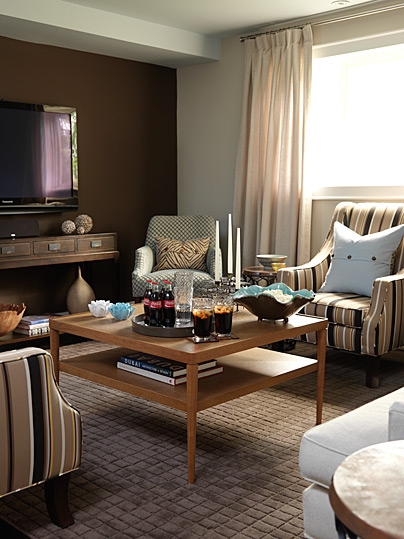
When you’re choosing a paint color for a room in your home, pay attention to which direction the light is coming from, how big the windows are, what the function or desired feel of the room is, and the shade or tone of the color you’ve selected. Here are some things to think about — not rules — just guidelines.
LIVING ROOMS
Function: Gathering, conversation, reading, and TV.
Direction of light coming in: Important as the living room is often the first room you see when you enter your home and where you receive guests, day and night.
Desired feel for the room: Warm and welcoming
Color choice: If your living room faces North, choose a paint color with a slight yellow undertone (as opposed to blue/gray) to add warmth to that North-facing room. If your living room faces South or West, you may want a cool color with the warmer hues reserved for pillows and accessories that can be moved in or out with the seasons. Easy solution? A medium-toned neutral (not necessarily beige) will allow you to bring in any furniture, window coverings and accessories without changing the wall color in the future. Another option: a rich hue on the focal wall (the one you see as soon as you enter the room — it may have a fireplace) and the other walls lighter and more neutral. Canadian designer Sarah Richardson loves this effect– that is one of her designs pictured above. Notice how the black TV disappears in front of the chocolate accent wall? Clever! (http://www.sarahrichardsondesign.com)
BEDROOMS
 Function: Primarily sleeping. Exception: Kids’ rooms. Since kids often play in their rooms, you can ramp up the palette to please them (a topic for another post!).
Direction of light coming in: Not a huge factor since you’re in there primarily at night anyway.
Desired feel for the room: Spacious if the room has little square footage and relaxing for a good night’s sleep.
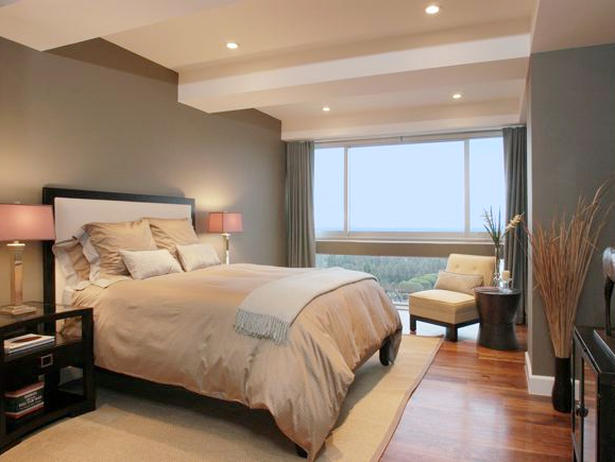
Color choice: You can go in one of several directions. For the spa feel, look at light grays, gray-beiges, and calm gray-blues/greens. For a cheerful awakening every day, include pops of color like orange, yellow or shell pink like in this bedroom by Nicole Sassaman Designs (http://www.nicolesassaman.com). Luxurious with cream bedding!
DINING ROOMS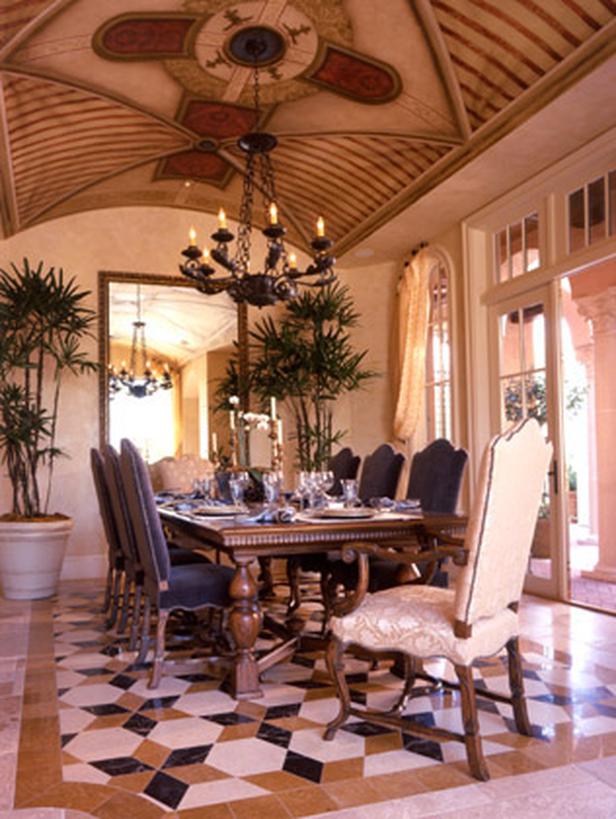
Function: Eating and conversation.
Direction of light coming in: Again, not a huge factor since you use the dining room primarily at night. (Exception: dining areas that are in an open-concept layout do have some light considerations.)
Desired feel for the room: Stimulating and dramatic.
Color choice: If you like deep, rich colors, this is your opportunity to use them for maximum effect. But you do not have to go dark with the wall color to be dramatic. Beautiful furniture, artwork, and lighting will make the room dramatic even if paler or more neutral colors are used. And don’t neglect the ceiling in the dining room. You may want something dramatic above the table — designer Troy Beasley’s handpainted canvas on the ceiling certainly gives a dramatic European flair to this dining room! (www.beasleyandhenley.com)
KITCHENS
Function: Cooking, eating, entertaining, and sometimes studying.
Direction of light coming in: Vital since you’re in the kitchen at all times of the day and night!
Desired feel for the room: Warm and welcoming.
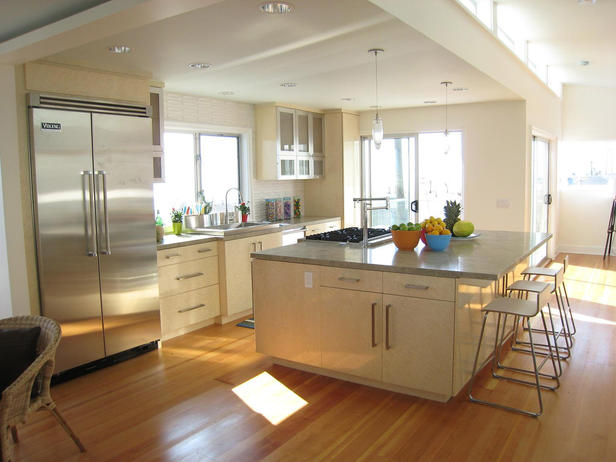 Color choice: Okay, now this is where it gets tricky. Start with your cabinets. Are they dark? What color is the counter top? You’ll want to introduce some contrast in the room either by choosing a lighter tone for the walls or bringing in a complementary color. Are your cabinets light? As long as there is some contrast somewhere in the kitchen, you can choose a light wall color for a light and airy feel to the kitchen like this one by designer Lori Dennis (www.loridennis.com). Lori uses the warmth of the wood floor and different tones of whites and warm grays to warm up this light, open kitchen and adds pops of color on the counters as well.
MEDIA ROOMS
If you have a separate area for watching movies on the big-screen TV, then go medium to dark with the walls and even the ceiling. The idea is to recreate that movie theater feel and eliminate glare at the same time. Gray, navy, eggplant, chocolate and rich red — all great wall colors for the “man cave” like this one by designer Phyllis Harbinger (http://www.dcistudio.com). 
 Your Home & Color Coach