
Choosing Siding Color (or Colors) for your House
July 19, 2011 § 4 Comments
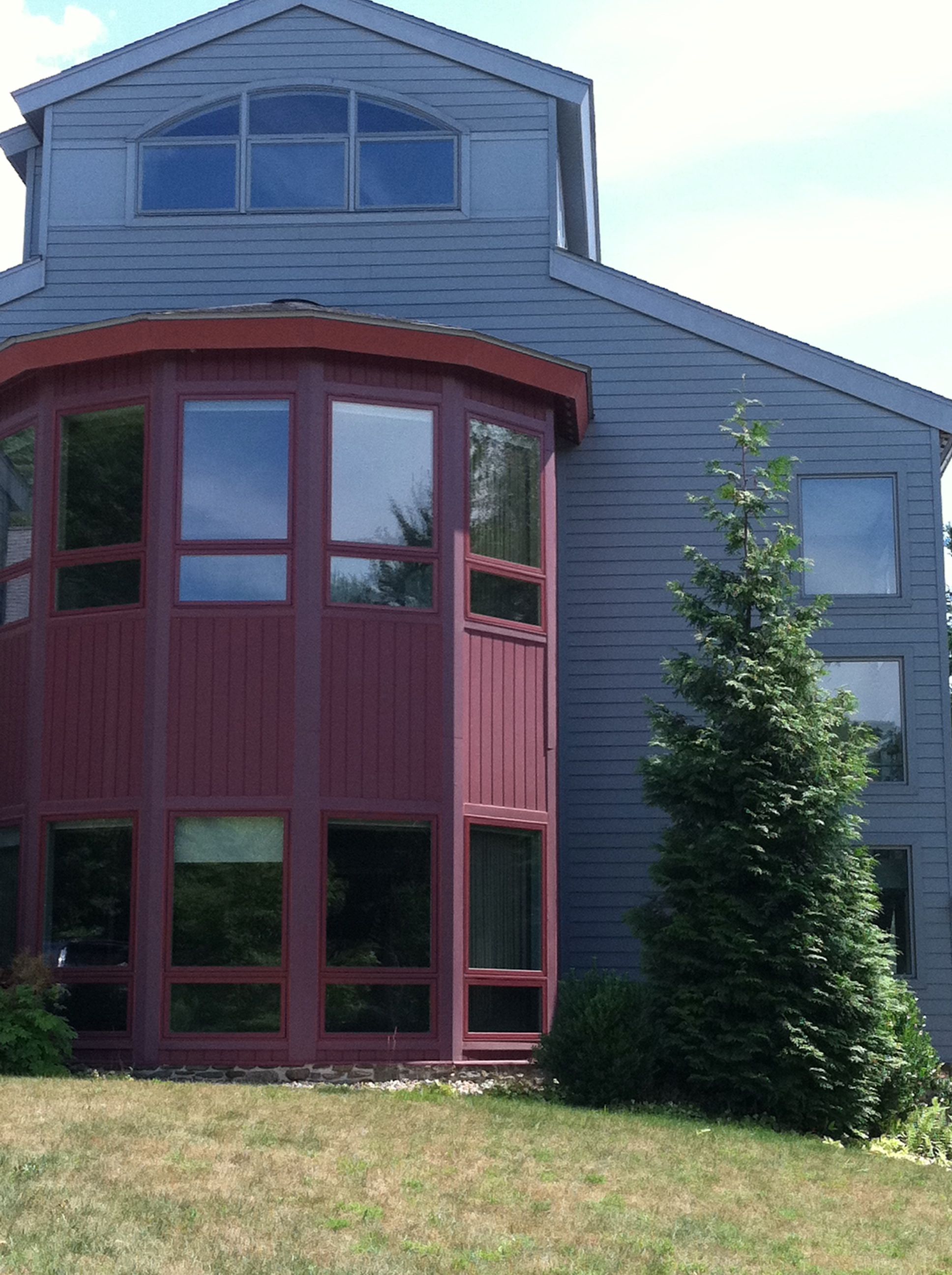 If your house has an architectural feature — maybe a porch, a large portico, or a distinctive garage — consider using an accent color for the siding instead of the color you’ve chosen for the house.* The effect is obvious. The accent color will stand out. This color technique is perfect for large houses that might look too massive if they were all the same color. Dividing up the exterior color gives you an opportunity to highlight the design of your home and make a large-scale house a bit cozier.
Speaking of a massive house that could use a little visual down-sizing, maybe we should consider accenting the architectural detail on the White House with a little color! … (oh, forget it… we’d get into that red state/blue state thing — no wonder the place is still white!)
Anyway, color can be used creatively to re-scale a large structure and add visual interest.
If you want your house to look bigger, however, this technique is NOT for you. Dividing up the exterior color chops up the house and calls attention to small areas. If your small house currently has a multi-colored siding palette, consider painting it all one color and using the accent colors for doors, shutters, furniture, flowers, and other accessories.
*The construction of the Doyle Center in Leominster, MA, is really interesting. Here’s a link: http://www.thetrustees.org/what-we-care-about/climate-change/green-buildings/doyle-conservation-center.html
Crown Molding: A Crowning Achievement or a Hot Mess
July 15, 2011 § Leave a comment
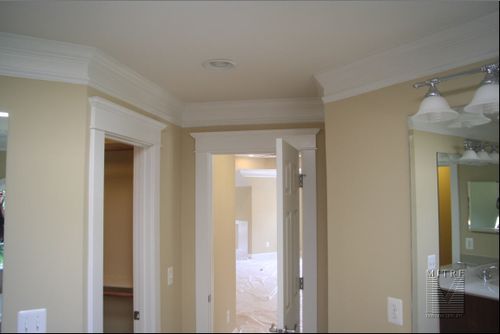 If lighting is the jewelry in the room, the crown molding is like a proper hem — no stitches showing. Crown molding covers the seam between wall and ceiling and adds weight and architecture to the room. And by drawing the eye upward, crown molding can create the framework for painting the ceiling something other than white. But done improperly, crown molding will lead to painting miscues and a hot mess.
I ran into just such a situation today on a high-end new construction job. The carpenter had “built up” the molding by using a couple of inches of wall between the crown at the top along the ceiling and another cheaper piece of finish molding along the bottom edge (photo shows how it’s supposed to look). The idea was to make the finished unit (crown + wall + smaller molding — all painted trim color) look like a giant (read: expensive!) piece of crown molding. What happened was that the carpenter did not finish the edges at the doorway leaving wall space exposed. The painter then came along and, not having a finished piece of molding to serve as the starting point, he (or she) drew a LINE on the wall with a pencil and started painting wall color on the other side of it. Oh…my…gosh… and this was high-end construction??
So two warnings:
If you are using crown molding, make sure you get an experienced carpenter who has the sense to finish edges. If you’re putting it up yourself, do your research first and know how you’re going to go around corners and finish edges properly.
If you are painting a wall, you must have a piece of architectural molding or the wall edge in order to move from one color to another. Never draw a vertical line on the wall to separate two colors unless you’re painting stripes. That’s it!
Phew! ‘Nuf said…
Choosing Colors that “Pop”
June 6, 2011 § Leave a comment
 It may seem obvious, but opposites attract. And when it comes to color, opposites attract attention! These bright orange pansies are the perfect complement to the rich azure blue ceramic basket on the front step of this home. Orange and blue are opposites on the color wheel and, because of that, they give each other a vibrant visual energy that draws your eye. Cheerful, welcoming, fun — everything you want your house to say.
The other opposites? Red with green and purple with yellow.
If you’re planning your garden, planting some annuals in pots, or painting some accent furniture for the yard or the porch, think about what colors will pop off each other. Talk about curb appeal… you’ll certainly attract some attention from the road.
When Tiling Goes Over the Top — Literally
February 16, 2011 § 3 Comments
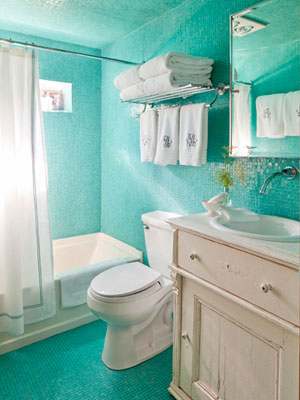 If you have ANY plans to sell your home within the next, say, 10 years, I do not recommend dipping your bathroom in a vat of mosaic glass tiles. I know they are stunningly effervescent especially in cool swimming pool shades of blues and greens, but my gut tells me that the extreme application of almost any material will become the “avocado green” of the next generation of home buyers.
When Leslie Marshall cautioned, “Choose your color confidently because retiling can be a costly venture,” (http://www.bhg.com/decorating/color/colors/add-color-without-paint/) she might have added that you should think twice before tiling every surface at ALL!
I know that floor-to-ceiling (including the ceiling!) tile is becoming popular in newly created “spa” bathrooms — yes, they’re easy to keep clean and they look spectacular too. Just keep in mind that somebody is going to have to chisel that color down from the rafters when the time comes to prepare your home for sale. Chances are pretty good that we will have moved our design aesthetic along to new ideas by then and your bathroom will be “just so last decade.”
The alternative? Think longevity for your bathroom. Add trendy color in ways that will be switched out easily either by you or whoever gets to whip your home into shape for resale. A little bit of tile color in the bathroom– on the floor, in the shower area, or around the mirror–will go a long way toward modernizing your bathroom without taking the room over the top.
Can I Paint My Ceiling Dark?
January 22, 2011 § Leave a comment
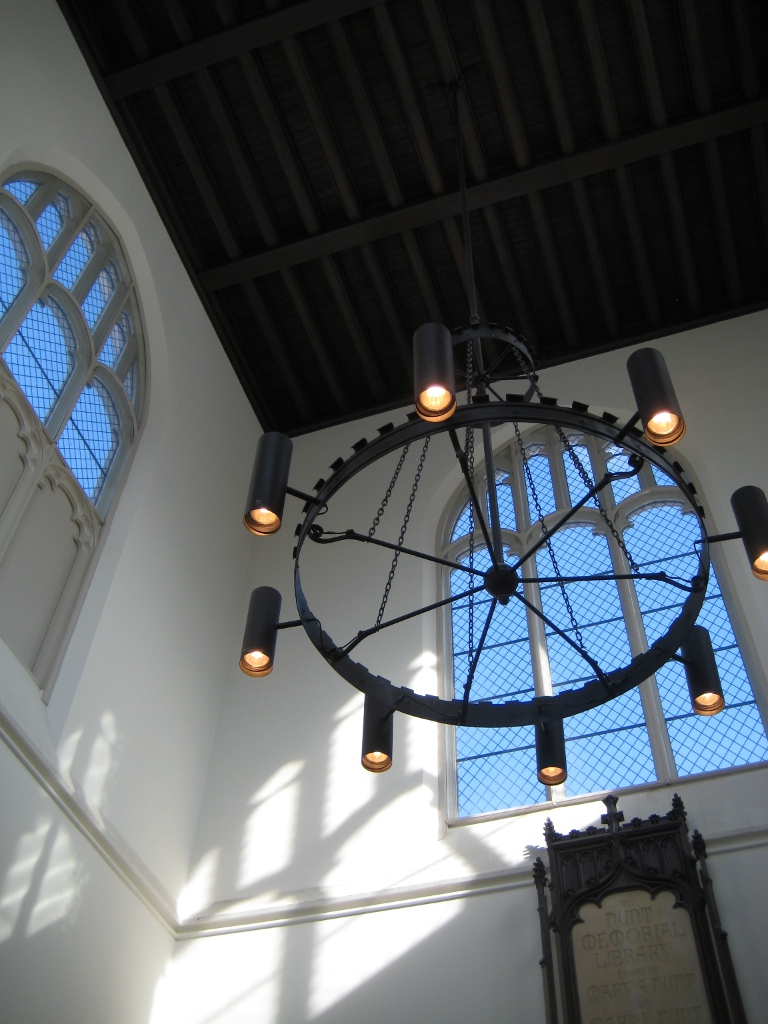 Next time you’re in a large restaurant or a public building, look up at the ceiling. If it’s like the one in this old library in Nashua, New Hampshire, it’s dark. Of course, this ceiling is three stories high. The effect of the dark ceiling is to bring it down visually and make the enormous space seem a little cozier to us way down on the floor.
The same is true in a room in your home. If you have a large space with a high ceiling and particularly if the ceiling really feels too high, then painting it a dark color will square out the room and make its dimensions seem a little more homey.
Unfortunately, if you have a 7-ft ceiling in a bedroom, a dark ceiling might make you feel like you’re the batter in a waffle iron. Cozy is not quite the word to describe that effect. So I recommend a lighter tint for smaller rooms. You can still move away from the white ceiling, but just use a tint of the wall color (10-30% of the full-strength hue). Or use a coordinating tint — something you pull from the bedding or other accent pieces. Using a tint on the ceiling will highlight any crown moulding you have in the room and will unify the color scheme.
Caution: because the ceiling is horizontal and does not get much light shining on it, any color you choose will appear darker up there than it does on the paint chip. Try a sample board first before tackling the ceiling job — a neck-breaker and mess-maker, for sure!
Southern Style Christmas Tree
December 7, 2010 § Leave a comment
 When it comes to decorating for Christmas in the South, more is better. And bigger doesn’t hurt either. The Celebrity Holiday Homes 2010 special on HGTV featured Trisha Yearwood’s home decorated with big wreaths made from cuttings from her yard, a rainbow of ornament and ribbon colors, and beautiful hydrangeas perched between the boughs of the Christmas tree! Now that’s an idea that never would have occurred to me so I decided to try it on my own Christmas tree.
I hauled out some silk bouquets I had put away in the closet and selected the reds and creams for the tree. What a terrific pop of color — similar to oversized ornament balls but more textured and interesting. I kept all my other red glass Christmas balls and the children’s ornaments from Nana as well as the little plaid bows. But the silk hydrangeas really make the tree look special even way up here in New England. I’m hooked.
So for those of you who celebrate, y’all have a colorful Christmas!
Choosing a Roof Color for a White House
May 7, 2010 § Leave a comment
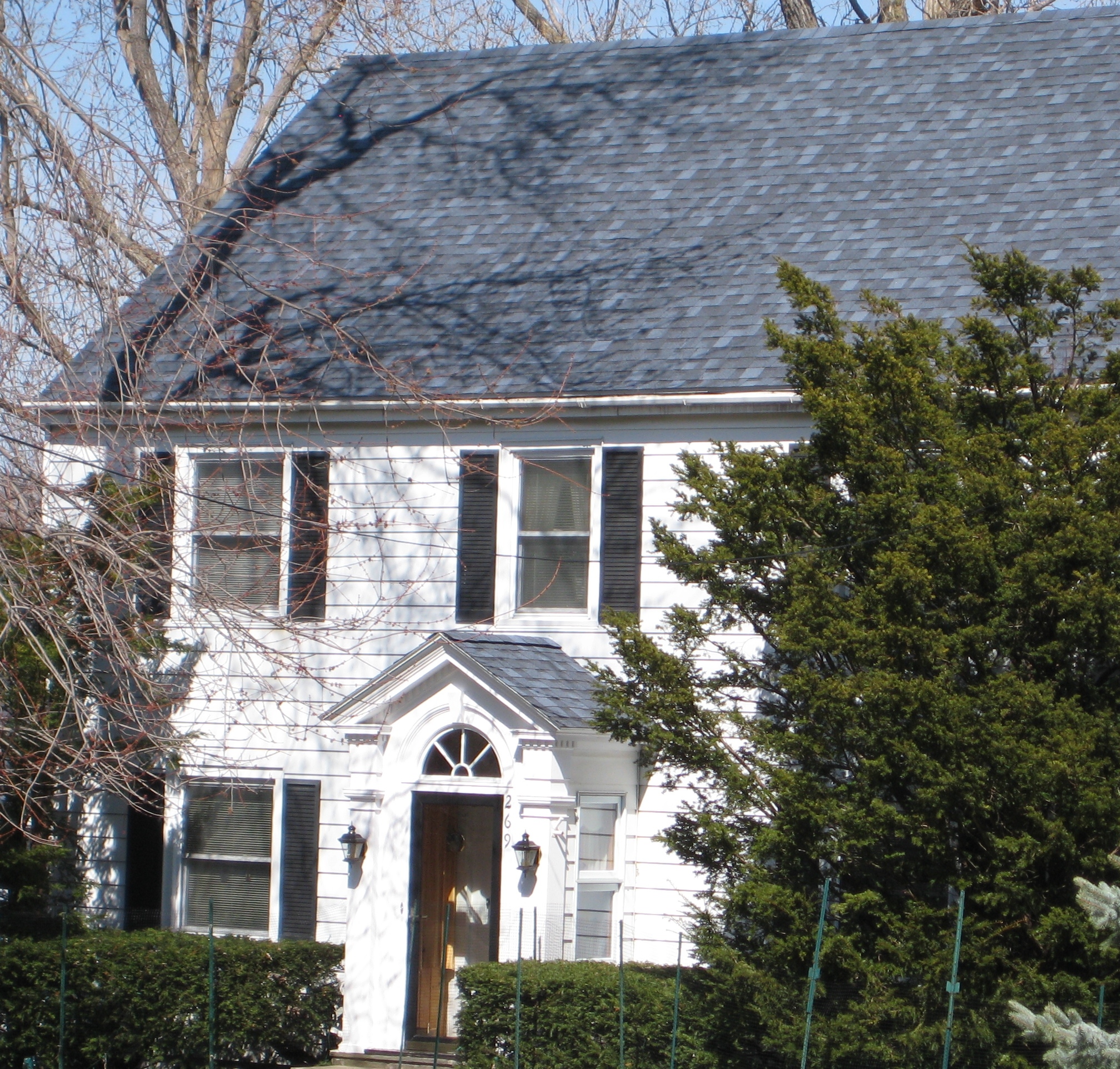 Choosing a roof color these days can be overwhelming with all the choices available to us. We’ve gone from classic black and charcoal to every shade of brown, red, green, and even blue. This white house with navy blue shutters looks spectacular with its multi-hued, architectural style blue roof. It really stands out in the neighborhood lined with browns and charcoals. And with a white house, adding a little color to the roof (at least on this house) certainly adds interest without going overboard.
If you have a white colonial and want to replace your roof with a metal style, I suggest sticking to the darker, more traditional colors. A metal roof adds an air of informality (and a touch country) to the house itself so keep that in mind when you’re selecting a roof style. Nothing wrong with metal, but you won’t want to attract too much attention to it if you have a traditional metropolitan house. If you live in the country or the mountains, anything goes!
Good Design Learns from History
February 4, 2010 § 2 Comments
 This historic New England barn is original to the property, and its characteristic beauty helps to define the classic regional style. Owning an historic property can be a real joy for those whose passion is preserving the beauty of the past, but don’t think you have to own a historic treasure to enjoy the pleasures of a striking outbuilding.
If you need more space for a workroom or your vehicles, you can add a lot of character to your property by incorporating the unmatched elements, colors, and materials used in previous centuries to make your own history, whether it’s a barn, a large work shed, or simply your garage.
I get lots of questions about how to match exterior colors and blend materials between house and garage, but as you can see from this photo, there’s absolutely nothing matching between this barn and the accompanying house. From the unpainted board-and-batten style siding, brass lighting, and farm-style scale, this barn stands on its own. The colonial house has traditional, painted, horizontal lap siding and white windows. The bridge color between house and barn is black — the black windows on the barn carry over to the accent color on the house (note the black shutters and lighting as well as the black pergola and fence next to the driveway). By painting the wood accessories on the house black instead of leaving them natural, the unpainted barn takes center stage.
Even if you have no plans to build a major additional structure in your yard, keep this basic design principle in mind when you’re working on your exterior. Colors and materials do not have to match.
When Roof Selection Becomes a Headache
October 18, 2009 § Leave a comment
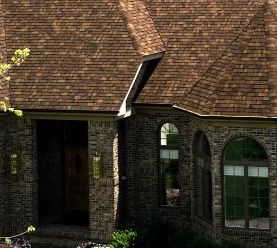 Whoa! Does anybody else get a headache from this dizzying roof and brick combo? Although selected for the brochure of one of the major roof manufacturers, I find this photo to represent all too many not-so-great roof decisions. The brick in this home is very busy since it has a lot of color variation. Adding the color variation from the architectural shingles takes the house (and it’s big!) way over the top. An alternative might have been a more traditional roof with less color variation that would complement the brick and not clash with it. And that alternative would have been cheaper too!
If you have a brick home with a lot of color variation and you’re trying to decide on a roof, consider the whole look before making your selection. Avoid going with a trendy roof style just because the neighbors are doing it. Consider your house style and the effect that the new roof will have on it. If you need help, click on the If I Can Help You page and we’ll work on it together.
It’s All About the Windows
May 7, 2009 § 14 Comments
Whether we’re all craving light or fresh air, who knows, but the focus these days is on windows. And we’re not talking about the old standard white replacement models anymore, that’s f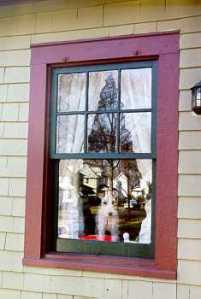 or sure. Now we have choices from black to almond to green and even red. And whatever the shape of your space, we have a window to fit into it. Awhile back the trend was to update the interior lighting plan with recessed cans and spotlights, uplights, downspots, and all the specialized lamps you could imagine for your space. Now we’ve moved on to creating unique window plans to suit the house: clerestory, stained glass, enormous picture windows, and different styles of window mullions to fit the style of your house, from Colonial to Victorian to Mission. Even new homes can be made to look old — well sort of.
Word of caution: If you have an historic home or a home with a very definite style, you should try to repair the original windows before resorting to a replacement. There’s very good information at the following link to help you with windows in historic homes. Or any window decisions, for that matter.
http://www.oldhouseguy.com/windows.php
If you have old wooden windows, paint the window sash and mullions a coordinating color (black looks spectacular) to add life to your home. Those of us stuck with white vinyl are jealous…
 Your Home & Color Coach