
Everybody’s Favorite Neutral: Revere Pewter
January 4, 2013 § 2 Comments
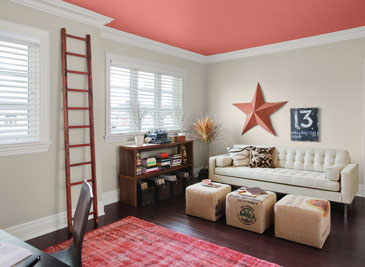
As our design aesthetic moved steadily from beige to gray over the past several years, one warm gray popped up as the perfect transitional color. Benjamin Moore’s Revere Pewter HC-172 is currently the number one all-around neutral as it is not too light, not too dark, not too yellow, not too green, not an ounce of pink, and even not too gray. Perfect with all kinds of complementary colors including this luscious Persimmon 2088-40 on the ceiling.
I like Revere Pewter in public areas like the dining room as it looks spectacular with warm golds and crystal. In the kitchen, it highlights the stainless steel appliances. In the hallway, it even makes a golden oak bannister look terrific.
As one fan describes it, the color “calms and restores, like driftwood found on the beach.” Yup. Kind of makes me want to dunk the whole house in it.
Return of the Gilded Age, Well Not Exactly
January 3, 2013 § 1 Comment
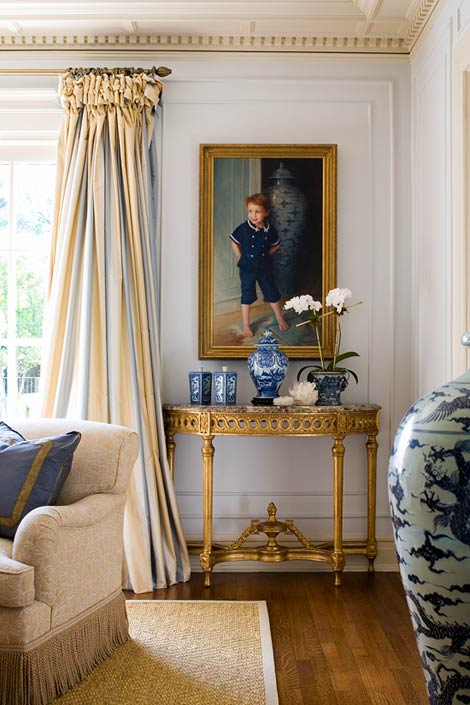
We have Downton Abbey, Princess Kate, and the popularity of all things English to thank for the resurgence of gold in interior design right now. At least that’s my opinion… And what a welcome sight it is.
After too many years degilding homes of anything that even hinted of gold, brass or yellow, the hue of royalty has returned.
The new interpretation, however, is decidedly fresh as we see in this living room from Traditional Home magazine. The wall color is so subtle that it accentuates even the creamy tan stripe on the window panel and the moldings on the ceiling. The gold demilune table and classic gold-framed art above it pop. As does the Chinese porcelain, as if pulled directly from the painting. Even the floor color is perfect, establishing a solid grounding upon which to layer all those beautiful blues and wheat tones.
The look is not your grandmother’s living room, with all due respect to your grandmother. Gold is nolonger shunned from updated decor.
Welcome back, gold.
Interior designer: Joseph Minton, with Paula Lowes and Michelle M. Wade
Have a Colorful New Year!
December 31, 2012 § Leave a comment
Here’s one New Year’s resolution I just know you can keep. Add one piece of color to your life. Whether it’s a fresh orange pillow on the sofa, a bright red tape dispenser for your desk, a sunny yellow spatula for beside the stove, or one of these fun pops of colorful furniture.
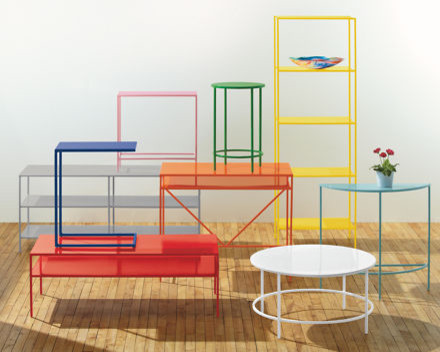
Why add color? So simple. Color can lift your spirits, soothe the beast, fire up the team, warm some hearts, and remind you of being a kid. And what a great way to start out the New Year.
Have a Colorful New Year Everybody!
What’s All the Buzz about Undertones?
December 28, 2012 § 5 Comments
Determining a beige color undertone (defined by color expert Maria Killam as “a colour applied under or seen through another colour”) can be tricky. Beige can have one of several undertones: pink, yellow, or green are the basics. If you have dining room furniture with a decidedly yellow/orange hue and walls with a pink undertone like Benjamin Moore’s Georgetown Pink Beige HC-56, then yikes, you have a problem. Off to the paint store.
Bottom Line: Mixing pink-beige with yellow-beige (or yellow/orange) is a big no-no. Fix: Choose a paint with a different (non-pink) undertone like Benjamin Moore’s Monroe Bisque HC-26 that has a yellow undertone and looks great with the golden oak.



If you avoid the mistake of mixing pink and yellow undertones, you’re on your way to understanding them. The other nuances of what undertones to mix and not to mix will come much easier. Note: Mixing pink and yellow vibrant hues is perfectly okay. It’s just the dreaded undertones that can trip you up. Beware.
Choosing a Wall Color: Light and Lighting Help
December 27, 2012 § Leave a comment
Have you ever entered somebody’s home in the summer with the hot afternoon sun streaming into their bright yellow living room and felt like you’re drowning in a container of lemon curd? Perhaps a bit too much sunshine! The message? Light matters.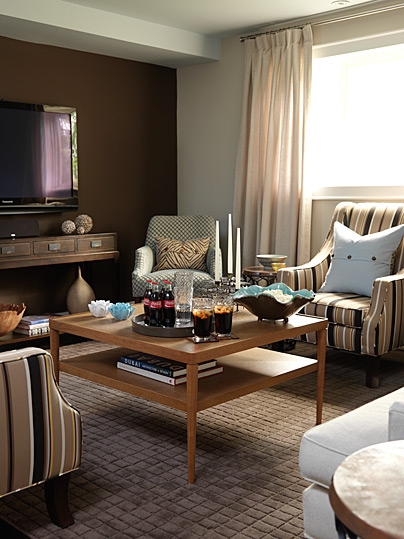
When you’re choosing a paint color for a room in your home, pay attention to which direction the light is coming from, how big the windows are, what the function or desired feel of the room is, and the shade or tone of the color you’ve selected. Here are some things to think about — not rules — just guidelines.
LIVING ROOMS
Function: Gathering, conversation, reading, and TV.
Direction of light coming in: Important as the living room is often the first room you see when you enter your home and where you receive guests, day and night.
Desired feel for the room: Warm and welcoming
Color choice: If your living room faces North, choose a paint color with a slight yellow undertone (as opposed to blue/gray) to add warmth to that North-facing room. If your living room faces South or West, you may want a cool color with the warmer hues reserved for pillows and accessories that can be moved in or out with the seasons. Easy solution? A medium-toned neutral (not necessarily beige) will allow you to bring in any furniture, window coverings and accessories without changing the wall color in the future. Another option: a rich hue on the focal wall (the one you see as soon as you enter the room — it may have a fireplace) and the other walls lighter and more neutral. Canadian designer Sarah Richardson loves this effect– that is one of her designs pictured above. Notice how the black TV disappears in front of the chocolate accent wall? Clever! (http://www.sarahrichardsondesign.com)
BEDROOMS
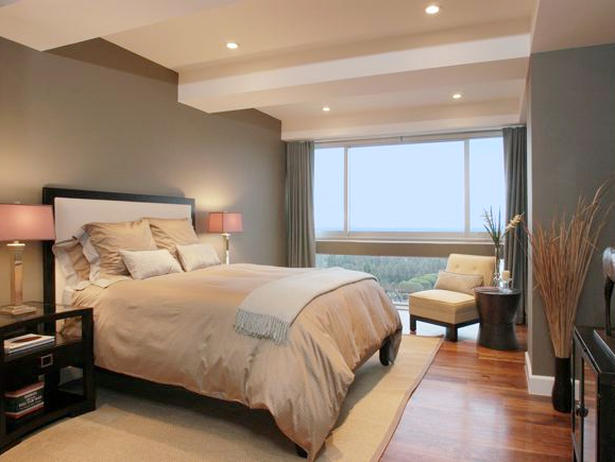 Function: Primarily sleeping. Exception: Kids’ rooms. Since kids often play in their rooms, you can ramp up the palette to please them (a topic for another post!).
Direction of light coming in: Not a huge factor since you’re in there primarily at night anyway.
Desired feel for the room: Spacious if the room has little square footage and relaxing for a good night’s sleep.
Color choice: You can go in one of several directions. For the spa feel, look at light grays, gray-beiges, and calm gray-blues/greens. For a cheerful awakening every day, include pops of color like orange, yellow or shell pink like in this bedroom by Nicole Sassaman Designs (http://www.nicolesassaman.com). Luxurious with cream bedding!
DINING ROOMS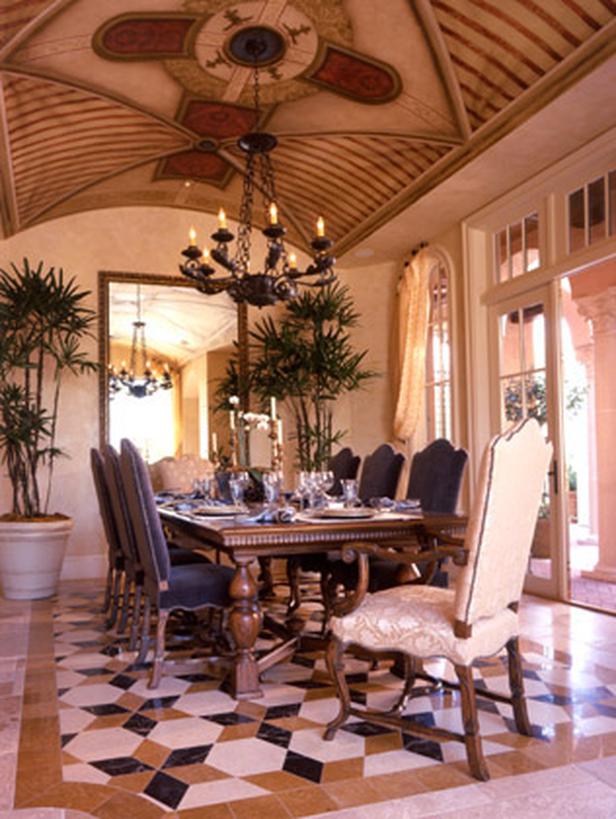
Function: Eating and conversation.
Direction of light coming in: Again, not a huge factor since you use the dining room primarily at night. (Exception: dining areas that are in an open-concept layout do have some light considerations.)
Desired feel for the room: Stimulating and dramatic.
Color choice: If you like deep, rich colors, this is your opportunity to use them for maximum effect. But you do not have to go dark with the wall color to be dramatic. Beautiful furniture, artwork, and lighting will make the room dramatic even if paler or more neutral colors are used. And don’t neglect the ceiling in the dining room. You may want something dramatic above the table — designer Troy Beasley’s handpainted canvas on the ceiling certainly gives a dramatic European flair to this dining room! (www.beasleyandhenley.com)
KITCHENS
Function: Cooking, eating, entertaining, and sometimes studying.
Direction of light coming in: Vital since you’re in the kitchen at all times of the day and night!
Desired feel for the room: Warm and welcoming.
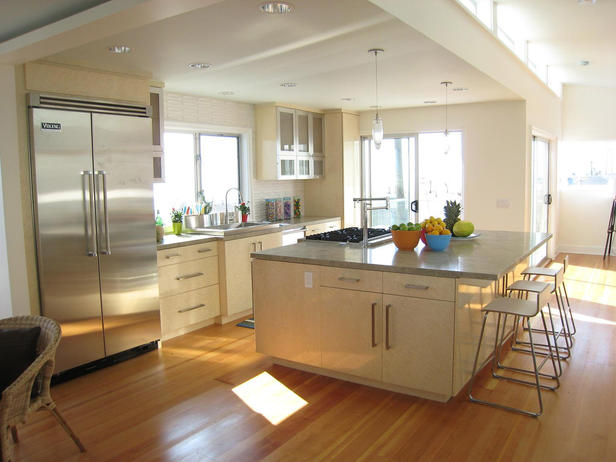 Color choice: Okay, now this is where it gets tricky. Start with your cabinets. Are they dark? What color is the counter top? You’ll want to introduce some contrast in the room either by choosing a lighter tone for the walls or bringing in a complementary color. Are your cabinets light? As long as there is some contrast somewhere in the kitchen, you can choose a light wall color for a light and airy feel to the kitchen like this one by designer Lori Dennis (www.loridennis.com). Lori uses the warmth of the wood floor and different tones of whites and warm grays to warm up this light, open kitchen and adds pops of color on the counters as well.
MEDIA ROOMS
If you have a separate area for watching movies on the big-screen TV, then go medium to dark with the walls and even the ceiling. The idea is to recreate that movie theater feel and eliminate glare at the same time. Gray, navy, eggplant, chocolate and rich red — all great wall colors for the “man cave” like this one by designer Phyllis Harbinger (http://www.dcistudio.com). 
Brick House Trim Colors
December 26, 2012 § 338 Comments

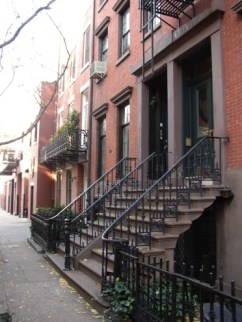
Creamy white trim with black shutters (and door) give brick houses like these on historic Nantucket Island in Massachusetts a classic traditional look that is timeless. But for a more contemporary look, use the brick itself for your trim color inspiration. Choose a color that you see in the brick or the grout– tan or taupe or another earthen color. If you select a color from the brick, it will blend with the brick and provide less contrast than the white. The overall effect will be soothing and contemporary but it will call less attention to the architectural details. The Boston building below is hardly contemporary, but the color scheme is taken from the brick and grout and is one example of using coordinating trim colors instead of contrasting trim.
Does Your House Welcome You Home?
December 18, 2012 § Leave a comment
Other than your golden retriever, what says “Welcome Home” better than an open, organized, well-lit, warmly decorated entryway. Isn’t it nice to swing open the door, hang up your keys, dock your cell phone, stash your purse, and find a free hanger for your coat? … That rarely happens, you say? Still tripping over sneakers and backpacks? Gotcha.
Well, how about a New Year’s Resolution to start with the entryway — whether you come in through the garage or the front door, it doesn’t matter. There are so many organizing ideas available now to help you customize an entry to fit your family and lifestyle. And although some require talent with power tools, there are many other options including stackable cubbies and DIY shelf systems that will tame the clutter.
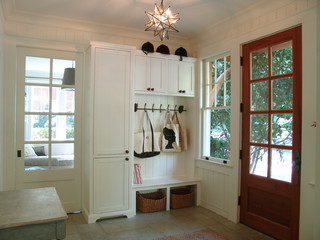
Light woods and white are wonderful in entryways that lack natural light. But if you have large windows, any favorite wall color will look great. Consider choosing an accent color from an adjoining room to give you the “flow” you’re looking for.
Before you tackle any other in-home projects this coming year, make sure your entryway welcomes you home.
Light Up Your Front Door
December 12, 2012 § Leave a comment
Why wait for the holidays to light up your front door? You spent enough time choosing the color — show it off all year with a boost in your exterior lighting.
Choose properly spaced recessed fixtures that will wash light down on the door color and other parts of the porch as in this photo (lighting by Illumination s, Inc.). Or add a large pendant over the door and sconces on either side. Make sure the lighting fixtures are big enough that they don’t look skimpy from the street. Bigger is usually better when it comes to lighting.
While you’re choosing your new light fixtures, take advantage of all the different metal color options you have now. Don’t settle for wrought iron if another color would update your house and make it look fabulous.
So when the holidays are over and you take down the hanging twinkle lights and box up the spot light from the front door, take a close look at what lighting is left. Maybe it’s time for an upgrade.
Let there be light!
Painting Your House Red
December 3, 2012 § Leave a comment

Choosing Paint Colors for House Trim and Doors
November 29, 2012 § 448 Comments

The front door is the focal point of your house and it can make a big splash. (Even though Great Britain’s former Prime Minister Tony Blair reportedly changed his 10 Downing Street door color from conservative black to Labour Party red as seen in this photo from the Daily Mail, evidently it was all an April Fool’s joke — see the full story at http://news.bbc.co.uk/1/hi/magazine/8677004.stm)
Doubtful that changing your own front door color will create as much of a stir in the neighborhood, but you’ll want to give it considerable thought anyway.
But first, what about the trim color?
House trim color: If you have a small house and you want it to look bigger, consider painting the edge trim the same color as the house or just a shade lighter. This will blend the corners of the house in with the body and draw your eye to color — hopefully, the front door. If you want to show off the trim in a more contemporary way, consider painting the edge trim two shades darker than the house color. To accent your trim in a traditional way, choose contrast by using either white or cream. If you have a stone house, the grout color is a great trim color.
The message here is to avoid too many different hues (different colors) when painting the house, trim, doors and shutters. Unless you have an architectural masterpiece, I would avoid choosing trim colors that are unrelated to the house color (for example, painting a gray house with navy blue trim, red shutters and red garage doors). Not only will you draw attention to all the different colors themselves and away from the front door (regardless of what color IT is), but you will have visual chaos!
Exception: If you have an old Victorian home, you may want to accent all the different architectural elements with paint in many different colors.
Trim around windows: To keep the windows looking as large as possible, paint the trim around the windows the same as the window frames, either white or cream or whatever color the window frames are. Matching the trim to the actual windows will make them look bigger than if you break up the color by painting a dark trim around a white window or a white trim around a dark window.
Garage door color: Unless you want to broadcast to your neighbors that you have a three-car garage, you probably don’t want to highlight your garage doors. Standard garage doors should usually be painted either the color of the house or a couple of shades darker to “anchor” them. Plus, by painting the garage doors the house color or a little darker, your house will look bigger and less chopped up. The focus is reserved for the front door. Note: yes, metal garage doors can be painted even if they’re white when installed. Just clean the doors very well and use a good primer.
Exceptions: Garage doors associated with brick homes are often painted either the trim color, the grout color, or the shutter color — black or dark green, for example. No need to try and match a paint color to the brick. The other exception is the new carriage-style garage doors, designed to be the focal point on the front of a home. If you have fancy garage doors, it’s okay to show them off! Even keeping them white or the trim color is okay.
Shutter color: For a traditional look, match your shutters to the roof color. If you have a dark gray or black roof, black shutters look terrific. It’s like adding a touch of black to a living room to dress it up a bit. Matching the shutters to the roof makes it look like you planned your roof color as part of the overall house palette. Dark brown shutters with a brown roof color give a similar, traditional look as black shutters with a gray/black roof. And brown is supposedly the new black. But for a classic home, black will never go out of style.
If you have lots of really small windows or don’t want dark shutters, consider choosing a color that blends with the house color. Here’s one strategy: choose your house color in the medium range. Then go lighter for the trim and a shade or two darker for the shutters (or remove the shutters altogether). And choose a completely different hue for the front door. This contemporary look focuses attention on the front door. There are no distracting colors anywhere else on the house.
Front door color: It’s time to create your focal point, the front door. This is the area you want guests to find when they pull in the driveway. Color is the way to do it although a shiny black door with a brass kickplate, brass door handle, and big colorful wreath is a classic. If you don’t want black, consider a rich dark red in a semi-gloss finish. Dark red (not cherry) seems to work with almost all house colors.
Here are a few other ideas:
- Light green house. Traditional: Dark purple door (especially nice if you have lilacs and other purple flowers in your landscape) and white door trim. For a modern look: Rusty red.
- Dark green house. Traditional: Rusty red door or natural wood and cream door trim. Modern: Turquoise.
- Light blue house. Traditional: Dark red door or navy blue door with white door trim. Modern: Dark olive green.
- Dark blue house. Traditional: Maroon door (play up the nautical look) with cream door trim. Modern: Lime green.
- Red house (or brick). Traditional: Black door with brass accents (classic) and white door trim. Modern: Grass green.
- Brick house. Traditional: Mahogany door with light grout color door trim. Modern: Dark purple.
- Pink house. In the North, a charcoal or black door. In the South, anything punchy. White door trim.
- Gray house. Traditional: Navy blue or red door with white door trim. Modern: Bright lemon yellow.
- Brown or tan house. Traditional: Dark green door with white door trim. Modern: Robin’s Egg Blue.
- Yellow house. Black door, black shutters, white door trim (a classic look). Modern: Dark red.
- White house. Traditional: Black, red or other dark rich color. Modern (or in warmer climates): Any bright, cheerful color that works with your landscape plantings. White trim everywhere.
One woman I read about paints her front door for every season. It might be cranberry red during the winter, purple in the spring, raspberry during the summer, and rust during the fall. Every year it’s different.
Don’t forget the roof: Consider the roof color when you’re making your house color choices and if you’re getting a new roof, choose something that coordinates with your house color. There are many choices in roof colors these days particularly in the brown family– many more choices than just slate gray or black. Don’t pass up the opportunity to finish the job with a well-coordinated roof.
 Your Home & Color Coach