Sporting a Patriotic Color Scheme
November 7, 2011 § Leave a comment
 With all due respect to my international bloggers, this house sings America the Beautiful to me every time I drive by. This time, I stopped to capture its beauty and share it with you.
What makes this red, white, and blue color scheme work so perfectly is the balance of color between the candy-apple-red siding and the creamy white trim. Notice on the flag hanging on the door that, for the most part, neither the red nor the white stripes dominate. Both colors balance each other. That same effect is evident on this house — the exceptionally wide trim painted a soft cream keeps the red from overpowering the house. Just like the flag, the house is balanced.
Navy blue accents the doors — just like the small block of navy blue in the upper lefthand corner of the flag provides a contrasting backdrop to the white stars.
If you have an old farmhouse or an outbuilding on your property that you would love to feature, consider painting it red with creamy white trim and navy blue doors. Hang the flag out front. You’ll attract attention but go ahead. Be proud!
Bold, Beautiful and Blue Roof
October 1, 2011 § Leave a comment
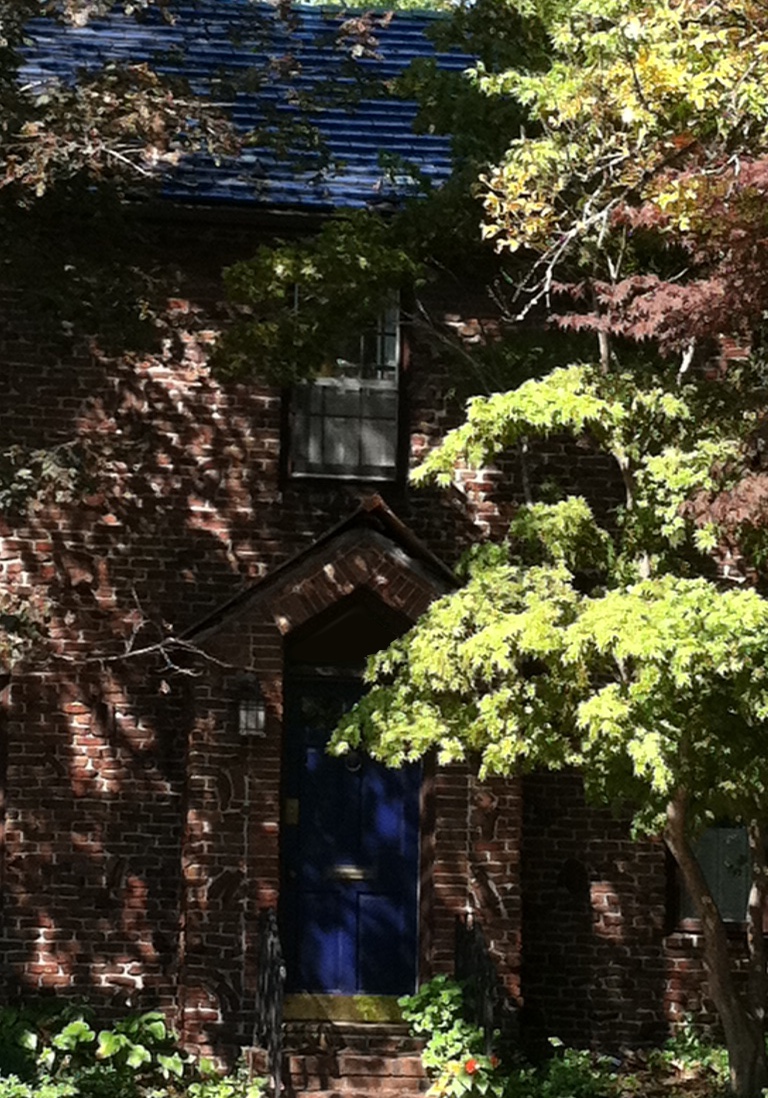 Some houses whisper. Some houses shout. This house sings opera! What makes this house so melodic is perfectly obvious to everybody who drives by. It has the most incredible roof and door color: a rich sapphire blue like you’ve never seen before except maybe in the Mediterranean. We’re certainly not accustomed to seeing that color on a traditional burgundy brick colonial, usually relegated to browns and charcoals (not that there’s anything wrong with browns and charcoals — I love them too).
This house tosses conventional color schemes out the window yet manages to look both whimsical and classy at the same time. It peeks out from behind big shade trees making it even more alluring to passersby. Like a secret garden around the corner, the act of discovery is part of the thrill.
The door color alone would be quite a find, but the fact that the roof is the same rich blue makes this house an opera star I want to discover again and again. Big applause!!
Choosing Dark Trim for your House
October 1, 2011 § Leave a comment
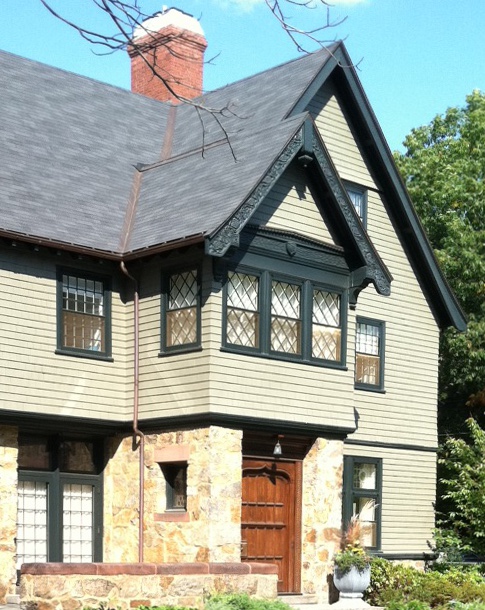 Contrast creates dramatic curb appeal. And on a house like this one with architectural features galore, dark trim accents all of them, from the gable trim, custom windows, and sculpted roofline to the stonework and doors.
Dark trim takes a really large, light-colored house and brings the scale down to normal by outlining the windows and doors and making them appear smaller. It’s what we call the “eyeliner effect.” It works great on large houses with big windows; however, small windows may look even smaller framed out in black.
No matter. If you are tired of white trim, consider a darker color. If you want maximum contrast, choose a really dark shade. If you want to minimize the contrast between house color and trim to avoid making your house look smaller, then choose a trim color whose “value” is no more than two shades darker than your house color on the paint strip. That will help the colors to blend thereby making the house appear less chopped up and visually bigger.
Do You Love Citrus? Adding happy color to your home
August 11, 2011 § Leave a comment
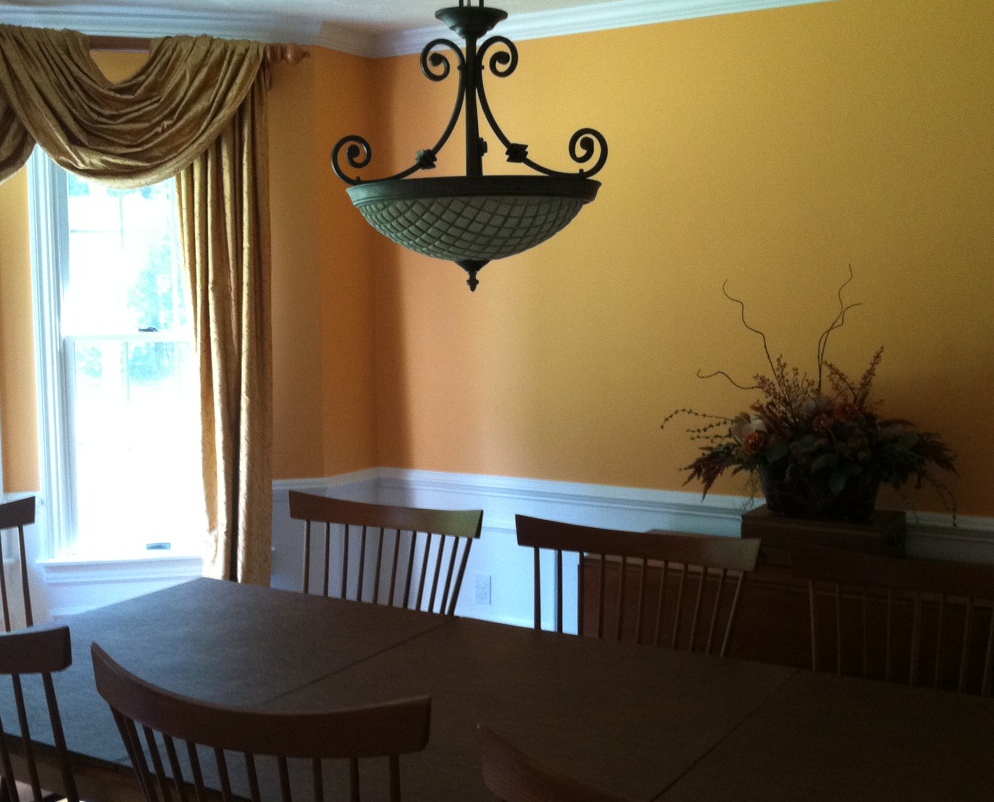 I just wrote a piece for Joelle Spear’s “Life in Metrowest” blog about how to add warm, bright colors to your home. Thought you might like to check it out.
http://homesmetrowestma.com/2011/bring-warm-colors-home-written-by-guest-blogger-barbara-meglis
Grabbing Attention at the Front Door: How to Pick a Door Color
July 25, 2011 § 12 Comments
 Red, yellow, and blue are primary colors that attract attention. Used alone or in combination, they will definitely grab your eye. So it’s no great surprise that this house with its pale yellow siding, royal blue door, and red foundation plantings made me slam on the brakes for a quick photo.
The first color you notice is the royal blue. That shade is what many would consider to be the definition of “blue” and with the white trim around the door, it pops. And that is precisely what a front door should do. There should be no mistaking the front door for the service entrance (I just love saying that… you know what I mean … usually the door into the garage).
The front door does not have to be a primary color, for sure, but it should stand out significantly enough from the rest of the house to be a welcoming entrance, and there should be a clearly defined path leading up to it. Front doors that, despite their color, are obscured from view behind a large bush just do not function well. I’ve been to some houses that were so confusing that I ended up walking around the house into the back yard looking for the way in… (this happens primarily when there is no sidewalk or stone pathway to follow — the subject of another post).
If you have two doors on the front of your house, be sure to let people know which door is preferable. Plantings, lights, and a visible doorbell or knocker will guide your guests to the preferred entrance and prevent your greeting partygoers in the mudroom. I suggest painting your main entry door the accent color and the other “service” doors the siding color. Then your guests will not be forced to choose between red doors, numbers 1, 2, or 3.
These are little points in the grand scheme of curb appeal, but I just thought I’d mention them anyway.
Crown Molding: A Crowning Achievement or a Hot Mess
July 15, 2011 § Leave a comment
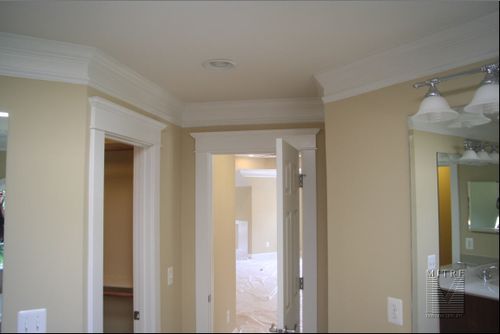 If lighting is the jewelry in the room, the crown molding is like a proper hem — no stitches showing. Crown molding covers the seam between wall and ceiling and adds weight and architecture to the room. And by drawing the eye upward, crown molding can create the framework for painting the ceiling something other than white. But done improperly, crown molding will lead to painting miscues and a hot mess.
I ran into just such a situation today on a high-end new construction job. The carpenter had “built up” the molding by using a couple of inches of wall between the crown at the top along the ceiling and another cheaper piece of finish molding along the bottom edge (photo shows how it’s supposed to look). The idea was to make the finished unit (crown + wall + smaller molding — all painted trim color) look like a giant (read: expensive!) piece of crown molding. What happened was that the carpenter did not finish the edges at the doorway leaving wall space exposed. The painter then came along and, not having a finished piece of molding to serve as the starting point, he (or she) drew a LINE on the wall with a pencil and started painting wall color on the other side of it. Oh…my…gosh… and this was high-end construction??
So two warnings:
If you are using crown molding, make sure you get an experienced carpenter who has the sense to finish edges. If you’re putting it up yourself, do your research first and know how you’re going to go around corners and finish edges properly.
If you are painting a wall, you must have a piece of architectural molding or the wall edge in order to move from one color to another. Never draw a vertical line on the wall to separate two colors unless you’re painting stripes. That’s it!
Phew! ‘Nuf said…
The “Accent Wall” is Back!
July 7, 2011 § 2 Comments
 Maybe it never really went away for some people, but for others the thought of an “accent wall” just screams ’80s. But you know, honestly, they’re not a bad idea… in some cases. Accent walls (I should dream up another name!) can take a large room and create a cozy nook, or a di
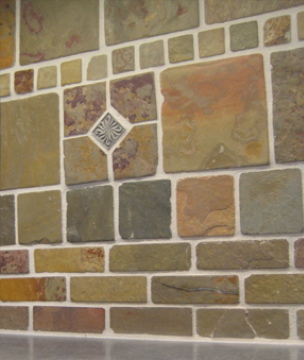 ning area. Like this kitchen. The walls were a gray blue, and half of the large space was dominated by white cabinets and a slate tile backsplash. So we pulled some of the orange out of the tile and created an “area of interest” on the other end of the room. The color is Tucson Red (1300).
Using an accent color on one wall is also a great way to warm up a loft or other modern, non-descript space that needs instant architecture. We call it “color blocking” — yes another term from the high-fashion ’80s (I’m dating myself) — but it’s a terrific way to take a neutral, often white, space and add large pops of color. Instant focal point!
When an accent wall doesn’t work is when the room is too small or too square. Painting one wall a different color might just chop up the room too much. But if you have a long narrow room, painting the far wall a warm color will bring it forward visually and make the room feel less like a bowling alley and more like a well-designed, pulled-together space created by you.
Can I Paint My 1960s Ranch?
June 21, 2011 § 3 Comments
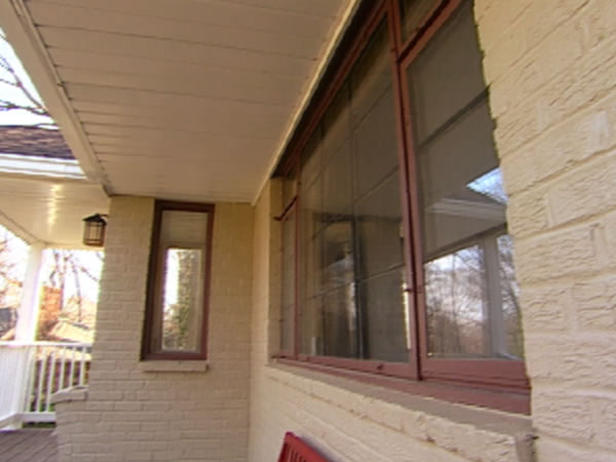 The answer is yes! With the growing popularity of the spray-painting technique for painting houses (not just lawn furniture anymore), it is becoming easier to paint over rough, textured surfaces like brick and get a good result in a reasonable amount of time.
Check out HGTV.com for some great before-and-after brick house projects. In one show, “Curb Appeal: The Block,” the designer John Gidding takes a paint sprayer to an old ’60s ranch and brings it into the new millenium.
Check with your paint store first, of course. And you might want to hire a professional painter to avoid over-spraying into your neighbor’s driveway (not a good thing…). But if you have a brick house with a) zig-zag-patterned brick; b) really obnoxious brick colors; or c) just tired, run-down plain old red brick, then get inspired! Paint will give your house a fresh new look!
What Color Is It? Really…
February 26, 2011 § 2 Comments
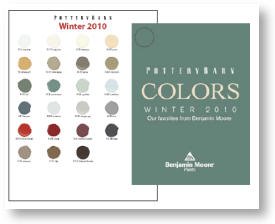
You’d like a Pottery Barn-approved Benjamin Moore color from the Pottery Barn fandeck to update your color scheme. So you pick a nice rich color like Bittersweet Chocolate 2114-10 for the entry hall — with a name like that it’s got to be a rich chocolate brown, right? Well not so fast.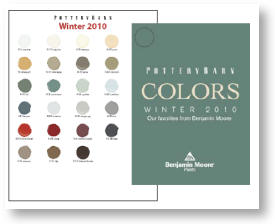
After painting a couple of coats on the wall, you notice that it looks like a dark eggplant purple when the sun shines on it. Hmmm… what is going on here? So you head back to Ben Moore to take a look at their fandeck that has ALL the paint colors and their related shades and tones. And voila! The lighter tones of Bittersweet Chocolate are decidedly purple with names like Hint of Violet 2114-60 and Victorian Mauve 2114-50. And that explains why the color Bittersweet Chocolate is not what we might think of as dark chocolate brown.
When you pick a color from a paint chart that does not contain the shades and tones for that particular hue, the best way to find out what color you’ve REALLY chosen is to:
1) Find the color on the big fandeck and check up and down the strip of shades and tones. You’ll see what that underlying hue is.
2) Also check the color next to a bright white piece of paper. The true hue should pop out even better.
Colors also change with the light. So there’s nothing quite like painting a sample board and sticking it to the wall in the area you want to paint. Check the color at night as well as on a cloudy day. Once you’re satisfied that you like the color all the time, then go ahead and paint away!
Adding Smart Color to Any Room
February 9, 2011 § Leave a comment
Spring is coming and are we ready! It’s time to add color to our homes. But before you drag all your furniture to the middle of the floor, take down all the artwork, and dash off to the paint store for a can of Chivalry Copper SW6353 or Chartreuse SW0073, stop! Think about how you want to add color to your room, especially if it’s a trendy new color hot off the pages of STIR Magazine (www.swstir.com).
If you are the type of person who loves to dive into a color trend head first and is not daunted by the idea of switching it all out when the next trend rolls in, then you are all set. But if you are the type of person who desperately wants to update your room but you are not planning to update again for many years, then I’m really talking to you.
Adding smart color to your room means painting the walls and installing tile and other architectural materials in a color that will stand the test of time and hold up to upcoming color trends without making your house look dated. Remember Harvest Gold? Avocado Green? How many of us are stuck in houses where the owners put a color trend into a fixture that would need to stay there for 20 years??
Here’s a way to stay current or get trendy in a smart way. Put the color in the items and materials that can be changed easily later. In this bedroom featured on the BHG site in a piece by Debra Wittrup (www.bhg.com/decorating/color/schemes/cozy-color-schemes-for-every-room), the designer painted the walls a warm taupe– flexible and adaptable to almost any color scheme. Then the wonderful melon color was added in the window panels, the lampshade, the pillows, bed linens, and accessories. If the home owner gets tired of melon, out it goes to be replaced by another fun color scheme with relative ease.
Now, granted paint is cheap and relatively easy to switch out, but trendy paint colors can also be applied to small pieces of furniture, like a wooden table or chair, instead of the four walls of your room. Accent walls are another way to add smart color to any room without the hassle and expense of a complete overhaul.
Enjoy color! Be smart about it!
 Your Home & Color Coach