The TV: Love It or Lose It?
March 21, 2016 § Leave a comment
We all have them. TVs. They range in size from small in the kitchen to medium in the bedroom to large/X-large in the living or family room. It’s the piece of furniture we cannot live without, but it’s the piece of furniture that can totally dominate the room. What to do?
Hide it. This shuttered cabinet completely engulfs the black box so it exits the visual space when not in use. This idea is perfect for a formal living room that happens to house the media components. It’s an open and shut case. (Available through http://www.ballardesigns.com)
Frame it. Literally. Put a picture frame around the TV screen. (Available through http://www.wayfair.com, but I can imagine this as a DIY project, can’t you?) The idea is that when guests come over, you simply turn on the TV and run a slide show or pause the TV on a pleasing pastoral scene. Black box problem solved.
Make it go away. This cabinet, though not inexpensive, lowers the TV down into an enclosed piece of furniture at the end of the bed or across a crowded room. Nobody will ever know there’s a TV hiding beneath the cabinet surface. Brilliant, but the TV size is limited by the size of the cabinet. (Available through http://www.touchstonehomeproducts.com)
Embrace it. If watching the Super Bowl on an 80″ TV is non-negotiable, then you simply must embrace the huge black box at the end of the room. But never fear. To camouflage it and keep the room from leaning too far visually in that direction, balance the black by adding more of it in the room. For example, opposite the TV, add a black shelving unit (available through http://www.ikea.com). The tall black unit will balance the huge black TV and actually make everything else in the room (the items that are NOT black) stand out. It’s like hiding the TV in plain sight. How cool is that!
It goes without saying that we rely on our TVs for entertainment: news, sports, movies, binge-watching, kid shows, soap operas, game shows, and concerts. Although some people have chosen a TV-free path, most of us haven’t. And TVs are getting bigger, not smaller. I hope these ideas have given your design muscles a much-needed energy boost. Now go deal with that TV!
Pick Paint Colors Last — yes, Last
January 15, 2014 § Leave a comment
 So often I am called to a freshly painted room and asked to help the homeowners find a rug and window treatments to go with the new wall color. As much as I appreciate the homeowners’ enthusiasm for tackling the paint project first, it makes finishing the room much harder to start with the paint.
If you’re planning a room re-do and anticipate purchasing new furniture, window treatments, and a rug, here’s the most efficient order of purchases:
- Pick the biggest-ticket item first, perhaps the new upholstered or leather sectional sofa.
- Then pick the other furniture, like upholstered chairs and a leather ottoman.
- Then pick the rug. There are fewer options at that point, but the rug will introduce additional colors into the palette and you can bring those other colors into the room with art and accessories.
- Then if you want fabric window treatments, pick the fabric next that will complement the other elements.
- After ALL those decisions are made, THEN it’s time to pick the wall color.
There is a multitude of paint colors, shades, and tones from which to choose, but the paint decision will actually present itself more clearly once all the other major decisions are made. And the paint color will then pull the whole room together.
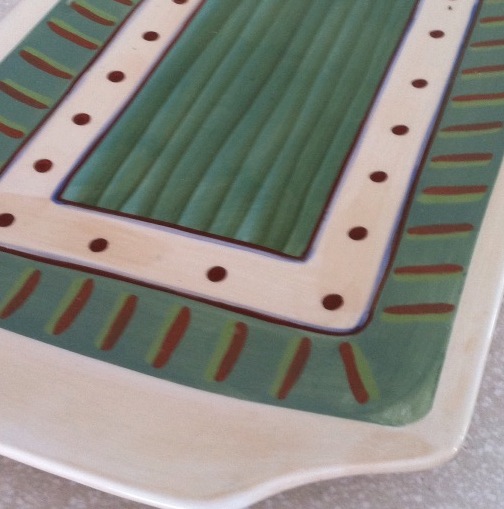
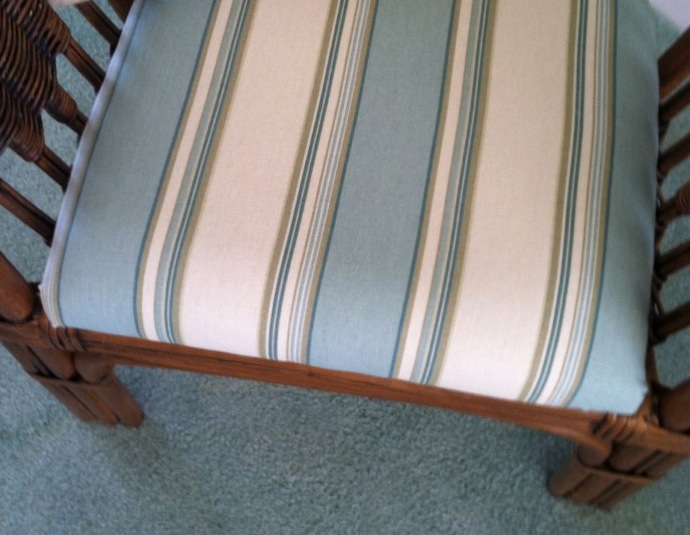 If your furniture and rugs a
 re neutral, you can find your color inspiration from almost anywhere, including in this case, a hand-painted platter. From that inspiration piece, we pulled in a striped fabric to cover some rattan chairs, and pulled the soft, gray-green paint color out at the end to complement the blues.
Furniture Arrangement Challenges May Call for Different Furniture
January 16, 2013 § Leave a comment
When it comes to furniture placement, some rooms just will not cooperate. With bay windows, bow windows, niches, dormers, and other odd architectural challenges, where on earth do you put your sofa? One solution is to forget the sofa altogether and replace it with a circular arrangement of very comfortable chairs, either all matching for a formal look or all mismatched for a casual eclectic look.
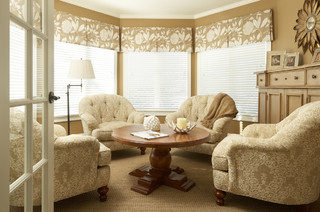
Either way, the arrangement gives you an instant, inviting seating area where you can sit down with others and have a cup of coffee or read the paper. In this photo, the designers put a round coffee table for holding popcorn, drinks, books, and just about anything else. But as you know, I’m a big fan of the big overstuffed ottoman– what I consider to be the perfect piece of versatile furniture– so that would be my choice for the center.
If you simply cannot figure out where to place your living room sofa, consider moving it to the family room or wherever the TV is. Replace the sofa/loveseat/chair concept with four comfy upholstered chairs. You’ll love the change.
Have a Colorful New Year!
December 31, 2012 § Leave a comment
Here’s one New Year’s resolution I just know you can keep. Add one piece of color to your life. Whether it’s a fresh orange pillow on the sofa, a bright red tape dispenser for your desk, a sunny yellow spatula for beside the stove, or one of these fun pops of colorful furniture.
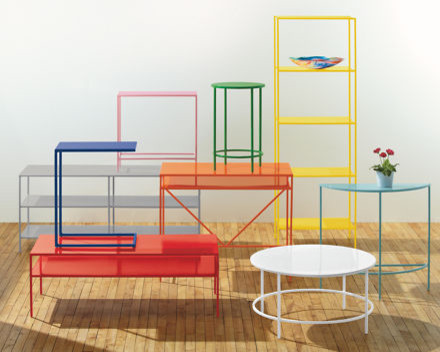
Why add color? So simple. Color can lift your spirits, soothe the beast, fire up the team, warm some hearts, and remind you of being a kid. And what a great way to start out the New Year.
Have a Colorful New Year Everybody!
Hop the Trend: Consignment Stores
December 29, 2012 § Leave a comment
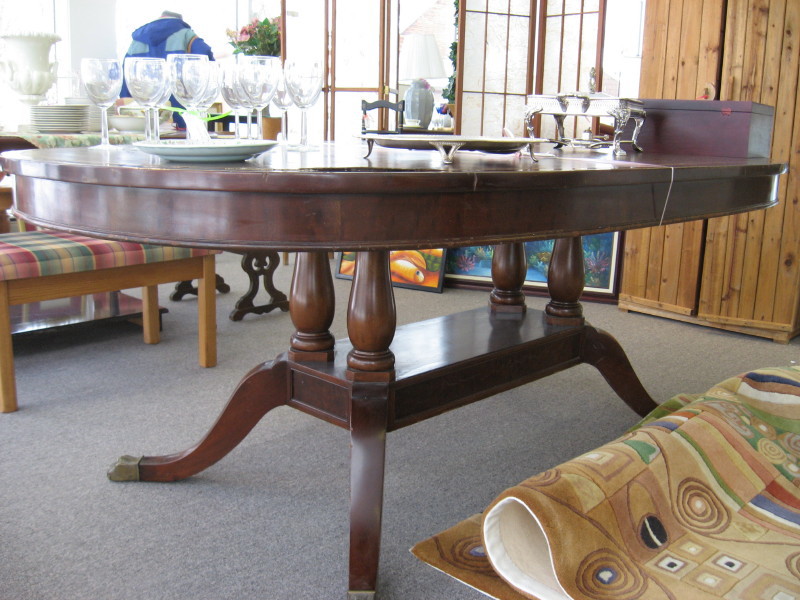
Okay, I admit it. I am a consignment store junkie. And with good reason. Not only is it “green” to furnish your home with items that have been around awhile, it’s amazing what you can find for a fraction of the retail price for a new item. And the consignment bug has started to spread to my clients. During one project, we were looking for a settee of a specific length to fit in a tight spot. Tricky to find new anyway unless we went custom. My client decided to check out the local consignment store, and he found the perfect piece. Even the legs and wood color were perfect. Call it luck or call it karma.

The Cannery Exchange in Newport Beach, CA. (photo credit: Jody Tiongco)
I am convinced that these vintage pieces have a soul — they certainly have a history visible by the lovely worn patina on the arms or the scratches on the tabletop. But every scratch has a story attached to it, and that story comes with the piece to its new home.
You can always paint and recover a chair, for example, if you want a painted furniture look. Again, you’re probably starting with a chair that’s far better constructed than what you can find now so you’re already ahead. It’s like finding a piece of gently worn designer clothing or better yet a piece with the tags still hanging on it. Bonus!
Give your home some character by adding a piece or two of consignment furniture. But beware. You might catch the consignment bug too.
What’s All the Buzz about Undertones?
December 28, 2012 § 5 Comments
Determining a beige color undertone (defined by color expert Maria Killam as “a colour applied under or seen through another colour”) can be tricky. Beige can have one of several undertones: pink, yellow, or green are the basics. If you have dining room furniture with a decidedly yellow/orange hue and walls with a pink undertone like Benjamin Moore’s Georgetown Pink Beige HC-56, then yikes, you have a problem. Off to the paint store.
Bottom Line: Mixing pink-beige with yellow-beige (or yellow/orange) is a big no-no. Fix: Choose a paint with a different (non-pink) undertone like Benjamin Moore’s Monroe Bisque HC-26 that has a yellow undertone and looks great with the golden oak.



If you avoid the mistake of mixing pink and yellow undertones, you’re on your way to understanding them. The other nuances of what undertones to mix and not to mix will come much easier. Note: Mixing pink and yellow vibrant hues is perfectly okay. It’s just the dreaded undertones that can trip you up. Beware.
Neutral but Never Boring
December 10, 2012 § 2 Comments
Does your home scream 1972 when you enter the front door? Are you stuck with metallic wallpaper on the ceiling in the guest bath, orange shag carpet in the basement, or an avocado bathtub? Then maybe it’s time to update. But this time, instead of hopping on the latest hot new trend (I could name a few here, but I’ll resist), how about giving your home a classic re-do. Something that will stand the test of time, or at least a decade or two, without branding your home with a particular year. For that kind of longevity, we turn to a neutral palette, but neutral does not have to mean beige and it’s hardly ever boring.
-The key to a neutral palette is texture. You could have an all-white living room but if that white includes fuzzy white pillows, a shiny white marble table top, and some warm white chenille upholstery, then the room will have plenty of interest.
-Neutral does not have to mean just one color either. In this room, the walls are a latte color, the sofa is dark brown leather, and there is plenty of color in the books and objects on the white bookshelves. What makes this room work so well is that the stonework on the fireplace is a feature and because the other furnishings do not stomp all over the subtle colors in the stones, the room’s palette includes peaches and golds and grays and tans and taupes — more than enough colors.
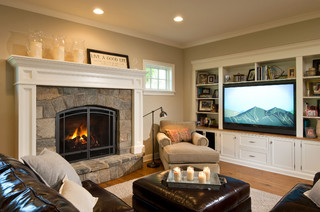
-Neutral allows you to bring in color in the art, pillows, and other more temporary furnishings and accessories without clashing with a strong wall color and a brightly colored sofa.
-Neutral allows you to change your accessories with the seasons and the holidays without overpowering the existing color palette or the holiday decorations.
-And when you’re selling your house, neutral allows potential buyers to see themselves in your home and that is critical for a successful sale.
So as you choose tile and furnishings and paint for your newly updated space, consider neutral because neutral does not have to be boring.
Outdoor Furniture — On a Quest for the Perfect Adirondack Chair
June 4, 2012 § 9 Comments
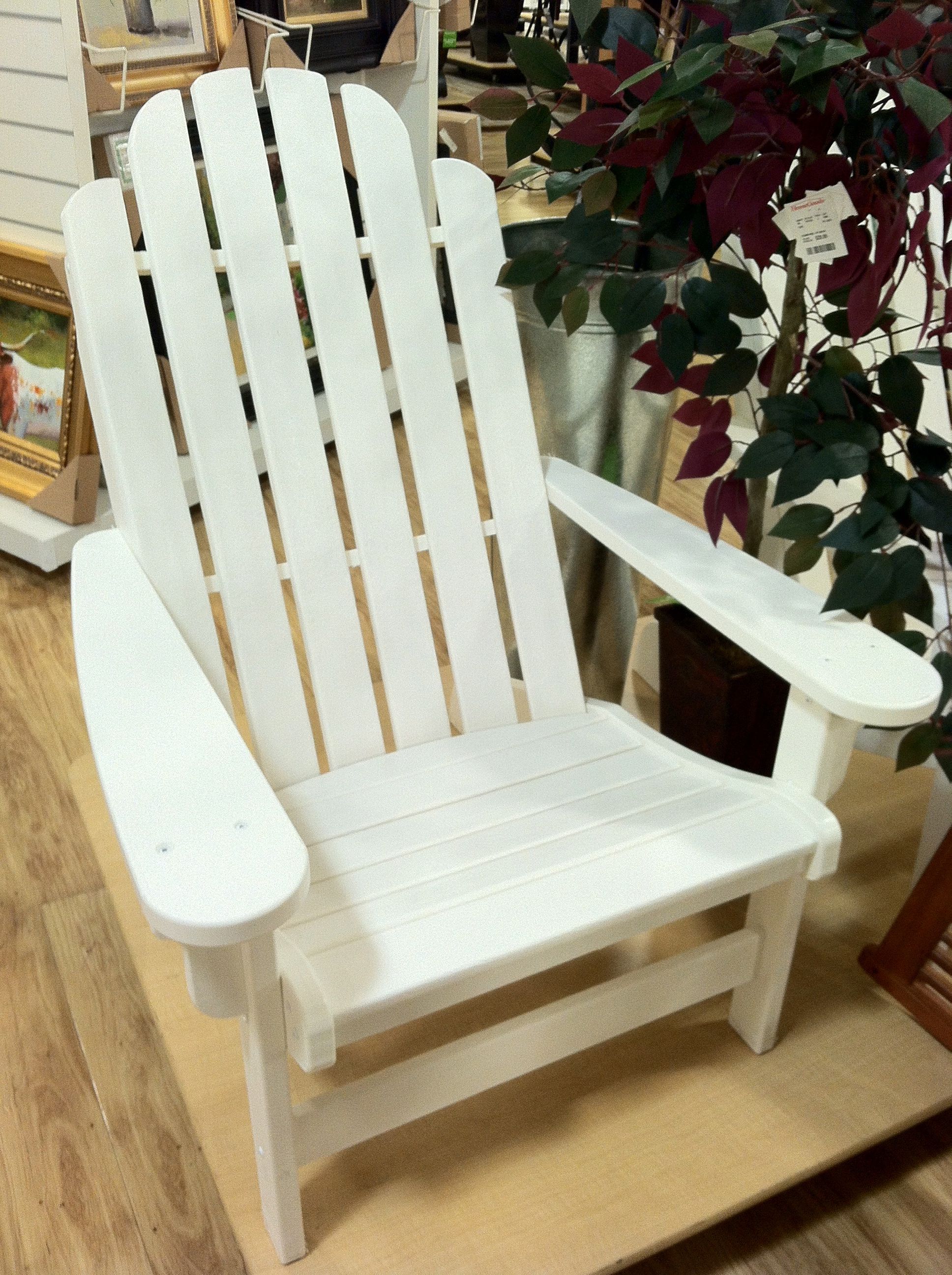 With renters arriving in a couple of weeks, I am on a hunt for Adirondack chairs that will replace the rickety old painted wooden ones we have currently at the cottage. There is such a difference in quality and price — I can’t seem to figure out what’s best.
The traditional wooden ones seem to last only a few years. Even reviewers at LLBean are sending theirs back for replacement chairs. After surveying the other offerings online, I went looking for Amish craftsmanship hoping to find something to last a decade or two. What did I find there? Plastic.
This white “poly” chair is made out of plastic bottles and it is guaranteed to last many years (the Amish guarantee is 50!), but I can’t seem to bond with a plastic facsimile of the hand-crafted old originals. Although the “poly” is not supposed to fade, I’ve heard that some colors do. White works for me so that’s not a big issue.
The price is extraordinary — twice or three times that of a wooden Adirondack chair. So that’s another sticking point. Is a plastic chair really worth almost (and in some cases over) $300?
If you have any experience with these Polywood chairs and would like to share that with me, feel free to comment. I’m kind of a purist when it comes to chairs, but they are comfortable. (My husband claims he can tell plastic from the road…). What to do…
Reviving Old Furniture with Wall Color
May 13, 2008 § 16 Comments
 Do you have a sofa from the 80s that looked great back then but kind of looks sad at the moment? Of course, you can slipcover it, but how about punching up the color behind it. We took a living room with blah beige striped wallpaper and pastel patterned upholstery (in good condition) and brought it to life with a soft blue-green paint color (Benjamin Moore’s stratton blue HC-142) and some new pillows. What a difference. All of a sudden the sofas looked intentional and the room came alive.
The trick here is to pick a wall color that is rich but subdued. You need a greyed down shade for this effect to work. Otherwise, a bright wall color might just make your furniture look even older. But a nice tasteful splash of wall color will give your furniture a few more years of life. And in this age of recycling, re-purposing, and reusing old stuff, it’s all about making what you have work.
Before you drag your old furniture off to the consignment store, try painting your room.
Green Decorating: Shop your local consignment stores
March 17, 2008 § 10 Comments
 Okay, I admit it. I have the consignment bug. I find it incredibly exciting to hunt for and find an item that is not only reasonably priced but also has a history to it.
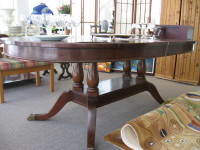
I recently purchased an oval mahogany solid-topped dining table that was, admittedly, a little beaten up on the surface, but the base was unbelievable. Personally, I find the scratches and gouges rather charming, much like the wrinkles on a wise old woman. But I may decide to apply a little loving elbow grease (or a simple table cloth). Regardless, I now have a gem. It took two burly men to haul this solid piece of craftsmanship up the deck stairs and into the dining room. And it’s not going anywhere.
The best part is that there’s a wonderful karma that comes from knowing that perhaps another loving family sat around this fabulous table before ours. It’s not a perfect specimen; it’s been around here for a couple of generations, at least. And I find that history a wonderful addition to our family. Not only that, but by purchasing something that is already here, we are not only saving thousands of dollars but we are decreasing that carbon footprint that everyone is talking about. Purchasing antiques and other gently used furniture and accessories is considered “green.”
 Your Home & Color Coach