
Color Your Windows
November 4, 2011 § Leave a comment
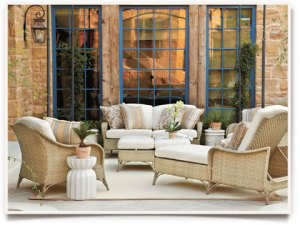 Although it’s a commitment, there’s a growing trend in windows to replace white with color — like these beautiful blue mullioned picture windows shown as a backdrop to outdoor furniture from the Ballard Designs catalogue (www.ballarddesigns.com). Red is another great window accent color as is the ever-present forest green.
When choosing a window color, decide whether you want your windows to stand out (white windows already do) or blend into the siding color. Choosing a color that is not in your house palette already except for maybe the front door will pop your windows right off the front of the house. Picking a window color that is already in the palette of your house (taupe, for example, to match stonework) will blend the windows. Particularly nice if you have a lot of little tiny windows and prefer a less busy look for the house.
As with all color selection, contrast or the lack of it will determine the end result. But don’t pick white just to be safe. Think color!
Freshen Your House Color: Paint Your Trim
October 21, 2011 § Leave a comment
 Amazing what just a little paint can do to freshen up a house. Just changing the trim color from siding color (beige) to white brought this house from drab to defined. Suddenly the architectural details emerged: the substantial window trim, the fascia and soffit, and the detail around the front door. A simple fix really but effective.
Houses need contrast. When choosing a trim color, select either a 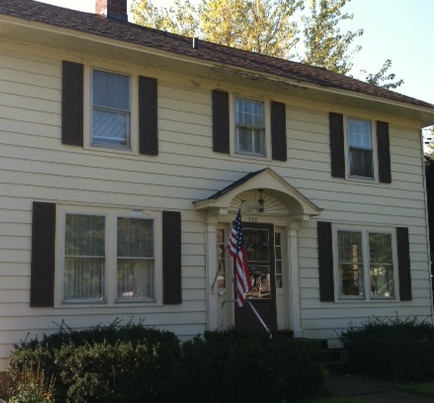 different color from your siding or a different shade of the siding color. Not only will the house be more updated and interesting to look at, but also the house will look as if the entire house was repainted, not just the trim.
Choosing a House Paint Color: Look at your roof first
October 21, 2011 § Leave a comment
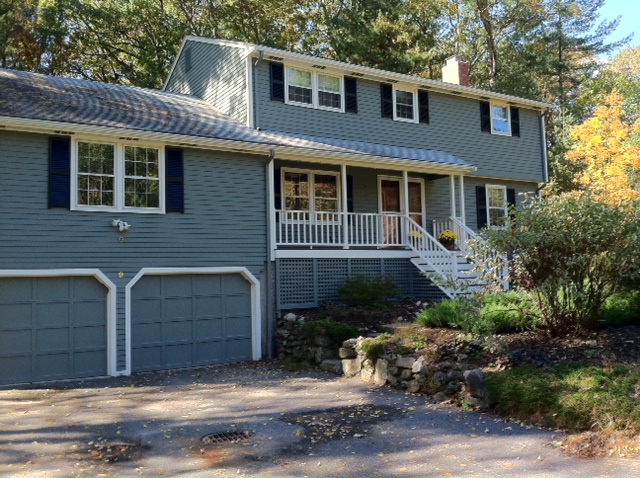 The dark blue and white color scheme on this house (below right) created a contrast that brought out the less-than-attractive features: the stained roof (not being replaced), the dirty garage doors, and the foundation latticework originally designed to camouflage, not stand out.
With the roof in mind, we chose a color that would blend instead of highlight. Although the homeowners would have preferred any number of brighter, lighter colors, the green-gray of Benjamin Moore’s Duxbury Gray HC-163 accomplished the task of incorporating the roof and the other features into a unified whole. We kept the slightly off-white trim the same as well as the shutters. But the finished look is very different. The house now appears bigger and cleaner. And the white trim highlights the windows, doors, and porch. And that’s it. The homeowners can now add colorful landscaping, pots of flowers, and other seasonal decorations.
What I tell homeowners is when you are selecting a color for your house, you really have to determine what the house wants to be. It sounds strange, but you need to look at the entire house: the roof color, the foundation color, the garden, the stonework, and yes, even the neighbors’ homes. If you simply paint the house your favorite color, you will end up with a complete disaster and an expensive mistake to fix.
Choosing a New Roof Color
October 4, 2011 § 4 Comments
 Sometimes a house looks a little too hot for the neighborhood. And for this orange brick house in a neighborhood of other orange brick houses, the matching orange roof took the house over the top (literally!).
The cool grays and whites in the trimwork could not balance the warmth of this overall orange color scheme. To give the eye a cool compress, we chose a gray roof that picks up the many gray tones in the brick trim around the windows and doors and contrasts nicely with the orange brick. The roof is Georgetown Gray by Certainteed. Now the palette of warm and cool colors distributed evenly makes the house look balanced and pulled together.
If you are choosing a new roof, remember that the roof color is as much 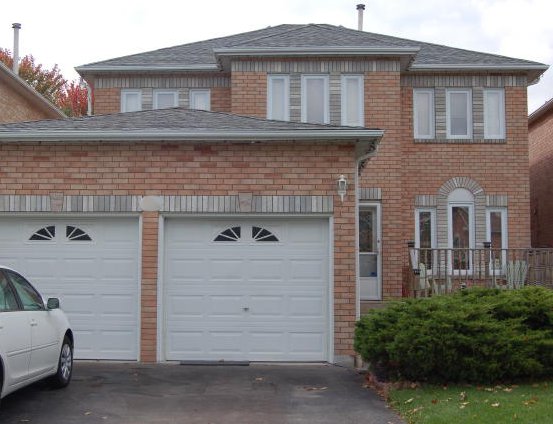 a part of your home’s color scheme as the siding and trim colors. Even more so because you will not be changing the roof anytime soon. It is okay to choose a roof color from the same hue family as the siding color (a brown roof with a tan house, for example). But remember to create contrast somewhere, either with the trim color or the pop of color on the front door. If you have a brick house, choose a neutral color that is in your brick or choose a dark neutral that will allow your brick to take center stage. When in doubt, seek the help of a professional in your area or write to me. I’ll help you. A second set of eyes is critical before you make that big investment.
Driving up to your house should make you say, “Ahhhh, good to be home.”
Bold, Beautiful and Blue Roof
October 1, 2011 § Leave a comment
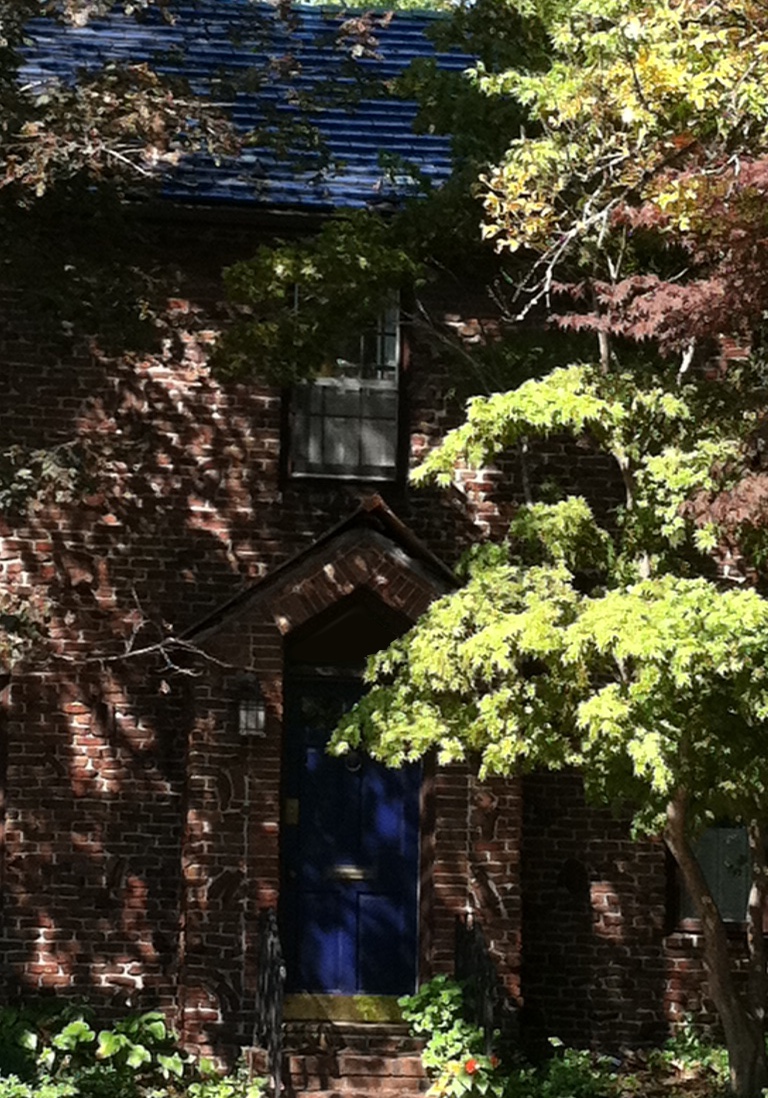 Some houses whisper. Some houses shout. This house sings opera! What makes this house so melodic is perfectly obvious to everybody who drives by. It has the most incredible roof and door color: a rich sapphire blue like you’ve never seen before except maybe in the Mediterranean. We’re certainly not accustomed to seeing that color on a traditional burgundy brick colonial, usually relegated to browns and charcoals (not that there’s anything wrong with browns and charcoals — I love them too).
This house tosses conventional color schemes out the window yet manages to look both whimsical and classy at the same time. It peeks out from behind big shade trees making it even more alluring to passersby. Like a secret garden around the corner, the act of discovery is part of the thrill.
The door color alone would be quite a find, but the fact that the roof is the same rich blue makes this house an opera star I want to discover again and again. Big applause!!
Choosing Dark Trim for your House
October 1, 2011 § Leave a comment
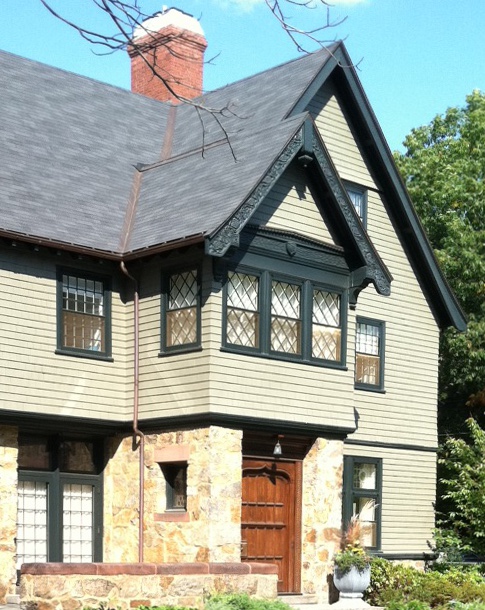 Contrast creates dramatic curb appeal. And on a house like this one with architectural features galore, dark trim accents all of them, from the gable trim, custom windows, and sculpted roofline to the stonework and doors.
Dark trim takes a really large, light-colored house and brings the scale down to normal by outlining the windows and doors and making them appear smaller. It’s what we call the “eyeliner effect.” It works great on large houses with big windows; however, small windows may look even smaller framed out in black.
No matter. If you are tired of white trim, consider a darker color. If you want maximum contrast, choose a really dark shade. If you want to minimize the contrast between house color and trim to avoid making your house look smaller, then choose a trim color whose “value” is no more than two shades darker than your house color on the paint strip. That will help the colors to blend thereby making the house appear less chopped up and visually bigger.
Bold House Color Statement
October 1, 2011 § 2 Comments
 Call it dark charcoal, call it midnight blue, or just call it black. It’s a knock-out house color that made me slam on the brakes when I drove by. What’s more dramatic than the pairing of opposites black and white, but who would think to put them on a house? Obviously somebody did and it looks spectacular.
The soft yellow chiffon door is perfect. More lemon? Too strong. More orange? Halloween. And although I’m not a big fan of white shutters, they make sense here. Another convention that was slapped in the face was the idea that dark equals small. You don’t even notice how small this house is because it is so well put together. From the gray roof to the brick steps and pops of floral color, this house is a winner.
The beauty of this bold house color statement is that it fits perfectly in any neighborhood!
Shutters Shatter Traditional Color Combinations
September 6, 2011 § 4 Comments
 This house has a color combination I wanted to share with you. The taupe siding has the most interesting pink, almost purple, undertone that changes the way we see the house color depending on the light. The color can go from brown to mauve to gray over the course of the day. The trim is a combination of painted creams and vinyl off-whites (I wish they had picked one color or the other, honestly). But the real surprise (we’ll ignore the green front door) is the majestic blue shutter color. I would never think to pair the mauvey taupe with a royal blue but somehow it works. Black shutters would have been the easy choice, but someone had the bold idea to step out of the ordinary and into a new color combo. New to me anyway…
Shutters provide another opportunity, along with the front door, of course, to express some individuality for your home’s exterior. Although it is customary to work within the neighborhood in terms of palette, if you feel like breaking the mold, go for it. Just be sure that your home’s personality does not overpower your own. It’s no fun to make excuses for a paint job that went haywire. In other words, if you don’t like it, paint it over!
In the meantime, have another spin of the fandeck and see what paint color combinations work for you.
Do You Love Citrus? Adding happy color to your home
August 11, 2011 § Leave a comment
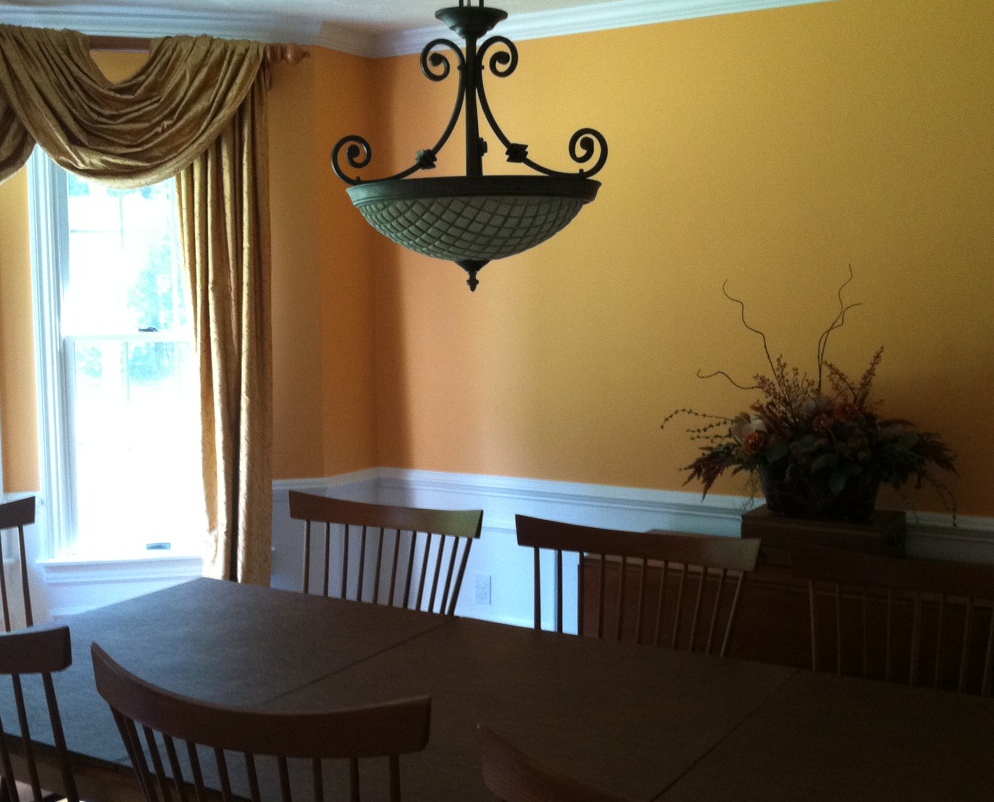 I just wrote a piece for Joelle Spear’s “Life in Metrowest” blog about how to add warm, bright colors to your home. Thought you might like to check it out.
http://homesmetrowestma.com/2011/bring-warm-colors-home-written-by-guest-blogger-barbara-meglis
Grabbing Attention at the Front Door: How to Pick a Door Color
July 25, 2011 § 12 Comments
 Red, yellow, and blue are primary colors that attract attention. Used alone or in combination, they will definitely grab your eye. So it’s no great surprise that this house with its pale yellow siding, royal blue door, and red foundation plantings made me slam on the brakes for a quick photo.
The first color you notice is the royal blue. That shade is what many would consider to be the definition of “blue” and with the white trim around the door, it pops. And that is precisely what a front door should do. There should be no mistaking the front door for the service entrance (I just love saying that… you know what I mean … usually the door into the garage).
The front door does not have to be a primary color, for sure, but it should stand out significantly enough from the rest of the house to be a welcoming entrance, and there should be a clearly defined path leading up to it. Front doors that, despite their color, are obscured from view behind a large bush just do not function well. I’ve been to some houses that were so confusing that I ended up walking around the house into the back yard looking for the way in… (this happens primarily when there is no sidewalk or stone pathway to follow — the subject of another post).
If you have two doors on the front of your house, be sure to let people know which door is preferable. Plantings, lights, and a visible doorbell or knocker will guide your guests to the preferred entrance and prevent your greeting partygoers in the mudroom. I suggest painting your main entry door the accent color and the other “service” doors the siding color. Then your guests will not be forced to choose between red doors, numbers 1, 2, or 3.
These are little points in the grand scheme of curb appeal, but I just thought I’d mention them anyway.
 Your Home & Color Coach