Three Tips for Staging your Empty Condo
August 2, 2010 § 1 Comment
 Selling a condo is hard enough, but in a buyer’s market, it’s a challenge to distinguish yours from all the others out there, some even in the same building. And if you’ve already moved out? Oh, forget it! There’s nothing worse than a vacant unit where the fingerprints on the walls and the spots on the carpet become the selling features that buyers remember.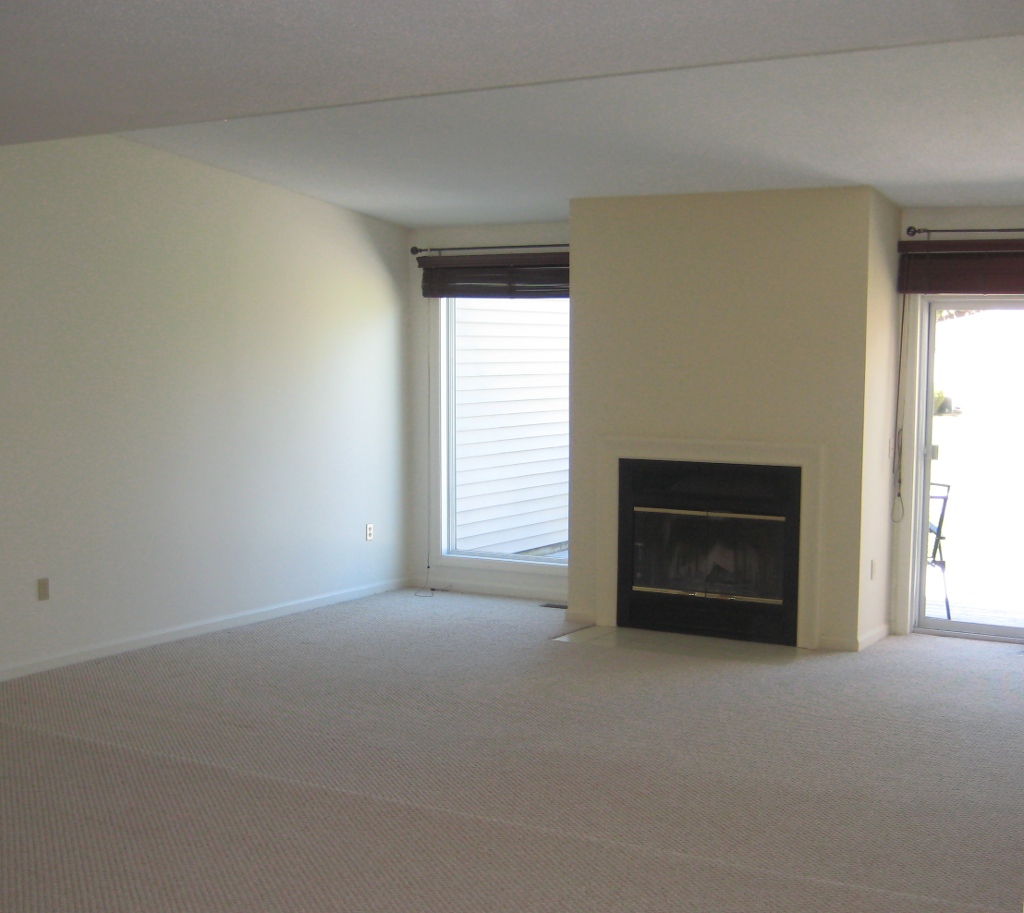
If you are trying to sell your condo, here are three basic tips to get you started. This is not an exhaustive list of “to-do’s” for your space but if you do nothing else, do these.
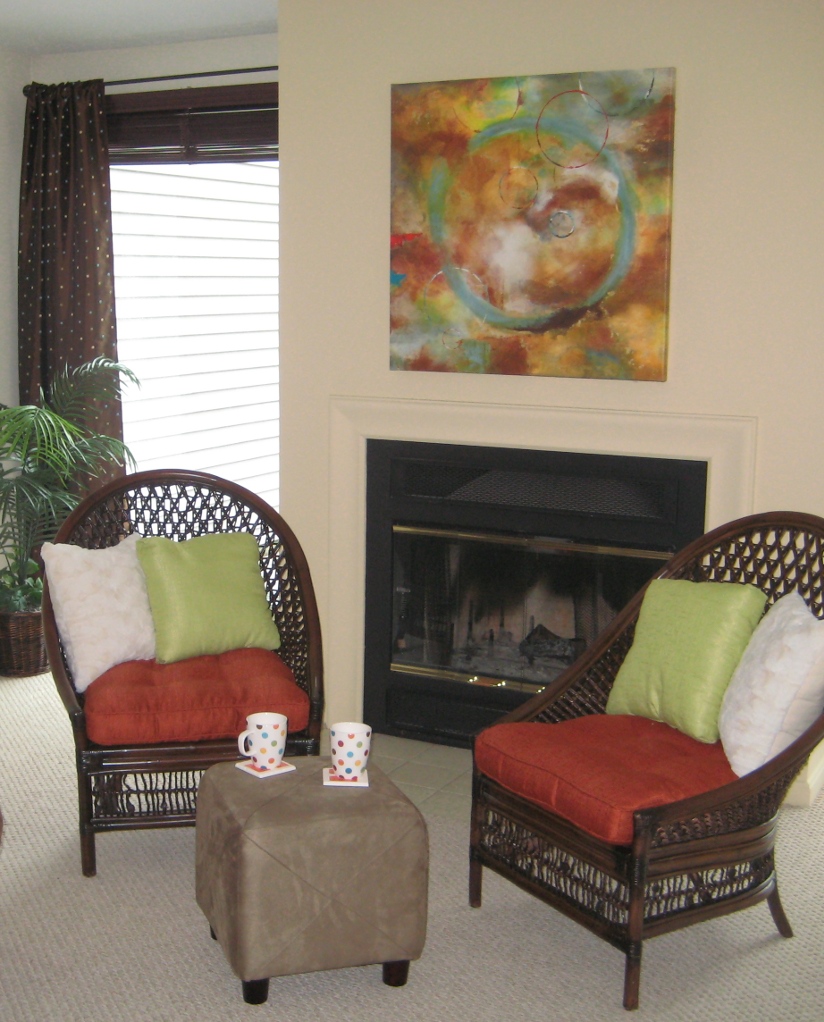
1) Play up the saleable features. This condo has a fireplace and it happens to be the focal point of the room. But without drawing the buyer’s eye to it with art and chairs, the eye wanders from window to window and aimlessly around the vacuous space. With a couple of chairs, an ottoman, a piece of art hung on the wall (with no nails), and some accessories to warm up the area, potential buyers can picture themselves sitting there reading a book and enjoying their home. And that’s what we want.
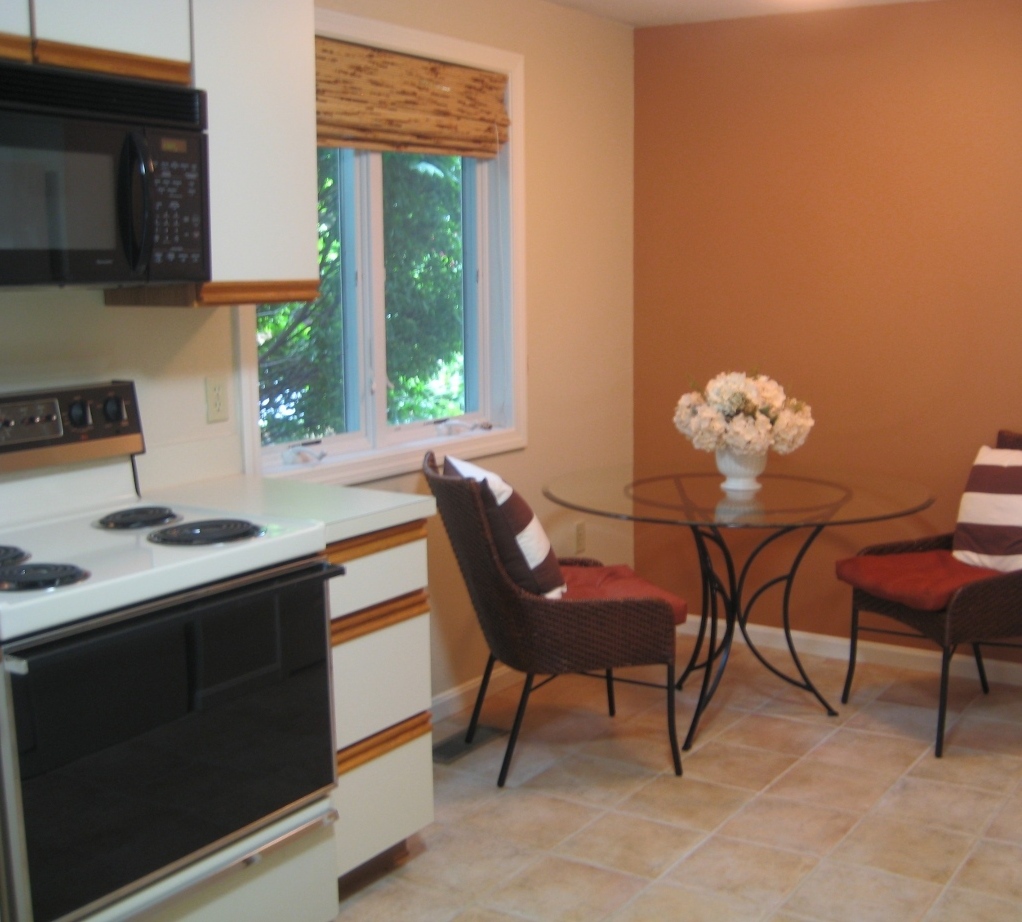 2) Pay attention to the kitchen. The sellers were unwilling to upgrade cabinets or countertops so we picked a warm wall color that would blend the old-style cabinets and formica countertop. Doing that took the focus off the dated features highlighted by the white walls and made the kitchen look bigger — a selling bonus. The sellers had also painted a burnt orange accent wall that would not appeal to all buyers so we toned that down to a warm cognac brown that coordinated with the woven shade in the window and the wood trim on the cabinets. With a table and two chairs, the kitchen turned into a move-in ready space, despite its vintage.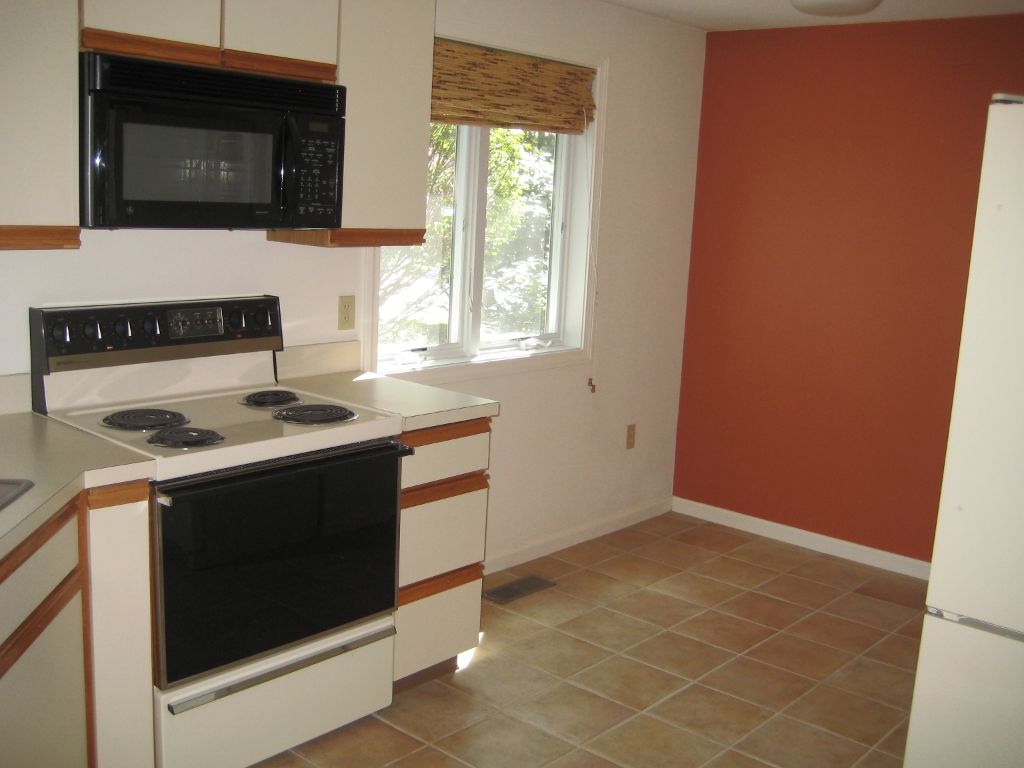
 3) Define your living spaces. The only way to tell where the dining area was in this condo was the lonely light fixture hanging in the middle of the room. So we added a table and chairs and set the table with a contemporary color scheme that tied in with the art and furniture in the adjoining living room. The dining area was defined and set up for guests — again, allowing buyers to picture themselves entertaining in their new condo.
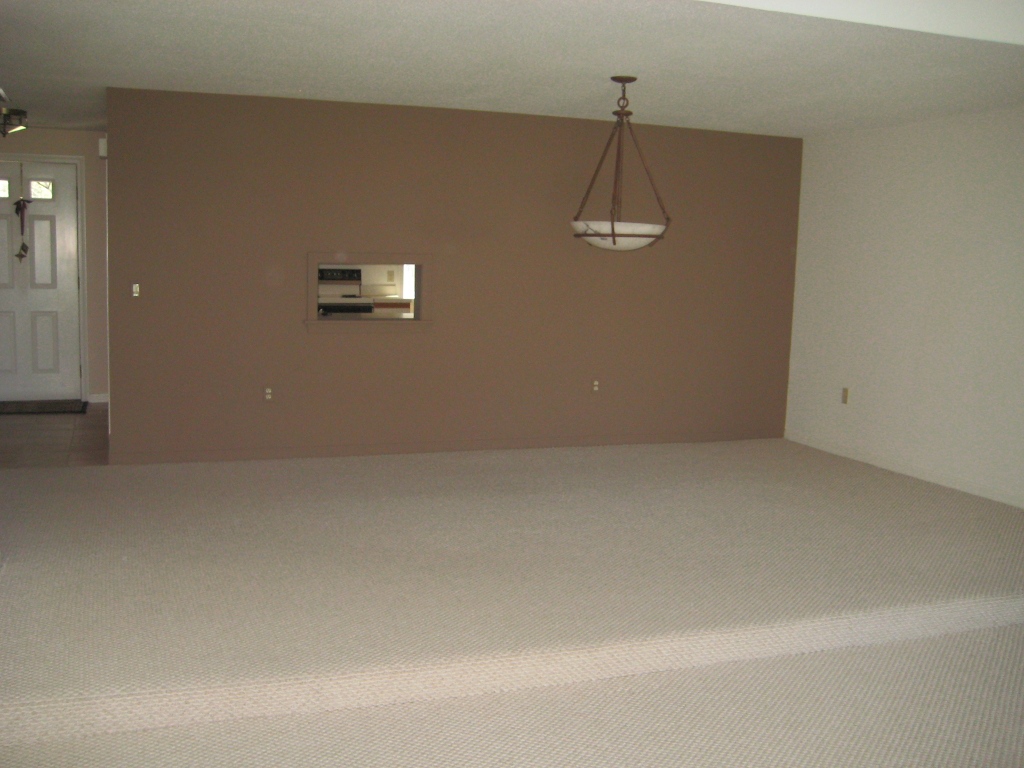
Don’t leave your condo vacant and expect it to sell unless you live in a penthouse in Manhattan. Most cookie-cutter condos need some personality injected into them to attract serious buyers, but a little paint, a few pieces of furniture, and some well-placed accessories will help you create the atmosphere you’re trying to sell.
Quick Headboard or Wall Panel for Art Display
March 21, 2010 § 2 Comments
Is your artwork getting lost? One of my favorite pieces just seemed to float above the sofa in a sea of beige until I rolled out a piece of fabric and found my solution. I stapled the fabric right to the wall and trimmed it out with three pieces of painted moulding cut on a 45-degree angle with my miter box (handy little gadget!). Voila! Some drama, instant matting, and a terrific way to add color and contrast to an otherwise quiet palette. Especially good if your furniture and wall color are the same!
This technique is also a great way to create a headboard over a bed. The fabric adds height to the room and texture to the wall, and it is more interesting than a square of paint (although that will work too).
Once I decided what I was going to do, purchased the moulding and painted it, the whole project took about an hour to install.
Camouflage the Neighbors (and other eyesores)
August 19, 2008 § 1 Comment
 Despite your attempts at diplomacy, your neighbor has decided to park his rusty old camper on your end of his front yard. This predicament is particularly significant if you are trying to sell your house, but it is not pleasant at any time. What to do. If he really will not haul the camper to the rear out of sight, then move on to plan B. Your landscape.
The old saying, “Good fences make good neighbors,” may apply in your case, but if you think that a stockade fence might be a bit aggressive, hedges are the next best thing. Lilacs, forsythia, or a traditional row of arbor vitae will form a quick-growing visual barrier between your property and your neighbor’s.
Eyesores in your own yard can be camouflaged as well. Fencing around a large air conditioner and garbage cans, lattice work around the perimeter of the deck to conceal the yard machinery underneath, a garden of sunflowers between the house and the aluminum shed, and the list goes on. Stand back on the curb or the edge of the property and pretend you are a visitor to your house for the first time. What do you notice in the yard that’s not so great? That’s what needs to be either removed or camouflaged.
Green Decorating: Shop your local consignment stores
March 17, 2008 § 10 Comments
 Okay, I admit it. I have the consignment bug. I find it incredibly exciting to hunt for and find an item that is not only reasonably priced but also has a history to it.
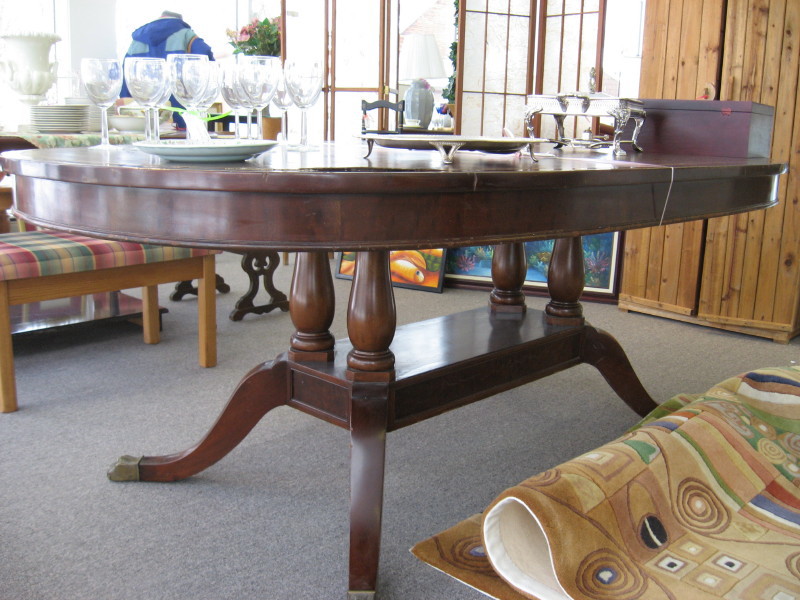
I recently purchased an oval mahogany solid-topped dining table that was, admittedly, a little beaten up on the surface, but the base was unbelievable. Personally, I find the scratches and gouges rather charming, much like the wrinkles on a wise old woman. But I may decide to apply a little loving elbow grease (or a simple table cloth). Regardless, I now have a gem. It took two burly men to haul this solid piece of craftsmanship up the deck stairs and into the dining room. And it’s not going anywhere.
The best part is that there’s a wonderful karma that comes from knowing that perhaps another loving family sat around this fabulous table before ours. It’s not a perfect specimen; it’s been around here for a couple of generations, at least. And I find that history a wonderful addition to our family. Not only that, but by purchasing something that is already here, we are not only saving thousands of dollars but we are decreasing that carbon footprint that everyone is talking about. Purchasing antiques and other gently used furniture and accessories is considered “green.”
Curb Appeal: Shrubs, Trees, and Bushes
August 23, 2007 § 2 Comments
 Next time you’re out front, take a good look at your house. Can you see it okay or are there trees and shrubs blocking the view?
It’s especially important if you’re selling your house to make sure potential buyers have a good look at your house from the street. And they like what they see, of course. If overgrown greenery is blocking the windows, the house will look neglected. Red flag to a potential buyer.
Solution: Either hire a landscaper to trim your trees and bushes professionally or give it a try yourself. Just check with a nursery to make sure you prune and shape at the right time of year, but if you’re removing the plant, go for it. If a shrub is woody and without leaves, maybe it’s seen better days.
Fresh landscaping is small and spread out and has a variety of colors and textures. Not all the same green and all the same size and shape. The nursery can advise you, but here’s a tip. If you’re planting something new, pick at least one shrub or bush that coordinates with your house. Red door, red rhododendron. Purple door, lilac bush. Then in the spring, you can stand on the curb and go “Wow!”
Stage Your Own Home
June 13, 2007 § 5 Comments
If you are selling your home, or even if you’re not, there is lots of advice out there for how to prepare your house. Television shows like Designed to Sell (HGTV) give you a crash course in updating, but for many home sellers, the thought of redoing kitchens and baths and floors without the benefit of a designer and crew of workers is just too overwhelming.
Here are a few suggestions for staging your own home, enough to get you started, at least.
After 
 Before
Box up all the stuff. You’ve heard it before, but clutter is the biggest turn-off to people who are looking to buy your house. Clutter makes the house feel smaller and it simply makes the house look like yours and not theirs. And you want the potential buyers to see themselves in your house. But you’ve lived in the house for 20 years and accumulated an overwhelming amount of stuff? That’s okay.
1. Start by taking down all the family photos, wrapping them up and putting them in a box labelled “Family: Open First.” You can even put the box in your car and carry it with you. The hardest part is now done. You can now start thinking of your new house as your new home and your current house as somebody else’s.
2. Now create three piles: Keep, Throw Out, and Recycle. Just like the show Mission Organization, take a day and dedicate it to going through your bookshelves, closets, home office, and kitchen with a quick, yet critical eye for what stays and what goes. When in doubt, throw it out. As a general rule, leave lots of open space on the bookshelves, no small knick-knacks anywhere, and as few cords as possible. If you can live without the printer or the DVD player, box it up.
Lighten Everything Up. You’ve removed all the clutter, but everything seems dark. In older homes with lots of dark woodwork, it’s really important to lighten up the room any way you can.
1. Raise all the shades on the windows, push drapes all the way open or remove completely, turn lights on (for a showing), and add white to the room to create some contrast. In this room, we found a bigger piece of art for over the fireplace, moved a white settee next to the fireplace to highlight the room’s focal point, and put a white pillow in the dark blue chair for contrast.
2. Remove all the extra furniture. Keep all the walkways open, bring the furniture away from the walls, and cluster seating to provide intimate conversation areas. In this room, we removed a sofa table that blocked the entrance.
Make it Squeaky Clean. Whether your house is old and worn or brand new, everything in it needs to be clean. Windows, walls, floors, kitchen counters and cabinets, bathroom tile, sinks and tubs. If your walls are dingy, you’ll need a fresh paint job. The potential homeowner should enter a home that smells fresh and looks really, really clean. The same goes with the outside, especially the front door area. Make sure the yard and the front porch are spruced up.
The Rest is Gravy. After de-cluttering, removing extra furniture, and cleaning everything in sight, you’re almost done. Just make sure that each room’s best selling features are evident. If you have beautiful hardwood floors, make sure you can see them (remove unnecessary scatter rugs). If you have a great view, make sure you can see it (maybe even take the drapes down). If you have a terrific marble fireplace surround, call attention to it (put a comfortable chair next to it or a piece of art over it). Put a bouquet of flowers somewhere visible as you come in the front door and let your house sell itself.
Consider Your Home’s Roof Color: A Major Design Statement
May 31, 2007 § 385 Comments
Not too long ago, roof color was black — or a shade of black. Today, coordinating roof and house colors or choosing a new roof can be quite a project. So many choices and expensive ones at that. It is important to make a wise decision to avoid a long-term design disaster.
If you’re due for a new roof, congratulations! You now have a chance to select your roof color from the myriad choices that are available. Here are a few guidelines and considerations:
Traditional Shingle Roofs
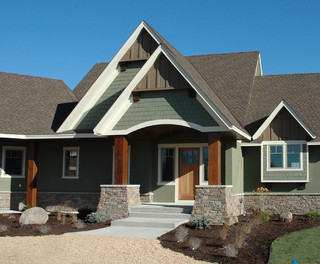
- Gray or blue house. Stay with a traditional roof color like dark gray or black. That way your roof will blend with your house and make the whole structure seem bigger. Any other roof color will stand out too much and make the house look chopped up.
- Cream, tan, or light brown house. Consider the many brown roof options, some of them with a mixture of browns that really make the house look updated and terrific. A brown roof will blend with the cream or tan and make the house look bigger. Black and gray roofs just look ordinary. A brown roof looks like you actually planned out your entire color scheme.
- White house. Dark gray and black are traditional, but they work. Blue is also a terrific option. Red or green metal on a white farmhouse give a traditional country look. Bottom line on a white house: you have lots of options.
- Red, green, or yellow house. You can go either way, a brown or a gray/black roof. I prefer a brown roof for red and green house colors and a black roof for a yellow house.
Of course, the same suggestions apply if you are stuck with your roof color and are looking for a paint color for the house.
- Black/gray roof. The ideal house colors are gray, blue, white, and yellow.
- Brown roof. The ideal house colors are cream, tan, brown, red, green.
- Green roof and other colors. You can either use the roof as an accent color to the house or try to blend it by using a lighter tint of the roof color on the house itself.
Nontraditional Roofs
What about metal roofs? They’re all over Colorado, Upstate New York, and other areas of the world where snow on the roof is a major factor in the winter. Metal roofs come in a rainbow of colors, from red to green to brown to purple. If you have a metal roof, you are making a design statement (whether you mean to or not, of course) and you can treat it as an accent color, kind of like picking a front-door color. However, if you do not want to call attention to your metal roof, choose a natural roof color like dark charcoal, bronze, black, or brown instead of a color like blue.
What about terracotta roofs? These are traditionally seen on Mediterranean style homes and are a definite design feature. Keep the house color neutral to highlight the beautiful roof and the other architectural elements that are undoubtedly present.
Other nontraditional roof materials. Just like a thatched roof on an English cottage, a nontraditional roof is a design feature of the home. Hopefully, you want it that way. Choose a house color that makes the roof look like you planned it as a feature.
Regardless of what kind of roof you have, make sure you consider it when making house color decisions.
 Your Home & Color Coach