
Choosing House Colors: Gray-Green?
January 20, 2012 § Leave a comment
 Look all around your environment for color inspiration. Sometimes the most complex color palettes come from places we might least expect, like a kayaking trip, for example. Look at the different shades and tones in the water and sky. They evoke a calmness that’s relaxing to look at. Then the red kayak pops out of the photo — we know it doesn’t belong there but it grabs our attention.
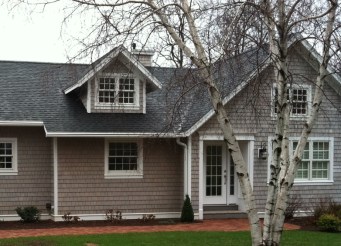
What if we use this scenic palette for a house exterior! The gray-green of that  water is not a color you would necessarily pick out of a paint store color chip lineup, but it’s a great house color. It’s muddy and dark and has a little bit of brown mixed with green and gray. Very complex — not a Crayola color, that’s for sure!! But paired with cream trim, a brown roof and pops of red accents, the combination fits right into its environment just like the house was plucked from the shores of Maine.
Choosing House Colors: Taupe?
January 10, 2012 § 3 Comments
 When selecting the palette of colors for your exterior, use natural materials in the environment as your inspiration. This stonework has all the colors you need for your entire house, from the dark charcoal of the roof to the taupey gray siding and even the orangey brick walkway.
Tying your house color in with its surroundings “grounds” the house — it looks like it belongs there. A house that strays too far from the natural palette looks more like a spaceship that has landed on a foreign planet. Don’t do that to your neighborhood. Save your taste-specific color applications for inside the house.
Choosing House Colors: Lavender?
January 6, 2012 § Leave a comment
 Looking for a versatile neutral? Ever considered lavender? There’s something really appealing about this color as long as it has gray undertones. In different lights, the color can go from blues to grays and paired with cream trim and dark brown wood accents, it has a richness that is refreshingly unexpected.
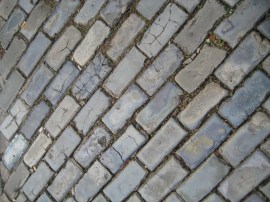
In Old San Juan, we see this color in, of all places, the blue tile bricks on the streets. But of course lavenders are found in nature in most climates so I would feel free to add lavender to your crayon box of house color possibilities. Just keep the shade subdued (nothing too purple) and like many other complex hues, lavender will be a head-turner in your neighborhood.
Choosing House Colors: Lime Green?
January 3, 2012 § 2 Comments
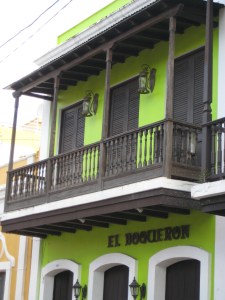 In many neighborhoods, the homeowners who chose this house color might be run out of town but not in this neighborhood where the color is prevalent in nature. The lime green (bordering on neon) fits right in! We see it here in the rainforest of El Yunque in Puerto Rico. What a happy, stimulating hue! And how appropriate to borrow it for a house color on that island paradise. It helps to pair this strong acidic color with a coffee brown or even black just to balance out the palette.
  But it works.
Use your home’s environment as inspiration when choosing a house color. But if you do not see the color in nature’s palette, then reserve the color for inside. Otherwise, your home might become a lighthouse beacon in the neighborhood. Great for identifying your house in the dark, but that’s about it!
Who Says You Can’t Paint Your House Pink?
November 10, 2011 § Leave a comment
 Pink can be a tasteful house color for old Victorian homes and even new-construction homes with made-to-look-old character. Ranging from bubblegum to rose to petal pink and even lavendar, you name it — we’ve seen it.
Although some homeowners may go a little over the top with the pink, here’s a house that I find to be really well done. The soft ballet-pink hue is paired with creamy white trim and topped with a medium gray roof. What works so beautifully for this property is that the gray is carried over to the garage outbuilding that stands alone completely in both style and color. By limiting the pink to the house only, the homeowners have balanced what might be considered a soft feminine palette with a dose of solid, neutral dark gray — a touch of masculinity, if you will. The design principle of balance, the yin and yang, is evident here. And it works!
Sporting a Patriotic Color Scheme
November 7, 2011 § Leave a comment
 With all due respect to my international bloggers, this house sings America the Beautiful to me every time I drive by. This time, I stopped to capture its beauty and share it with you.
What makes this red, white, and blue color scheme work so perfectly is the balance of color between the candy-apple-red siding and the creamy white trim. Notice on the flag hanging on the door that, for the most part, neither the red nor the white stripes dominate. Both colors balance each other. That same effect is evident on this house — the exceptionally wide trim painted a soft cream keeps the red from overpowering the house. Just like the flag, the house is balanced.
Navy blue accents the doors — just like the small block of navy blue in the upper lefthand corner of the flag provides a contrasting backdrop to the white stars.
If you have an old farmhouse or an outbuilding on your property that you would love to feature, consider painting it red with creamy white trim and navy blue doors. Hang the flag out front. You’ll attract attention but go ahead. Be proud!
Shutters Shatter Traditional Color Combinations
September 6, 2011 § 4 Comments
 This house has a color combination I wanted to share with you. The taupe siding has the most interesting pink, almost purple, undertone that changes the way we see the house color depending on the light. The color can go from brown to mauve to gray over the course of the day. The trim is a combination of painted creams and vinyl off-whites (I wish they had picked one color or the other, honestly). But the real surprise (we’ll ignore the green front door) is the majestic blue shutter color. I would never think to pair the mauvey taupe with a royal blue but somehow it works. Black shutters would have been the easy choice, but someone had the bold idea to step out of the ordinary and into a new color combo. New to me anyway…
Shutters provide another opportunity, along with the front door, of course, to express some individuality for your home’s exterior. Although it is customary to work within the neighborhood in terms of palette, if you feel like breaking the mold, go for it. Just be sure that your home’s personality does not overpower your own. It’s no fun to make excuses for a paint job that went haywire. In other words, if you don’t like it, paint it over!
In the meantime, have another spin of the fandeck and see what paint color combinations work for you.
Do You Love Citrus? Adding happy color to your home
August 11, 2011 § Leave a comment
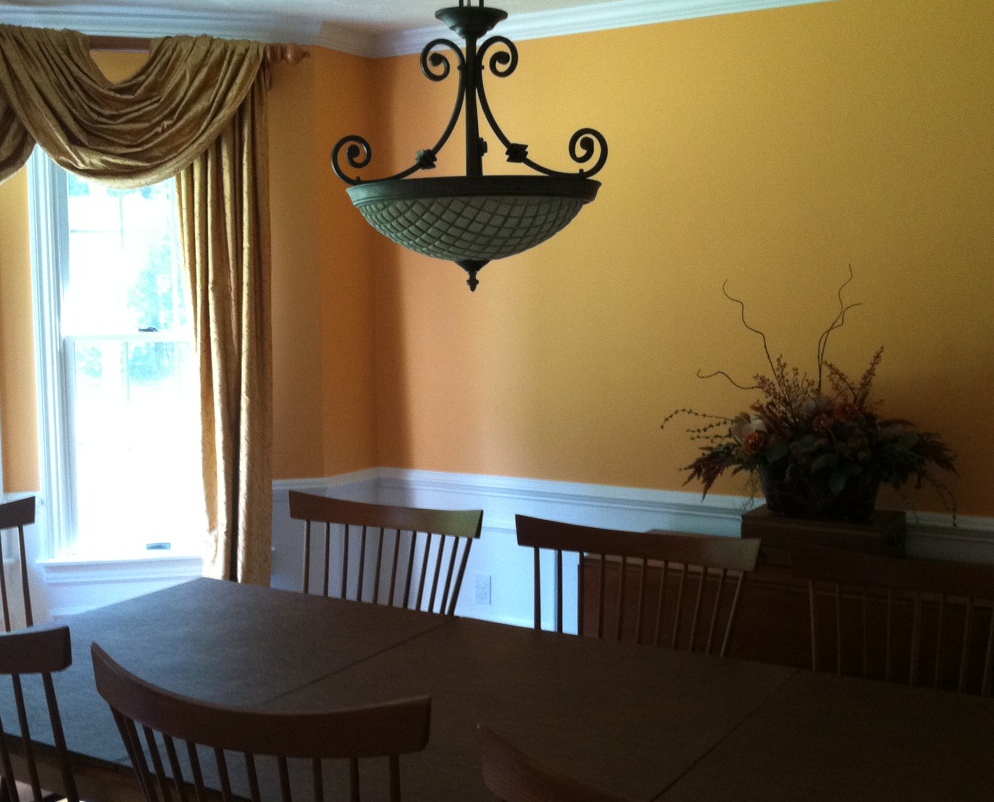 I just wrote a piece for Joelle Spear’s “Life in Metrowest” blog about how to add warm, bright colors to your home. Thought you might like to check it out.
http://homesmetrowestma.com/2011/bring-warm-colors-home-written-by-guest-blogger-barbara-meglis
Grabbing Attention at the Front Door: How to Pick a Door Color
July 25, 2011 § 12 Comments
 Red, yellow, and blue are primary colors that attract attention. Used alone or in combination, they will definitely grab your eye. So it’s no great surprise that this house with its pale yellow siding, royal blue door, and red foundation plantings made me slam on the brakes for a quick photo.
The first color you notice is the royal blue. That shade is what many would consider to be the definition of “blue” and with the white trim around the door, it pops. And that is precisely what a front door should do. There should be no mistaking the front door for the service entrance (I just love saying that… you know what I mean … usually the door into the garage).
The front door does not have to be a primary color, for sure, but it should stand out significantly enough from the rest of the house to be a welcoming entrance, and there should be a clearly defined path leading up to it. Front doors that, despite their color, are obscured from view behind a large bush just do not function well. I’ve been to some houses that were so confusing that I ended up walking around the house into the back yard looking for the way in… (this happens primarily when there is no sidewalk or stone pathway to follow — the subject of another post).
If you have two doors on the front of your house, be sure to let people know which door is preferable. Plantings, lights, and a visible doorbell or knocker will guide your guests to the preferred entrance and prevent your greeting partygoers in the mudroom. I suggest painting your main entry door the accent color and the other “service” doors the siding color. Then your guests will not be forced to choose between red doors, numbers 1, 2, or 3.
These are little points in the grand scheme of curb appeal, but I just thought I’d mention them anyway.
Choosing Siding Color (or Colors) for your House
July 19, 2011 § 4 Comments
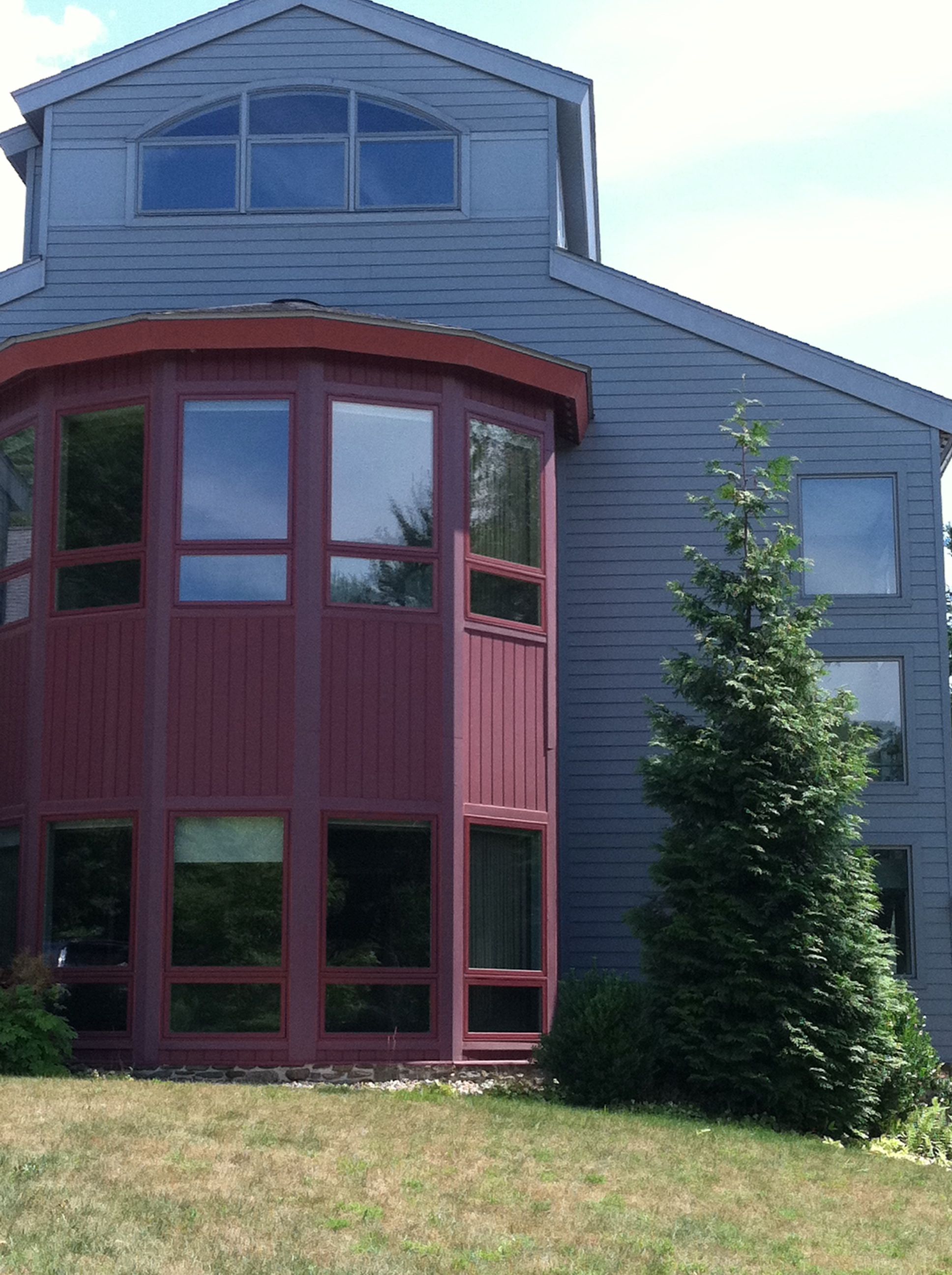 If your house has an architectural feature — maybe a porch, a large portico, or a distinctive garage — consider using an accent color for the siding instead of the color you’ve chosen for the house.* The effect is obvious. The accent color will stand out. This color technique is perfect for large houses that might look too massive if they were all the same color. Dividing up the exterior color gives you an opportunity to highlight the design of your home and make a large-scale house a bit cozier.
Speaking of a massive house that could use a little visual down-sizing, maybe we should consider accenting the architectural detail on the White House with a little color! … (oh, forget it… we’d get into that red state/blue state thing — no wonder the place is still white!)
Anyway, color can be used creatively to re-scale a large structure and add visual interest.
If you want your house to look bigger, however, this technique is NOT for you. Dividing up the exterior color chops up the house and calls attention to small areas. If your small house currently has a multi-colored siding palette, consider painting it all one color and using the accent colors for doors, shutters, furniture, flowers, and other accessories.
*The construction of the Doyle Center in Leominster, MA, is really interesting. Here’s a link: http://www.thetrustees.org/what-we-care-about/climate-change/green-buildings/doyle-conservation-center.html
 Your Home & Color Coach