
Choosing Paint Colors for House Trim and Doors
November 29, 2012 § 448 Comments

The front door is the focal point of your house and it can make a big splash. (Even though Great Britain’s former Prime Minister Tony Blair reportedly changed his 10 Downing Street door color from conservative black to Labour Party red as seen in this photo from the Daily Mail, evidently it was all an April Fool’s joke — see the full story at http://news.bbc.co.uk/1/hi/magazine/8677004.stm)
Doubtful that changing your own front door color will create as much of a stir in the neighborhood, but you’ll want to give it considerable thought anyway.
But first, what about the trim color?
House trim color: If you have a small house and you want it to look bigger, consider painting the edge trim the same color as the house or just a shade lighter. This will blend the corners of the house in with the body and draw your eye to color — hopefully, the front door. If you want to show off the trim in a more contemporary way, consider painting the edge trim two shades darker than the house color. To accent your trim in a traditional way, choose contrast by using either white or cream. If you have a stone house, the grout color is a great trim color.
The message here is to avoid too many different hues (different colors) when painting the house, trim, doors and shutters. Unless you have an architectural masterpiece, I would avoid choosing trim colors that are unrelated to the house color (for example, painting a gray house with navy blue trim, red shutters and red garage doors). Not only will you draw attention to all the different colors themselves and away from the front door (regardless of what color IT is), but you will have visual chaos!
Exception: If you have an old Victorian home, you may want to accent all the different architectural elements with paint in many different colors.
Trim around windows: To keep the windows looking as large as possible, paint the trim around the windows the same as the window frames, either white or cream or whatever color the window frames are. Matching the trim to the actual windows will make them look bigger than if you break up the color by painting a dark trim around a white window or a white trim around a dark window.
Garage door color: Unless you want to broadcast to your neighbors that you have a three-car garage, you probably don’t want to highlight your garage doors. Standard garage doors should usually be painted either the color of the house or a couple of shades darker to “anchor” them. Plus, by painting the garage doors the house color or a little darker, your house will look bigger and less chopped up. The focus is reserved for the front door. Note: yes, metal garage doors can be painted even if they’re white when installed. Just clean the doors very well and use a good primer.
Exceptions: Garage doors associated with brick homes are often painted either the trim color, the grout color, or the shutter color — black or dark green, for example. No need to try and match a paint color to the brick. The other exception is the new carriage-style garage doors, designed to be the focal point on the front of a home. If you have fancy garage doors, it’s okay to show them off! Even keeping them white or the trim color is okay.
Shutter color: For a traditional look, match your shutters to the roof color. If you have a dark gray or black roof, black shutters look terrific. It’s like adding a touch of black to a living room to dress it up a bit. Matching the shutters to the roof makes it look like you planned your roof color as part of the overall house palette. Dark brown shutters with a brown roof color give a similar, traditional look as black shutters with a gray/black roof. And brown is supposedly the new black. But for a classic home, black will never go out of style.
If you have lots of really small windows or don’t want dark shutters, consider choosing a color that blends with the house color. Here’s one strategy: choose your house color in the medium range. Then go lighter for the trim and a shade or two darker for the shutters (or remove the shutters altogether). And choose a completely different hue for the front door. This contemporary look focuses attention on the front door. There are no distracting colors anywhere else on the house.
Front door color: It’s time to create your focal point, the front door. This is the area you want guests to find when they pull in the driveway. Color is the way to do it although a shiny black door with a brass kickplate, brass door handle, and big colorful wreath is a classic. If you don’t want black, consider a rich dark red in a semi-gloss finish. Dark red (not cherry) seems to work with almost all house colors.
Here are a few other ideas:
- Light green house. Traditional: Dark purple door (especially nice if you have lilacs and other purple flowers in your landscape) and white door trim. For a modern look: Rusty red.
- Dark green house. Traditional: Rusty red door or natural wood and cream door trim. Modern: Turquoise.
- Light blue house. Traditional: Dark red door or navy blue door with white door trim. Modern: Dark olive green.
- Dark blue house. Traditional: Maroon door (play up the nautical look) with cream door trim. Modern: Lime green.
- Red house (or brick). Traditional: Black door with brass accents (classic) and white door trim. Modern: Grass green.
- Brick house. Traditional: Mahogany door with light grout color door trim. Modern: Dark purple.
- Pink house. In the North, a charcoal or black door. In the South, anything punchy. White door trim.
- Gray house. Traditional: Navy blue or red door with white door trim. Modern: Bright lemon yellow.
- Brown or tan house. Traditional: Dark green door with white door trim. Modern: Robin’s Egg Blue.
- Yellow house. Black door, black shutters, white door trim (a classic look). Modern: Dark red.
- White house. Traditional: Black, red or other dark rich color. Modern (or in warmer climates): Any bright, cheerful color that works with your landscape plantings. White trim everywhere.
One woman I read about paints her front door for every season. It might be cranberry red during the winter, purple in the spring, raspberry during the summer, and rust during the fall. Every year it’s different.
Don’t forget the roof: Consider the roof color when you’re making your house color choices and if you’re getting a new roof, choose something that coordinates with your house color. There are many choices in roof colors these days particularly in the brown family– many more choices than just slate gray or black. Don’t pass up the opportunity to finish the job with a well-coordinated roof.
What Color Should I Paint My Ceiling?
November 29, 2012 § 266 Comments
The ceiling is the fifth wall and many decorators and designers feel that keeping the ceiling white is like “throwing a sheet over the room” (Christopher Lowell said that years ago). But there are a few conditions to consider before painting the ceiling anything other than white:
1) Is your ceiling heavily textured? In many old houses, the ceiling is patterned (and God forbid, “popcorned”) and therefore very difficult to paint well. Also, painting it anything other than white will call attention to it and maybe that’s not what you want. One solution is to have your ceilings replastered to match your walls and painted, but if that’s out of the question, I would stick with white.
2) Is your ceiling a smooth plaster? If so, you should definitely paint it. How lucky you are! See below for what color.
2A) Is your ceiling really high? If so, you can paint it virtually any color that goes with the rest of the room. If you’d like to bring the ceiling down visually, consider a color darker than your wall color or a warm color (both will advance and appear to bring the ceiling down to a level that’s more in scale with your room). Also consider adding crown moulding if it’s not already there. The moulding will also bring the ceiling down by calling your eye’s attention to it. And it really finishes the room.
|
|
|

2B) Is your ceiling low or average height? Consider painting it a tint of the wall color. If your walls are a medium blue, then your ceiling would be the very lightest blue on the color swatch or even lighter (white with a dash of blue). This will help to round out the room and make the ceiling part of the overall decor — not just that white sheet over the top.
3) Does your room have enough light? Bright white ceilings do help bounce light back into the room so if your room is already dark, pay special attention to the ceiling color. White can be used effectively, but light tints on the ceiling will also reflect light. Just avoid a ceiling color that is going to absorb all the light and leave the room dark.
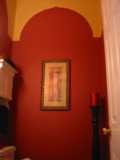
4) Are you painting a guest bath? I like to paint the wall color right up over the ceiling in a guest bathroom. Doing that makes the room feel larger by blending the walls and ceiling together and avoiding sharp lines and corners. Or do something kind of exotic on the ceiling, like the Moroccan tent (see photo above).
5) Are you painting a bedroom? In what other room do we lie around and stare at the ceiling? Why not paint it something interesting. In a bedroom, the sky’s the limit (literally) — from puffy blue clouds on a backdrop of sky blue to a quilt of squares in different colors (Candice Olson did a fabulous multi-colored geometric ceiling in a master bedroom). And in kids’ rooms, the ceiling is just one more space to use your creativity.
Hope this helps the “Do I paint the ceiling?” dilemma.
houzz, Pinterest, and the Barrage of Creative Ideas
November 20, 2012 § Leave a comment
At last count, there were 867,525 spaces on houzz.com to feed your quest for inspiration. Hours — days –of poring over photos of beautiful designs. And then there’s Pinterest where, by their account, “millions of new pins are added every week.” Is anybody out there feeling overwhelmed by the sheer volume of ideas??
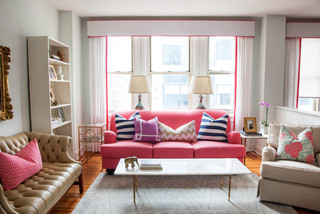
If you are planning a renovation, big or small, to any part of your house, here are a few tips to avoid creative overload:
-Realize that not every good idea will work in your home. Although that wall color online looks spectacular with the view of the ocean out the window, the same color may look completely different in your room with limited natural light. When you’re choosing wall color, start with your own home, the lighting you have, and the colors, furniture, and artwork in other rooms. A beautiful wall color inspiration is most likely already there.
-Stick with what you love, not something you think you should love because it’s fashionable. As we all know, trends come and go, and unless you want to re-do your home with every new trend, your home will be defined by the period in which the trend was popular. Look at metallic wallpaper from the 70s, for example. If you love it, then go for it. But try to avoid catching a wave only to find yourself tossed up on the beach in a year or two.
-And finally, unless you’re well organized at assigning ideas to a particular project or room as they come cascading into your head via web sites and social media, then focus on one project at a time. Try to avoid mission creep unless you have the budget and time to devote to starting and, most importantly, finishing all your projects. You will be bombarded with ideas and inspiration that may have you ripping up carpet in your family room when you really wanted to work on the bathroom first. Stay focused.
Enjoy the opportunity to see how millions of other creative people have transformed their homes. We are truly living in an age of enlightenment bordering on informational hysteria. Try and stay calm.
Zen Holiday Decorating: An Oasis from Mall Madness
November 8, 2012 § Leave a comment
 Does your beautifully decorated home brace for the onslaught of holiday decorations every year? When your artfully arranged furniture is sidelined to make space for the tree and your oh-so-subtle color scheme is squashed by the big footed Santa and his reindeer? I feel your pain… 😉
I’m here to help. But before that, if you have children, then forget about it. Do up the most spectacular Christmas you can imagine and enjoy the blinking lights and the kaleidoscope of colors for as long as your children appreciate your home’s transformation. And for the young-at-heart who still enjoy reliving this most festive time, then relax. Go ahead and hang all those old ornaments on the tree. The holidays are for celebrating and reminiscing too.
Now for those of you who would prefer a light touch to the holiday decorating and would like to create an oasis from the mall madness, this tip is for you.
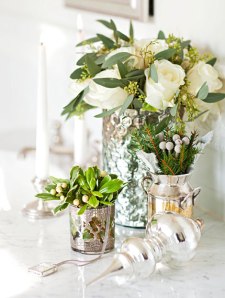
Limit your holiday color scheme of ornaments, ribbons, and decorations to white. That’s it. Then, just as the photo suggests from http://www.traditionalhome.com, add the necessary sparkle with glass ornaments, silver and gold metallic objects to reflect candlelight, and simple greens. You will be amazed at how festive your home looks without even an ounce of Santa’s sleigh red.
Which Came First? The house color or the foundation plantings?
October 1, 2012 § 2 Comments
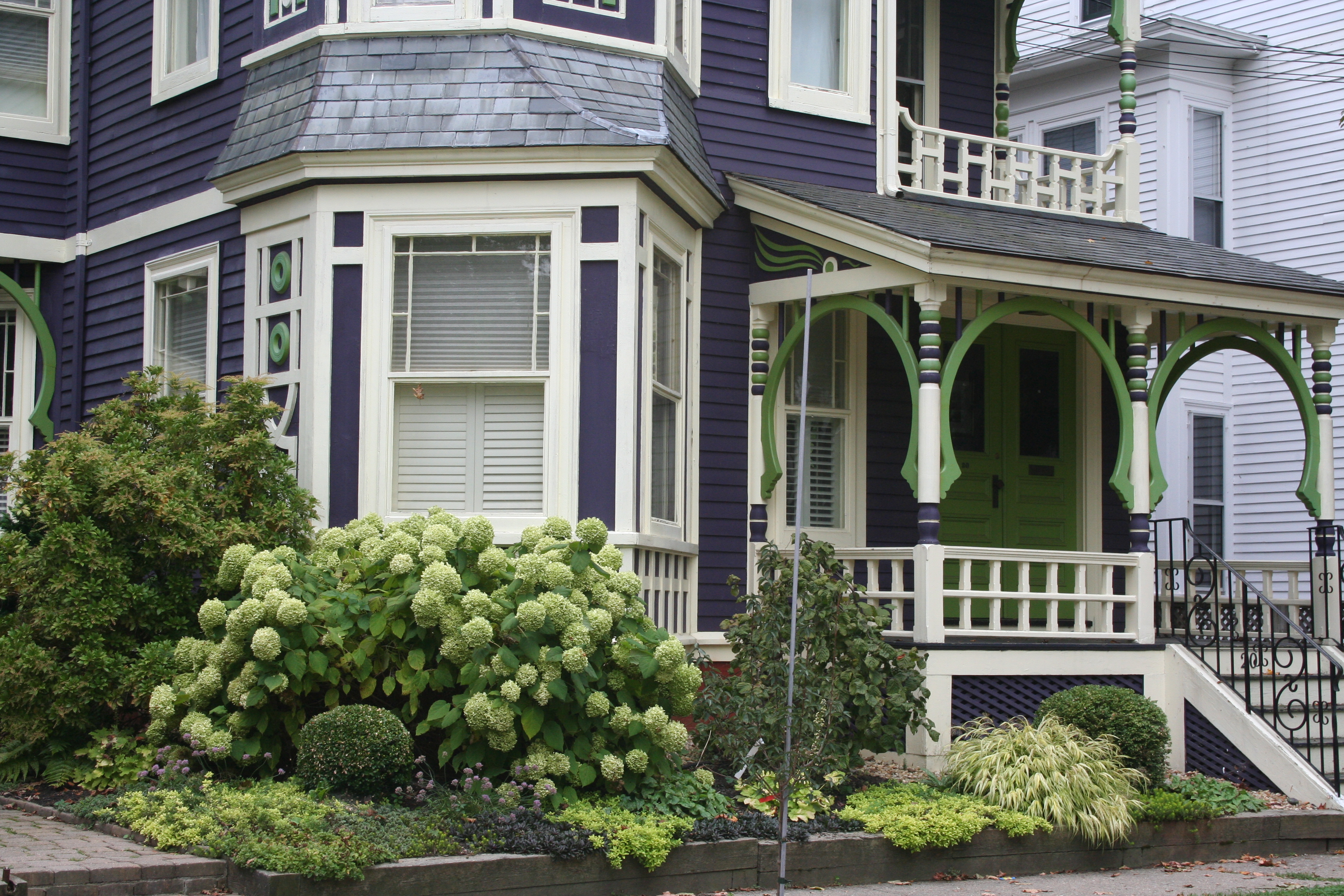 My guess? Neither. Take a close look at the roof, and the house color palette is revealed. The deep purples and greens of that slate roof present a palette the homeowners can use for their house: rich grape for the siding color tempered by a neutral cream trim and lime green for the accent color to highlight the Victorian embellishments.
But the homeowners did not stop there. To enhance the palette and spread the accent color out onto the landscape, they planted a gorgeous lime green Hydrangea coupled with other lime green plants, shrubs, and ground-cover species. Peeking out from under all that greenery is a purple flowering ground color pulling the whole look together.
Not to be matchy-matchy or anything, but this house rocks. There’s just enough contrast to keep our interest and show off the house detail without introducing new colors that might make the house too busy. Afterall, the house itself has so much detail that you wouldn’t want it to get lost in a rainbow of foundation plantings and annuals.
The Renaissance of Wallpaper: With a twist
September 17, 2012 § Leave a comment
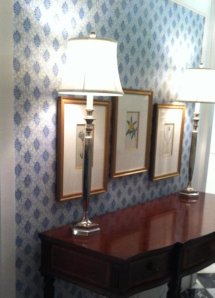 The first thing my husband did when we moved into our house many years ago was rip a long piece of wallpaper off the bathroom wall. “We won’t be keeping this,” he proclaimed. Well, I wasn’t planning to start a bathroom renovation that afternoon (I had to hide the ugly blemish with towels for months), but he certainly had the right idea. All the wallpaper came down eventually and was replaced with paint.
Many of us have visions of homes with old faded wallpaper and knick-knacks everywhere or rooms where every available inch of real estate was covered: ceiling, switch plates, wastebaskets– even the window treatments matched the wallpaper.
The rebirth of wallpaper that we’re experiencing, however, is far different from what you lived through in your grandmother’s parlor.
1) Contemporary wallpaper makes a bold statement either with color, texture, large graphic design, or all three.
2) The wallpaper is a feature of the room, like a piece of art, and not simply a wall covering upon which to layer a hodgepodge of family photos, diplomas, and other objects of interest.
And that’s the major difference. It’s more about what else is going on (or not) in the room and less about the wallpaper itself. Contemporary use of wallpaper involves a more judicious placement in areas like the focal wall in a foyer (as in the photo), the walls in a guest bath, the headboard wall in the master bedroom, and the walls above wainscoting in the dining room. The wallpaper is also selected to be the appropriate scale in the room (you won’t see so many little tiny pink flowers anymore). And the furnishings in a room with bold, contemporary wallpaper harmonize with it, both through color and fabric design and scale.
So be adventuresome. If you’re feeling like your room is just a little too blah, even after you’ve painted a fresh new color, try wallpapering an accent wall. Just for fun. Your grandmother would be proud.
From a Little Girl’s Room to a Teen Girl’s Haven: Navigating the Transformation
September 6, 2012 § Leave a comment
Decorating a teen’s room is way different from decorating a young child’s room, and I’m not just talking about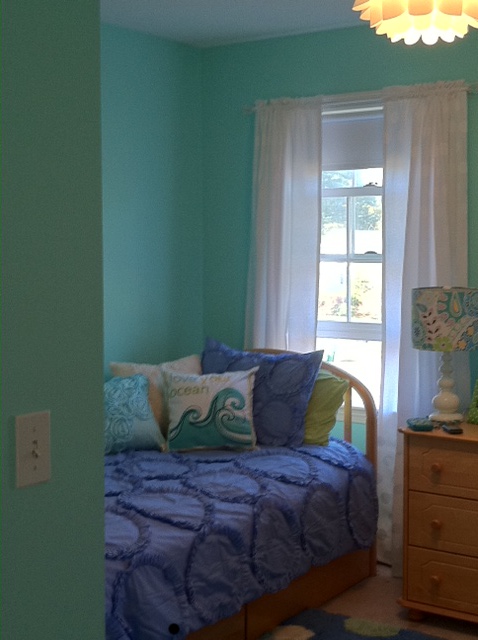 the comforter and the curtains. When you’re decorating a little girl’s room for the first time (when they’re really little), there’s not much push-back from her. She loves flowers, polka dots, pinks and purples. But as she grows older, she develops her own style and wants to do things her own way. As a decorator, we have to take that into account when we’re called upon to work on a young teen’s room. How to take her very strong requirements for her room and mesh them with the aesthetic sensibilities of mom and dad.
 This project is a prime example. The Before Photo shows a bedroom of many colors, stripes and dots in a fairly white room. As you can see from the swaths of color that she painted next to her bed, the teen living there was pretty much done with white walls. So that’s where we started. She picked a cool, vibrant blue-green that was a reflection of her personality (not her mom’s). From there, we found cornflower blue bedding (Pottery Barn) as well as some accent pillows and accessories to pull the colors together.
My major role in this project? To prevent color overload. The remedy? Adding white to the room to offer some visual relief from the intense hues. I found white tone-on-tone polka dot fabric for the window panels (custom-made), a white lamp with a lamp shade that pulled all the colors together (Pottery Barn), and a white fuzzy pillow for the bed (Pier 1). I also added the floral light fixture on the ceiling (Lamps Plus) — a great find for a teen room. The result was a room that all three of us (teen, mom, and decorator) could love.
Bold House Color Statement
October 1, 2011 § 2 Comments
 Call it dark charcoal, call it midnight blue, or just call it black. It’s a knock-out house color that made me slam on the brakes when I drove by. What’s more dramatic than the pairing of opposites black and white, but who would think to put them on a house? Obviously somebody did and it looks spectacular.
The soft yellow chiffon door is perfect. More lemon? Too strong. More orange? Halloween. And although I’m not a big fan of white shutters, they make sense here. Another convention that was slapped in the face was the idea that dark equals small. You don’t even notice how small this house is because it is so well put together. From the gray roof to the brick steps and pops of floral color, this house is a winner.
The beauty of this bold house color statement is that it fits perfectly in any neighborhood!
Design Star 2011 Finale
September 12, 2011 § 1 Comment
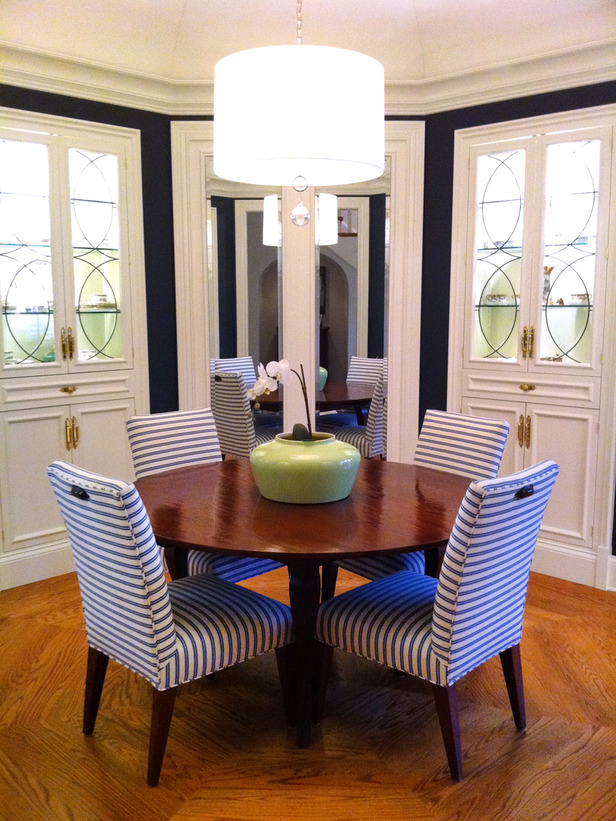 Okay HGTV fans. This is it! The finale between Meg and Karl is on tonight. For those who don’t follow Design Star, it’s not too late to check in. Design Star has spun off several excellent designers (David Bromstad, Kim Myles) and like them or not, these designers influence TV viewers and their expectations. I see that all the time.
So who is it going to be? Meg has a lovely fresh preppy style and a bubbly on-air personality. Karl’s architectural background gives him a very professional, big-picture design. He nailed the small-cottage challenge!
Move over Candice. Here comes a new face on HGTV!

Crown Molding: A Crowning Achievement or a Hot Mess
July 15, 2011 § Leave a comment
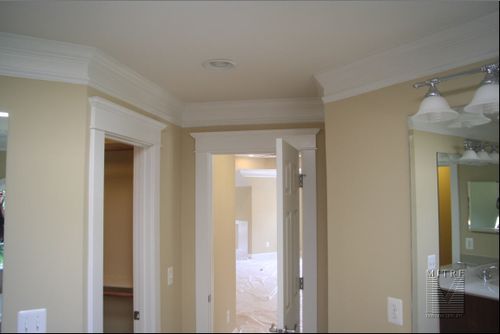 If lighting is the jewelry in the room, the crown molding is like a proper hem — no stitches showing. Crown molding covers the seam between wall and ceiling and adds weight and architecture to the room. And by drawing the eye upward, crown molding can create the framework for painting the ceiling something other than white. But done improperly, crown molding will lead to painting miscues and a hot mess.
I ran into just such a situation today on a high-end new construction job. The carpenter had “built up” the molding by using a couple of inches of wall between the crown at the top along the ceiling and another cheaper piece of finish molding along the bottom edge (photo shows how it’s supposed to look). The idea was to make the finished unit (crown + wall + smaller molding — all painted trim color) look like a giant (read: expensive!) piece of crown molding. What happened was that the carpenter did not finish the edges at the doorway leaving wall space exposed. The painter then came along and, not having a finished piece of molding to serve as the starting point, he (or she) drew a LINE on the wall with a pencil and started painting wall color on the other side of it. Oh…my…gosh… and this was high-end construction??
So two warnings:
If you are using crown molding, make sure you get an experienced carpenter who has the sense to finish edges. If you’re putting it up yourself, do your research first and know how you’re going to go around corners and finish edges properly.
If you are painting a wall, you must have a piece of architectural molding or the wall edge in order to move from one color to another. Never draw a vertical line on the wall to separate two colors unless you’re painting stripes. That’s it!
Phew! ‘Nuf said…
 Your Home & Color Coach